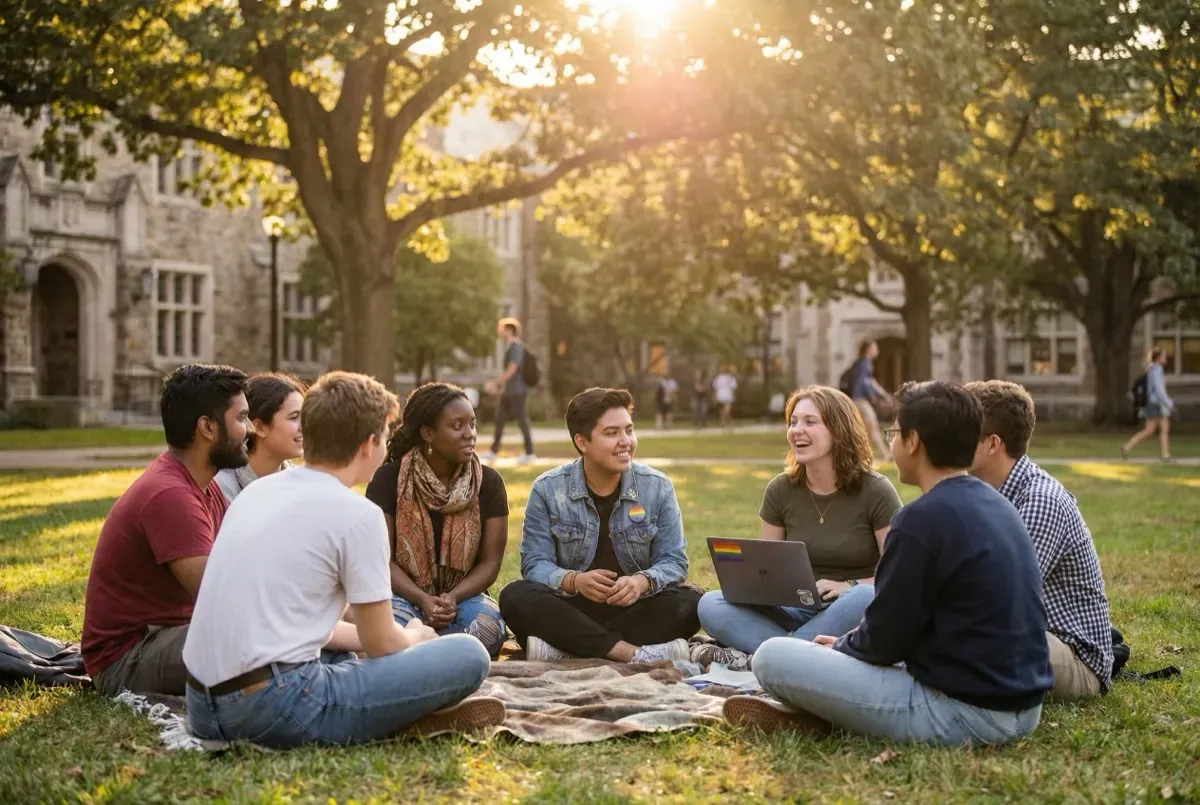
College can feel isolating, especially for LGBTQ+ students navigating their identities in a new environment. Finding your people matters. Research shows that 32.6% of LGBTQ+ students experience bullying, harassment, or assault on campus, compared to 18.9% of their non-LGBTQ+ peers. These challenges take a toll on mental health, academic performance, and sense of belonging.
Building community means more than making friends. You need networks of support that help you thrive. When LGBTQ+ students connect with others who share their experiences, they report better mental health outcomes, higher GPAs, and stronger commitment to finishing their degrees.
This guide walks you through finding existing LGBTQ+ communities on campus, starting your own student group, and creating spaces where everyone feels safe and supported.
Understanding the Need for LGBTQ+ Community
LGBTQ+ students face unique challenges that their straight and cisgender peers often don’t encounter. These include gender discrimination, family rejection, food insecurity, and reduced access to affirming healthcare. According to the 2023 U.S. National Survey on the Mental Health of LGBTQ Young People, many students also deal with suicide ideation and harassment.
The impact shows up in the numbers. Only 71.9% of LGBTQ+ students report feeling a sense of belonging at their college, compared to 83.5% of non-LGBTQ+ students. Students with multiple marginalized identities, such as LGBTQ+ students of color or students with disabilities, face even greater barriers to feeling included.
Community helps buffer these challenges. When you connect with other LGBTQ+ students, you gain access to shared experiences, practical advice, and emotional support. You learn you’re not alone. Research from Point Foundation and the Williams Institute at UCLA found that students involved in LGBTQ+ communities show higher retention rates and better academic outcomes.
Building these connections also creates lasting change. Student-led groups advocate for better policies, educate campus communities, and make universities more welcoming for future LGBTQ+ students.
Getting Started: Finding Your Community
Most campuses already have LGBTQ+ resources and organizations. Start by exploring what exists before creating something new.
Check for an LGBTQ+ Resource Center. Many colleges maintain dedicated centers that offer counseling, support groups, social events, and educational programs. The Consortium of Higher Education LGBT Resource Professionals maintains a map of LGBTQ+ centers nationwide. Visit your center’s website or stop by in person to learn about upcoming events and ways to get involved.
Attend LGBTQ+ student organization meetings. Look for groups like Gender and Sexuality Alliances (GSAs), Pride organizations, or identity-specific groups such as trans student unions or queer students of color collectives. Your campus student life office can provide a list of registered organizations. Attend a few meetings to see which groups feel like the right fit.
Join social events and activities. Many campuses host Pride Week, National Coming Out Day celebrations, or regular social gatherings like coffee hours or game nights. These low-pressure events help you meet people without the commitment of joining a formal organization.
Connect online first if you’re not ready to be out. Platforms like Q Chat Space offer live-chat support groups for LGBTQ+ teens and young adults. Campus Pride maintains a database of LGBTQ+-friendly colleges and their resources. These online spaces let you explore community at your own pace.
Look beyond campus. Local LGBTQ+ community centers, PFLAG chapters, and advocacy organizations often welcome college students. These connections can be especially valuable if your campus has limited resources.
Don’t feel pressured to find your community immediately. Building meaningful connections takes time. Try different groups and events until you find spaces where you feel comfortable being yourself.
Building Your Own LGBTQ+ Group
If your campus lacks the community you’re looking for, consider starting your own student organization. This takes work, but it creates lasting impact.
Define your group’s purpose. Ask yourself what gap you’re trying to fill. Does your campus need a social group for LGBTQ+ students? A support network for trans and non-binary students? An advocacy organization pushing for policy changes? Talk to other LGBTQ+ students to understand what they need. Your group should address real needs in your community, not just replicate what already exists.
Learn about your community’s diversity. The LGBTQ+ community includes people with vastly different experiences. A gay white student faces different challenges than a trans student of color. Read about different LGBTQ+ identities and experiences. Make sure your group creates space for all community members, not just those who share your specific identity. Organizations like GLSEN offer resources for building inclusive student groups.
Recruit passionate members. Start by talking to friends and peers about your idea. Gauge interest and gather feedback. You’ll need a core team of 3-5 committed students to get started. Look for people who bring different perspectives and skills. Some might excel at event planning, others at advocacy or social media.
Find faculty and staff allies. Most campuses require student organizations to have a faculty or staff advisor. Look for professors, counselors, or administrators who have demonstrated support for LGBTQ+ students. They can help navigate campus bureaucracy, secure funding, and provide continuity when student leaders graduate. Faculty support also signals to university leadership that your work matters.
Register your organization. Check your campus’s requirements for starting a student group. You’ll likely need to submit a constitution or bylaws, identify officers, and register with the Office of Student Life. The ACLU’s guide “How to Start a Gay-Straight Alliance” provides a helpful template, even if you’re starting a different type of group.
Build coalitions with other organizations. Partner with student groups that share your values, even if they focus on different identities. Connections with Black student unions, disability rights groups, or feminist organizations strengthen your influence and reflect the intersecting identities within the LGBTQ+ community.
Creating Safe and Inclusive Spaces
Building community means more than just gathering people together. You need to create environments where everyone feels respected and supported.
Use correct names and pronouns. This basic practice shows respect for people’s identities. Start meetings by having everyone share their name and pronouns. Don’t assume someone’s pronouns based on their appearance. If you make a mistake, apologize briefly and move on. Making a big deal about it centers your discomfort instead of the other person’s experience.
Establish clear community agreements. Work with your group to create guidelines for respectful interaction. These might include confidentiality agreements, expectations around language, and processes for addressing conflicts. Post these agreements visibly and review them regularly.
Center marginalized voices. LGBTQ+ spaces can sometimes center the experiences of white, cisgender gay men while marginalizing trans people, people of color, and others with multiple marginalized identities. Actively work against this. Invite diverse speakers, highlight different experiences, and ensure leadership positions reflect your community’s diversity.
Address conflicts directly. When tensions arise, don’t ignore them. Create processes for addressing concerns that feel safe for everyone involved. The Circle Process, a Native communication tool used for thousands of years, offers one approach. It uses a talking piece and structured questions to facilitate dialogue and resolve conflicts.
Practice self-care and prevent burnout. Leading LGBTQ+ organizations can be emotionally draining. You’re often educating others, advocating for change, and supporting peers through difficult experiences. Set boundaries around your time and energy. Share leadership responsibilities. Take breaks when you need them. Organizations like NAMI and The Trevor Project offer mental health resources specifically for LGBTQ+ people.
Remember that creating inclusive spaces is an ongoing process, not a one-time achievement. Stay open to feedback and willing to adapt as your community’s needs change.
Resources and Support
You don’t have to build community alone. Many organizations offer support for LGBTQ+ students.
Mental Health Resources:
- The Trevor Project provides 24/7 crisis support via phone, chat, or text for LGBTQ+ young people
- Trans Lifeline offers peer-led support by and for the trans community
- National Queer and Trans Therapists of Color Network helps you find affirming therapists who understand your experiences
Academic and Professional Resources:
- Delta Lambda Phi is an international social fraternity for openly queer men and non-binary students
- Gamma Rho Lambda is an all-inclusive sorority for LGBTQ+ students
- Reaching Out MBA supports LGBTQ+ students in business programs
Community Organizations:
- Campus Pride offers resources for student leaders creating safer campuses
- GLSEN provides tools for building effective student groups
- GSA Network supports Gender and Sexuality Alliances with training and resources
Scholarships and Financial Support:
- Point Foundation is the largest scholarship provider for LGBTQ+ students
- PFLAG chapters offer various scholarships
- League Foundation provides scholarships to LGBTQ+ students
Your campus student health center likely offers free or low-cost counseling services. Many schools now employ counselors with specific training in LGBTQ+ mental health.
Moving Forward
Building LGBTQ+ community on campus creates ripples that extend far beyond your college years. The connections you make, the spaces you create, and the advocacy work you do help future students find belonging and support.
Start small. You don’t need to launch a major organization or plan elaborate events. Sometimes community begins with a simple coffee meetup or study group. What matters is creating opportunities for LGBTQ+ students to connect authentically.
Your next steps:
- Explore existing LGBTQ+ resources on your campus this week
- Attend one LGBTQ+ event or meeting in the next month
- Reach out to one other LGBTQ+ student or ally to start building connections
Remember that you deserve community and support. Whether you’re out, not out, or somewhere in between, there are people who want to connect with you. Take the first step, even if it feels scary. Your community is waiting.
Related Articles
Looking for more guidance on building your LGBTQ+ support network? Check out these resources:
- Building Your LGBTQ+ Support Network - Learn how to create meaningful connections and find mentors
- Finding Your Community: A Complete Guide to LGBTQ+ Student Organizations - Discover how joining student organizations can transform your experience
- Finding LGBTQ+ Support Systems on Campus - Navigate mental health resources and counseling services