College is supposed to be this exciting time of self-discovery. For many LGBTQ+ students, it is. But let’s be real—it can also be incredibly isolating, especially if you’re figuring out your identity while navigating a new environment far from home.
The numbers tell a sobering story. LGBTQ+ teens experience depression at six times the rate of their straight and cisgender peers. They’re more than four times as likely to attempt suicide. Among transgender adults, nearly half have considered suicide in the past year alone. These aren’t just statistics—they’re your classmates, your friends, maybe even you.
But here’s what I want you to know: you’re not broken, and you’re definitely not alone. Being LGBTQ+ isn’t a mental illness. The distress comes from living in a world that doesn’t always accept you, from hiding parts of yourself, from wondering if you’ll be safe. That’s a normal response to an abnormal situation. And there are people and resources ready to help.
Understanding the Mental Health Landscape
Let’s talk about what’s actually happening. The bisexual and transgender communities face the highest rates of mental health challenges within the LGBTQ+ population. Younger LGBTQ+ people struggle more than older generations. Intersectionality matters too—if you’re also a person of color, disabled, or from a religious background that rejects your identity, you’re carrying extra weight.
The discrimination is real and measurable. A majority of LGBTQ+ people say they or someone they know have been threatened or harassed because of their identity. More than half believe they have fewer job opportunities. For trans folks specifically, 38% have experienced slurs, and 28% have dealt with insensitive comments in healthcare settings.
All of this takes a toll. When you’re constantly bracing for rejection or violence, your nervous system stays in overdrive. That chronic stress can lead to anxiety, depression, substance use, and physical health problems too.
But there’s hope. LGBTQ+ people actually use mental health services at 2.5 times the rate of heterosexual people. We’re seeking help. We want to feel better. The challenge is finding care that actually understands us.
Crisis Support: When You Need Help Right Now
If you’re in crisis, please reach out. I know it can feel impossible in the moment, but these resources exist because people want to help you get through this.
The Trevor Project operates 24/7, 365 days a year. You can call them at 866-488-7386, use their online chat, or text “START” to 678-678. Their counselors are specifically trained to support LGBTQ+ young people. You don’t have to be suicidal to call—if you’re struggling, that’s enough.
Trans Lifeline is run by and for the transgender community. Their peer support line is confidential, and they understand the specific challenges trans people face. You can reach them at 877-565-8860.
The LGBT National Hotline offers free and confidential peer support, online chat groups, and resource databases. Call 888-843-4564 or visit their website for chat options.
These aren’t generic crisis lines where you’ll have to explain your identity. These are people who get it. They’ve either been there or they’ve been trained specifically to support our community.
Finding Ongoing Mental Health Support
Crisis lines are for emergencies. For ongoing support, you have options.
On-campus counseling is often included in your tuition, so use it if you have it. Many campus counseling centers now have LGBTQ+-affirming therapists on staff. If yours doesn’t, they may be able to refer you to someone in the community. Don’t be afraid to ask directly: “Do you have counselors who specialize in LGBTQ+ issues?”
The National Queer and Trans Therapists of Color Network helps you find therapists who share or respect your lived experience, particularly if you’re a person of color. They also have a Mental Health Fund that provides financial support for queer and trans people of color who need help paying for therapy.
Q Chat Space offers live-chat support groups for LGBTQ+ teens. It’s moderated by adults but gives you a chance to connect with peers who understand what you’re going through.
The It Gets Better Project collects stories from LGBTQ+ adults who made it through difficult times. Sometimes just knowing that other people survived—and thrived—can help you keep going.
When looking for a therapist, it’s okay to interview them. Ask about their experience with LGBTQ+ clients, their approach to gender identity and sexual orientation, whether they’re familiar with issues specific to your identity. A good therapist won’t be offended. They’ll appreciate that you’re advocating for yourself.
Physical Health: Finding Care That Respects You
Mental health and physical health aren’t separate. When you’re stressed about whether your doctor will misgender you or dismiss your concerns, that affects your whole body. Yet 22% of transgender people avoid doctors entirely because they fear discrimination. More than half of all LGBTQ+ people have faced denial of care, harsh language, or providers who blamed their sexual orientation or gender identity for unrelated health issues.
This is unacceptable, and it’s also fixable. You deserve healthcare that affirms who you are.
Finding affirming providers takes some research, but it’s worth it. The LGBTQ+ Healthcare Directory is a free, searchable database of knowledgeable providers. The Human Rights Campaign’s Healthcare Equality Index rates facilities on their LGBTQ+ inclusion—you can see which hospitals and clinics in your area are doing the work.
Your campus health center may be more LGBTQ+-friendly than you expect. Many university health centers now offer gender-affirming care, including hormone therapy, and train their staff on LGBTQ+ health issues. If you’re not sure, ask. Ask if they have experience with trans patients, if they’ll use your chosen name and pronouns, if they offer PrEP (pre-exposure prophylaxis for HIV prevention), if their sexual health materials include LGBTQ+ relationships.
Student health insurance can be confusing, but it’s worth understanding what your plan covers. If you’re on a parent’s insurance and worried about privacy, know that you have options. In many cases, you can request that explanation of benefits (EOB) statements be sent to you rather than the policyholder. If you’re paying out of pocket, many campus health centers offer sliding scale fees.
Sexual health is part of overall health, and LGBTQ+ students deserve information that applies to their lives. Many campuses offer free and confidential STI testing, free condoms and lubricants, and sexual health education. Don’t let assumptions about who needs what stop you from accessing care. Whether you’re having sex with people of the same gender, different genders, or not having sex at all, you deserve accurate information and respectful care.
Self-Care: Small Practices That Help
Self-care isn’t just bubble baths and face masks (though those are nice). It’s about building practices that help you stay grounded in a world that isn’t always kind to people like you.
Create a self-care box. Fill it with things that engage your senses—a soft blanket, a favorite tea, a scented candle, a playlist that always makes you feel better, photos of people who love you. When everything feels overwhelming, having these tools ready can help.
Practice grounding techniques. The 5-4-3-2-1 method: name five things you can see, four you can touch, three you can hear, two you can smell, one you can taste. It sounds simple, but it can pull you out of a panic spiral.
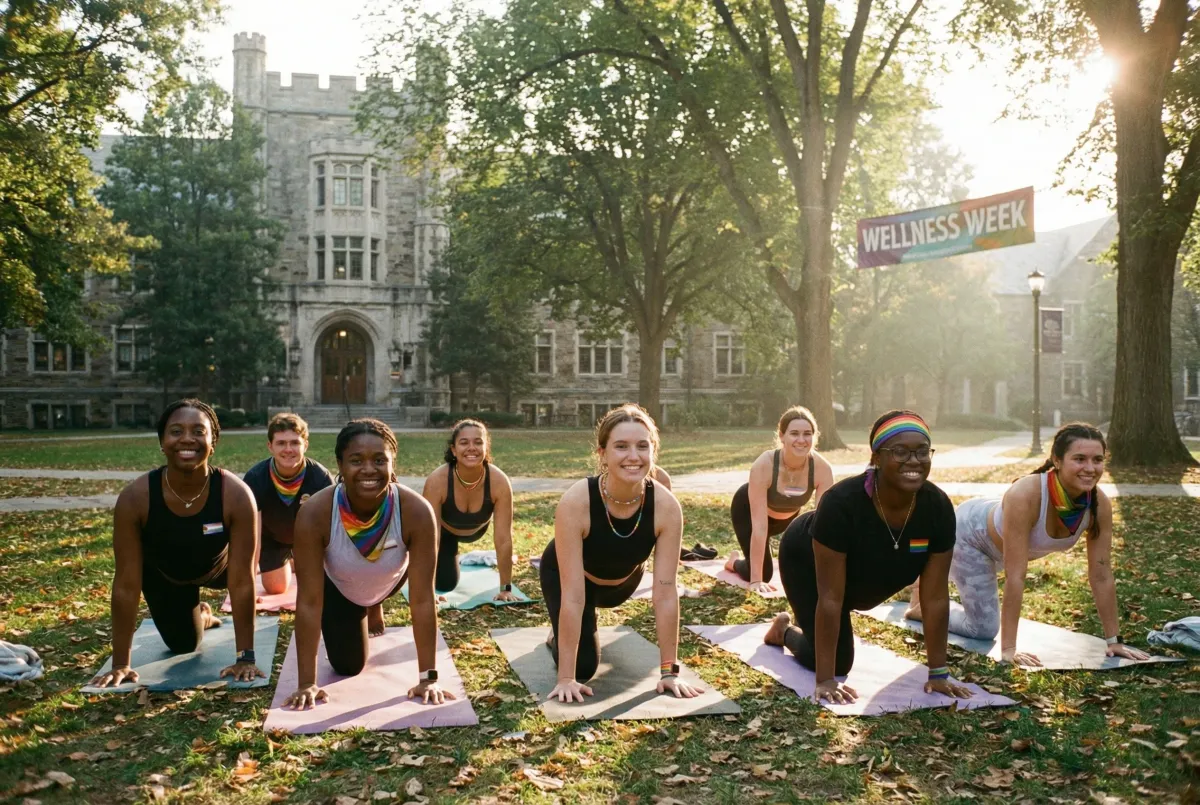
Move your body in ways that feel good. That might mean going to the gym, but it might also mean dancing in your room, taking a walk, or stretching. Exercise helps with mood, but only if you’re not punishing yourself with it.
Connect with community. Isolation is dangerous for LGBTQ+ people. Find your people, whether that’s through a campus LGBTQ+ center, an online community like TrevorSpace, a local support group, or even just one trusted friend who sees you completely.
Set boundaries. You don’t owe anyone information about your identity. You don’t have to educate people. You can walk away from conversations that feel harmful. Protecting your energy isn’t selfish—it’s necessary.
Journal. Write down what you’re feeling, what you’re grateful for, what you’re angry about. Getting thoughts out of your head and onto paper can help you process them.
Sleep, eat, hydrate. I know, I know—basic advice. But when you’re depressed or anxious, these fundamentals are often the first to go. Do what you can. Small steps count.
Building a Support System on Campus
Your campus probably has more resources than you realize. LGBTQ+ student organizations offer community and advocacy opportunities. Gay-Straight Alliances or similar groups can be lifelines. Campus Pride maintains a database of LGBTQ+-friendly colleges and can help you find resources at your school.
Safe space programs identify faculty and staff who have committed to being allies. Look for the stickers or placards on office doors—these are people who have at least some training and have explicitly said they want to support LGBTQ+ students.
Inclusive curricula matter too. When your classes acknowledge LGBTQ+ experiences, when your professors use inclusive language, when your textbooks don’t pretend everyone is straight and cisgender—it sends a message that you belong here. If your campus isn’t there yet, student advocacy can push for change.
For Allies: How to Support LGBTQ+ Student Wellness
If you’re reading this as an ally—thank you. Your support matters more than you know.
Listen without judgment. Don’t ask invasive questions about bodies or medical transitions. Use the names and pronouns people tell you to use, even if they’re different from what you expected. Speak up when you hear homophobic or transphobic comments, even when no LGBTQ+ people are around. Educate yourself rather than expecting LGBTQ+ people to teach you.
If you’re a faculty member or administrator, look at your policies. Do your forms allow for chosen names? Do your health services explicitly welcome trans patients? Is your curriculum inclusive? These systemic changes matter as much as individual kindness.
You Deserve to Be Well
I want to end with this: you deserve healthcare that respects you. You deserve mental health support that understands you. You deserve to feel safe, seen, and valued. The barriers exist, but so do people working to break them down. So do communities ready to welcome you. So do resources designed specifically for people like us.
If you’re struggling right now, please reach out. If you’re doing okay, check in on your friends. Build your support network before you need it. Take care of your body and your mind not because you have to earn the right to exist, but because you matter.
The world is changing. More providers are getting trained in LGBTQ+ health. More campuses are creating inclusive spaces. More people are speaking up against discrimination. We’re not there yet, but we’re moving. And you—you’re part of that movement just by being here, by surviving, by taking up space.
Your wellness matters. Take care of yourself. Ask for help when you need it. And know that there are people rooting for you, even if you’ve never met them.
If you or someone you know is in crisis, please contact The Trevor Project at 866-488-7386 or text “START” to 678-678. For trans-specific support, call Trans Lifeline at 877-565-8860.