Starting college is overwhelming for pretty much everyone. But if you’re LGBTQ+, there’s usually this extra layer of anxiety: Will I actually find my people here? Is there a place where I can be fully myself without filtering?
These worries make total sense. A study from the Point Foundation and UCLA’s Williams Institute found that nearly one-third of LGBTQ+ students experience bullying, harassment, or assault in college. That’s compared to less than 19% of non-LGBTQ+ students. The numbers are sobering.
But here’s what else the research shows: LGBTQ+ students who get involved with campus organizations report better mental health and feel more like they belong. Finding community isn’t just nice to have. It can genuinely change your college experience.
This guide covers what you actually need to know about navigating LGBTQ+ campus life—from tracking down the right organizations to building friendships that last beyond graduation.
Finding Your People: Where to Actually Look
Most campuses have more LGBTQ+ groups than you’d expect. The tricky part is knowing where to find them.
Check the LGBTQ+ Center First
If your school has a dedicated LGBTQ+ center or resource office, start there. These places are usually the hub of queer campus life. They keep lists of active student organizations, run events, and offer direct support. Even if you’re not ready to commit to a group, just stopping by can help you get a feel for the community vibe.
The staff typically know which groups are actually active versus which ones exist on paper but never meet. They can point you toward organizations that are genuinely welcoming to new members.
If your campus doesn’t have a dedicated center, check whether there’s a multicultural center, diversity office, or student affairs staff member who focuses on LGBTQ+ support. Sometimes these resources are housed within broader departments.
Hit Up Student Activities
Your campus student activities or student life office maintains the official list of registered student organizations. Ask specifically for LGBTQ+ groups or organizations focused on gender and sexuality.
Some campuses have dozens of options. You might find broad groups like “Queer Student Alliance” alongside more specific communities: organizations for LGBTQ+ students of color, trans and nonbinary groups, queer professional associations, and more.
Search Online
Most student orgs have some social media presence or use campus engagement platforms. Search Facebook, Instagram, or your university’s involvement app for LGBTQ+ groups. Many post meeting schedules, upcoming events, and photos that give you a sense of the group’s personality.
Ask Around
If you know any LGBTQ+ students on campus, ask about their experiences with different organizations. Personal recommendations tell you things a website can’t—like whether a group is actually inclusive or just talks a good game.
Types of Organizations You’ll Find
LGBTQ+ campus groups generally fall into a few categories:
General LGBTQ+ student organizations are your broad-based groups open to all queer students and allies. They host regular meetings, social events, and educational programming.
Identity-specific groups serve particular communities within the LGBTQ+ umbrella. Examples include Black Queer Students, Gaysians (for LGBTQ+ Asian students), trans and nonbinary support groups, asexual/aromantic spectrum groups, and queer religious organizations.
Professional and academic groups like oSTEM (for LGBTQ+ students in STEM) or business school pride alliances mix professional development with community building.
Social and activity-based groups focus on shared interests beyond identity—queer crafting clubs, LGBTQ+ gaming groups, campus drag organizations, that sort of thing.
Discussion and support groups are smaller, often confidential spaces focused on specific topics like coming out, transitioning, or navigating queer identity alongside other life challenges.
Taking the First Step: Actually Joining
Walking into a room full of strangers is hard. Here’s how to make it less daunting.
Start with Something Low-Stakes
Many organizations host open social events—game nights, movie screenings, casual meetups—that are perfect for newcomers. These let you get a feel for the group without committing to regular attendance or heavy involvement.
Some groups also offer “first-timer” programs or buddy systems that pair new attendees with current members. Don’t hesitate to ask if something like this exists.
Reach Out First
Most student groups list contact information online. Sending a quick email or DM asking about upcoming events breaks the ice. It also gives you a friendly face to look for when you show up.
Bring a Friend
If you’re nervous about going alone, see if someone will come with you. Having someone by your side makes that first meeting much easier.
Everyone Was New Once
Student organizations are used to welcoming new members. Most people there remember exactly what it felt like to walk in not knowing anyone. The community generally wants you to feel comfortable.
You Don’t Have to Be Out to Everyone
Many groups explicitly welcome students who are still exploring their identity or aren’t publicly out. Some even have specific programming for students in this situation. You get to decide how much you share and when.
Campus Events Worth Your Time
LGBTQ+ campus events offer some of the best chances for connection. Here’s what to look for throughout the year.
National Coming Out Day (October 11)
This annual celebration honors the process of coming out and raises visibility for LGBTQ+ identities. Many campuses host events ranging from panel discussions to parties. Some schools set up “coming out doors” where students literally walk through a door while sharing an identity that matters to them—whether that’s their sexual orientation, gender identity, or even being an ally.
LGBTQ+ History Month (October)
October is packed with programming celebrating queer history and culture. Look for film screenings, speaker series, workshops, and social events. These are great for learning while meeting people with similar interests.
Pride Month
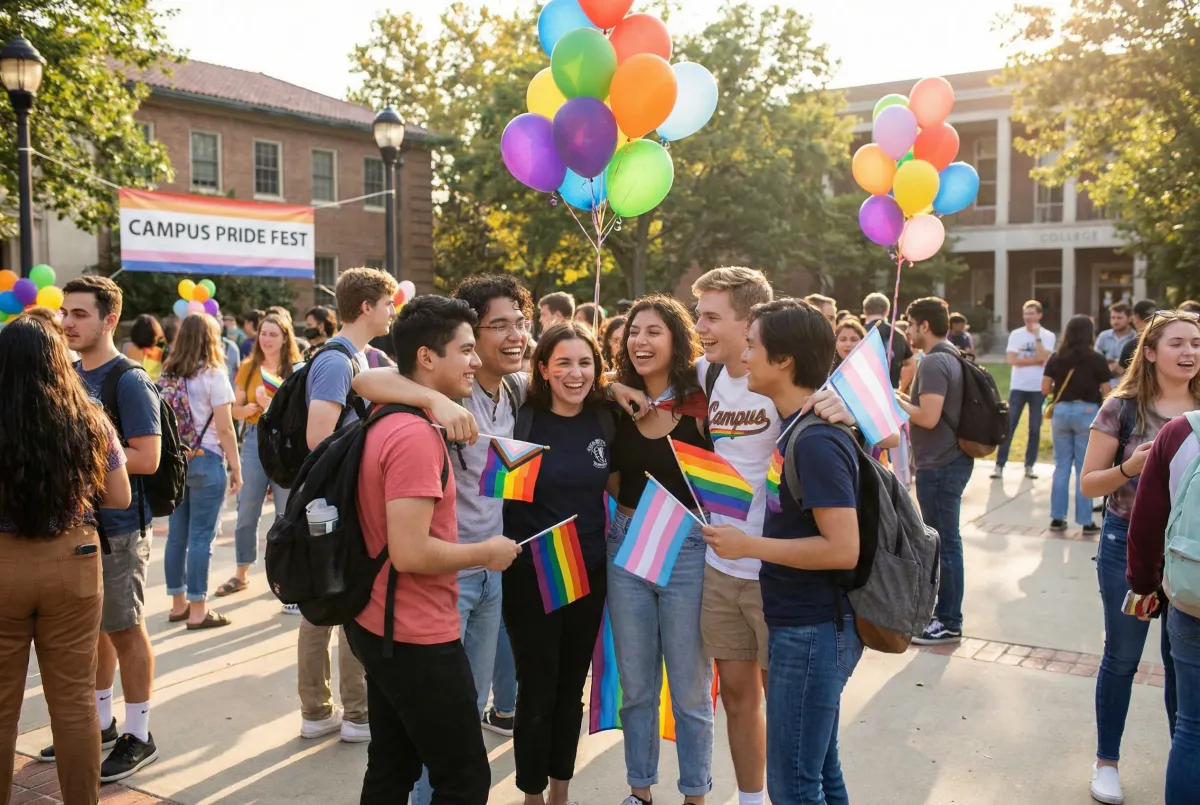
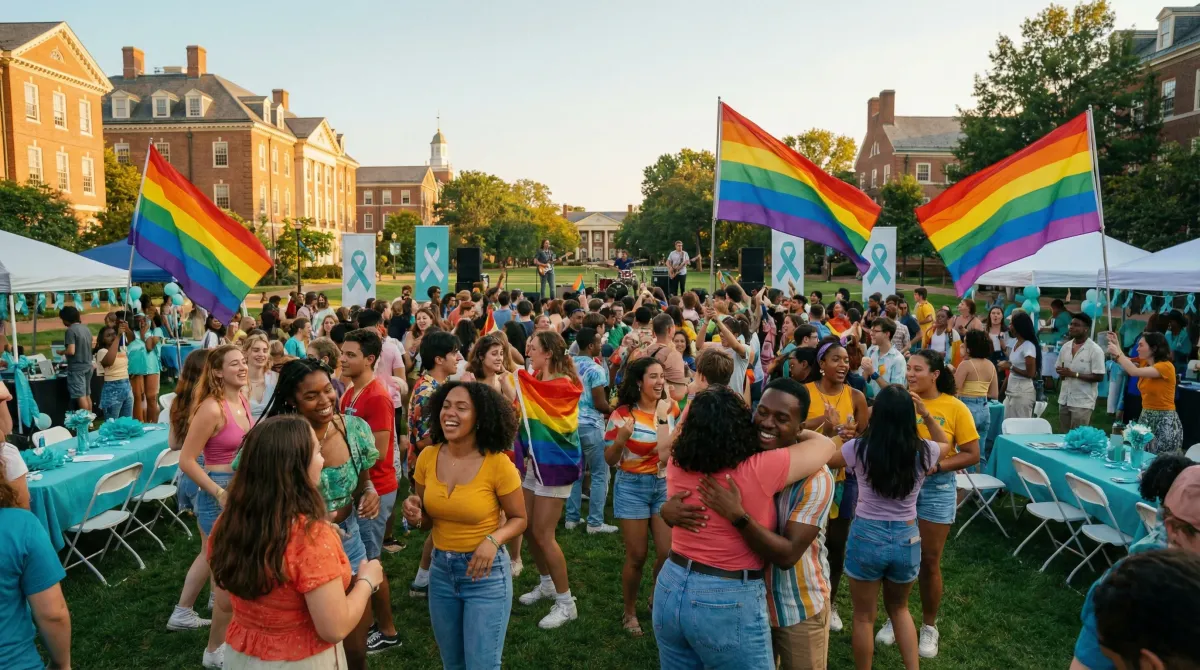
While Pride technically happens in June when most students are on summer break, many schools celebrate in April or May instead. Pride celebrations might include parades, festivals, drag shows, and community gatherings.
Lavender Graduation
This ceremony honors graduating LGBTQ+ students and their achievements. The name comes from lavender’s history as a symbol combining the pink triangle gay men were forced to wear in concentration camps and the black triangle designating lesbians—symbols later reclaimed by the community as badges of pride.
Even if you’re not graduating, attending helps you see the community’s legacy and connect with older students who can offer guidance. Many ceremonies include a keynote speaker, recognition of individual graduates, and a reception afterward.
Transgender Day of Visibility (March 31)
Events on this day celebrate trans and nonbinary people while raising awareness about ongoing discrimination. Look for panel discussions, film screenings, and community gatherings.
Ace Week (Late October)
This week raises awareness about asexual and aromantic identities—groups often overlooked in broader LGBTQ+ programming. It’s a good opportunity to learn and connect with the ace community.
Regular Programming
Beyond annual events, many organizations host weekly or monthly activities: discussion groups, social hours, craft nights, game tournaments. Regular attendance at these smaller events often leads to deeper connections than big celebrations.
Building Real Connections
Finding organizations and attending events is just the start. Building actual friendships takes more intentional effort.
Show Up Consistently
Community builds through repeated interaction. Try to attend events regularly rather than just dropping in once. People start to recognize you. Conversations continue from week to week. Casual acquaintances gradually become friends.
Consistency matters more than frequency. Going to one event every two weeks for a semester creates stronger bonds than attending five events in one week and then disappearing.
Get Involved Beyond Just Attending
Volunteering to help with events, joining committees, or taking on small leadership roles accelerates connection. Working alongside people builds bonds faster than sitting in meetings together.
Be Open to Different Connection Types
Not every interaction needs to become a deep friendship. Some connections might stay casual. Others might become study buddies or activity partners. A few might develop into close friendships. All of these have value.
Follow Up
When you meet someone you click with, suggest exchanging contact info or social media. Propose specific plans—getting coffee, studying together, attending another event. Taking initiative shows you’re interested in building the connection.
Explore Intersectional Spaces
Many students find their strongest connections in groups that honor multiple aspects of their identity. If you’re a queer person of color, a queer person of faith, or a queer person with a disability, look for organizations serving those intersectional communities. These spaces often provide understanding that broader LGBTQ+ groups might not.
Connect Online Too
Many campus LGBTQ+ communities have Discord servers, GroupMe chats, or other online spaces. These help you stay connected between events and get to know people in lower-pressure settings.
When Your Campus Falls Short
Not every school has robust LGBTQ+ resources. If you’re on a campus with limited options, you still have paths forward.
Start Something New
If there’s no organization for the community you need, consider starting one. Most campuses require just a few interested students and a faculty advisor to register a new group. Contact your student activities office to learn the process.
Starting a group takes work, but it also puts you in a position to shape exactly the kind of community you want to see. Organizations like GLSEN and the GSA Network offer resources specifically for students looking to build LGBTQ+ groups on campus.
Check Nearby Campuses
If your school is lacking, see if nearby colleges have more robust LGBTQ+ communities. Many events are open to students from other schools. You might also find regional gatherings that bring together students from multiple campuses.
Look Off-Campus
Most cities have LGBTQ+ community centers, youth groups, or social organizations that welcome college students. These can provide community even when campus resources are thin.
Build Informal Networks
Even without formal organizations, you can seek out other LGBTQ+ students. Social media, dating apps with friendship options, and even wearing LGBTQ+ symbols can help you find your people.
Protecting Your Energy
Building community matters, but it shouldn’t cost you your wellbeing.
Set Boundaries
It’s okay to step back from organizations or events if you’re feeling overwhelmed. You don’t have to attend everything or be involved in every initiative.
Find Balance
Your LGBTQ+ identity is important, but it’s not your whole identity. Make sure you’re also connecting with people who share your academic interests, hobbies, or other aspects of who you are.
Use Campus Resources
If you’re struggling with mental health, coming out, or other challenges, most campuses offer counseling services. Some even have LGBTQ+-specific support groups or counselors with expertise in queer issues.
Before disclosing personal information to any staff member, it’s worth asking whether they’re a “mandated reporter.” These individuals are required to report certain crimes, including sexual assault or harassment, which you may or may not want. Staff at LGBTQ+ centers should keep your conversations confidential, but confirming this upfront helps you make informed decisions about what to share.
Know When to Walk Away
If a particular group or person isn’t healthy for you, it’s okay to step back. Not every LGBTQ+ space will be right for every LGBTQ+ person. That’s fine.
Closing Thoughts
Navigating LGBTQ+ campus life is a journey. Some students find their community immediately. Others take months or even years. There’s no right timeline.
What matters is that you keep showing up—for yourself, and for the possibility of connection. The research is clear: LGBTQ+ students who find community have better mental health, stronger academic outcomes, and a more positive college experience overall.
Your people are out there. They might be in the LGBTQ+ center, at a student organization meeting, or at a campus event you haven’t tried yet. Take the first step. Send the email. Walk through the door.
Your community is waiting.