Congratulations. You made it to college.
Whether you’re excited, terrified, both, or neither, this first year is full of possibilities—and challenges. As an LGBTQ+ student, you have unique considerations that this guide will help you navigate.
This is your roadmap to thriving, not just surviving, your freshman year.
Before You Arrive
Research Your Campus
Before you step onto campus, do some reconnaissance:
LGBTQ+ Resources:
- Does your school have an LGBTQ+ center or pride alliance?
- What’s their social media presence like? (Active? Engaged? Welcoming?)
- Are there specific programs for incoming students?
Policy Review:
- Check your student handbook for non-discrimination policies
- Look into housing policies for transgender and nonbinary students
- Understand how name changes and pronoun usage work in your school’s systems
Community Connections:
- Search for LGBTQ+ student organizations
- Look for local LGBTQ+ community centers
- Find Pride groups on social media platforms
What to Pack
Beyond the usual dorm essentials:
- Pride items that make you feel good (flags, jewelry, stickers, clothes)
- Photos or mementos from people who love and support you
- Comfort items for tough days
- Books or media with LGBTQ+ representation
- Your favorite reminder of home
Mental Preparation
First year is emotional, even without identity stuff:
- Set realistic expectations—it takes time to adjust
- Build in time for self-care from day one
- Have a plan for tough moments
- Remember that struggling doesn’t mean failing
The First Weeks
Coming Out Decisions
You don’t have to come out in college just because you’re away from home. This is your decision, and you get to control the timeline.
Things to consider:
Why do you want to come out? Is it because you’re ready, or because you feel pressure? Coming out should feel like a choice, not an obligation.
Who do you want to tell? You don’t have to come out to everyone at once—or ever. Start with people you trust most.
What’s the worst that could happen? Think through scenarios so you’re prepared, but don’t let fear paralyze you.
What support do you have? If you come out and it goes badly, where can you go? Having a plan makes it easier to take risks.
Resources if you need support:
- Campus counseling center
- LGBTQ+ student organizations
- Trevor Project (866-488-7386)
- LGBTQ+ community centers
Finding Your People
Community doesn’t appear instantly. It takes time and effort:
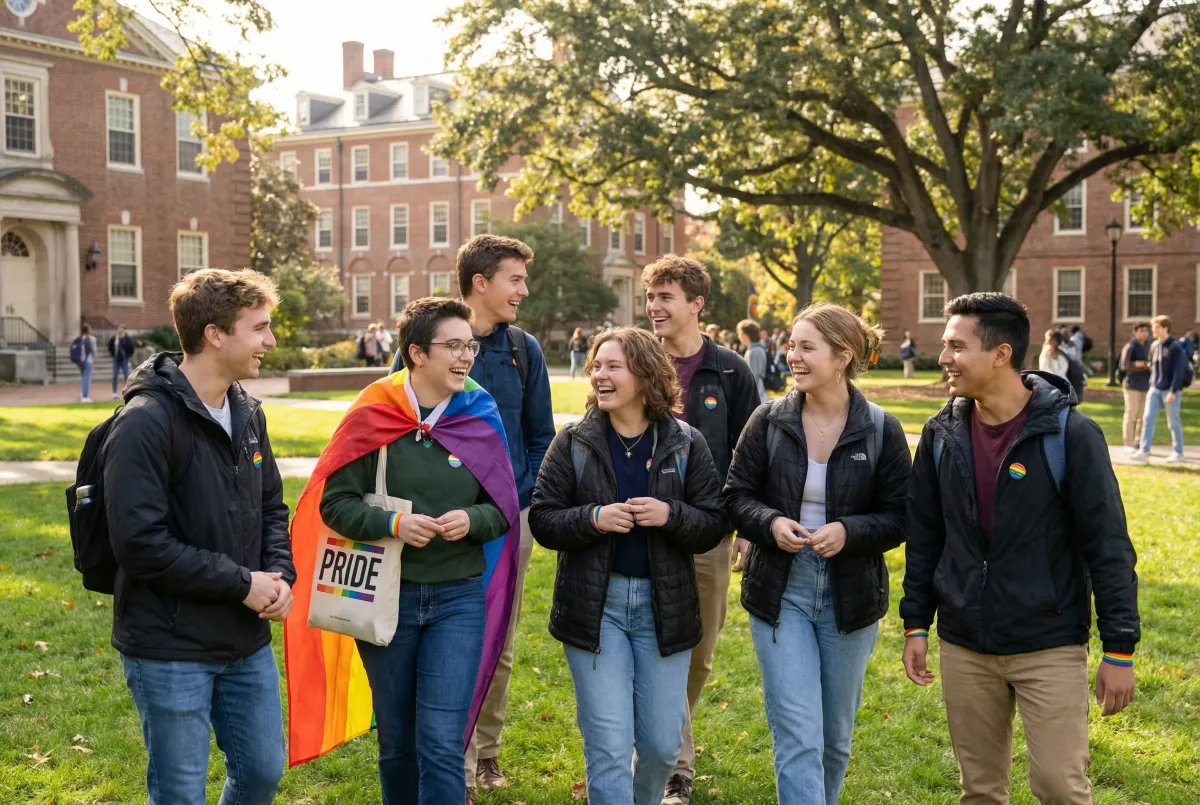
LGBTQ+ Organizations: Attend meetings early and often. Even if you’re shy, being present builds connections.
Identity-Specific Groups: Some campuses have groups for specific identities—trans students, queer women, LGBTQ+ people of color. These can offer targeted support.
Common Ground: Look for communities based on other interests—sports, arts, academics, religion. LGBTQ+ people exist everywhere.
Give it time: Making friends takes weeks or months. Don’t panic if you haven’t found your people by week three.
Navigating Your Dorm
Your living situation can significantly impact your experience:
Roommates: Most schools have processes for requesting accommodations if having a LGBTQ+-affirming roommate matters to you.
Privacy: If you’re not out to your roommate, you’re not obligated to share. Your identity is yours to share on your timeline.
Safety: If you ever feel unsafe in your dorm, report it. Your housing office and campus security exist to protect you.
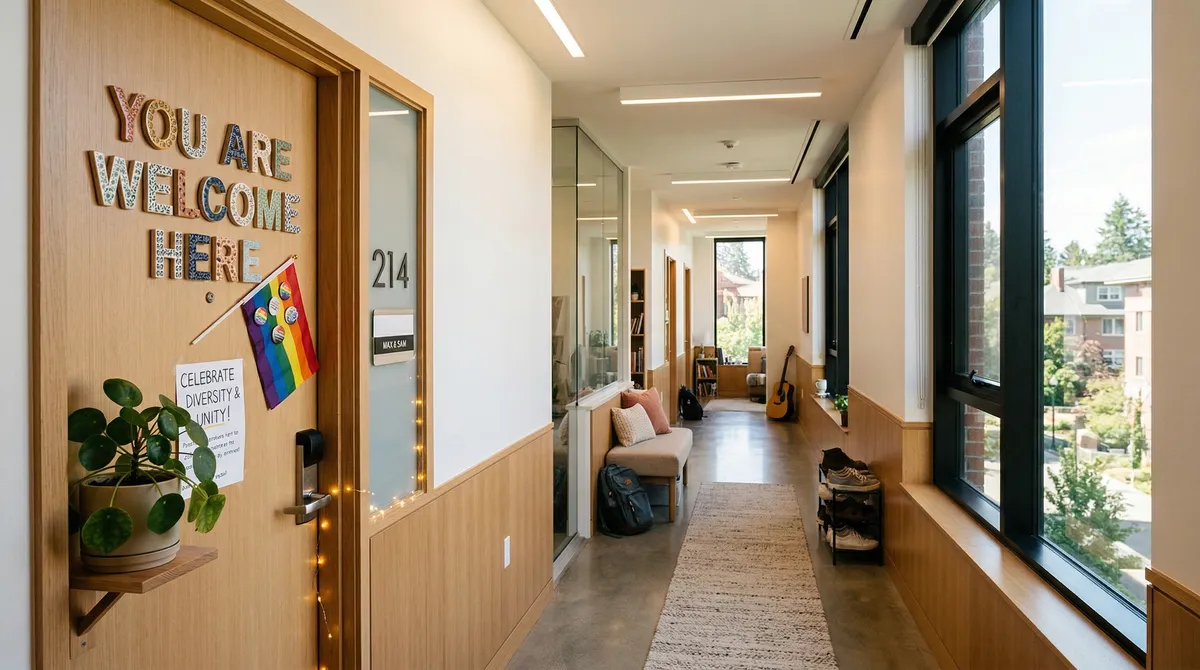
Creating your space: Make your dorm feel like yours. Pride flags, posters, photos—surround yourself with reminders of who you are.
Academic Success as an LGBTQ+ Student
Finding Affirming Faculty
Some professors will be allies; others won’t. Here’s how to navigate:
Research: Rate My Professor and similar sites sometimes include notes about inclusivity. Ask other LGBTQ+ students about their experiences.
Office hours: Visit professors you’re unsure about. You can often sense whether someone’s an ally from how they respond to you.
Diversify: Taking classes with multiple professors spreads risk and gives you more potential allies.
Name and Pronoun Challenges
Misgendering and deadnaming are painful. Here’s how to handle them:
Be proactive: Early in the semester, email professors or visit office hours to share your name and pronouns.
Correct gently: “Just a heads up, I use [name/pronouns]” usually works better than confrontation.
Document: If misgendering becomes harassment, you have records.
Escalate if needed: Most schools have procedures for addressing discrimination.
When Classes Cover LGBTQ+ Topics
Sometimes curriculum includes LGBTQ+-related content. Sometimes it doesn’t. Both can be complicated:
When it comes up: You might feel exposed, validated, or defensive. Take care of yourself.
When it doesn’t: Curriculum gaps can feel erasing. Consider talking to professors or advocating for more inclusive content.
Representation matters: Seek out classes, readings, or professors who center or include LGBTQ+ perspectives.
Social Life and Dating
The Party Scene
College social life often involves parties and alcohol:
Know your limits: Alcohol affects everyone, and being visibly intoxicated can make you vulnerable.
Buddy system: Go with friends, check in with each other, leave together.
Consent is key: Never assume anything about anyone’s desires. Check in clearly and respect all answers.
You don’t have to drink: Mocktails exist, and so does “I’m not drinking tonight.” Your choices are valid.
Dating as an LGBTQ+ Student
Dating can be complicated, especially when you’re figuring out your identity:
Go at your own pace: There’s no timeline for dating. You don’t have to date anyone until you’re ready.
Use apps safely: LGBTQ+ dating apps exist, but be cautious. Meet in public places, tell friends where you’re going.
Consent is everything: LGBTQ+ relationships aren’t different in this regard—enthusiastic, ongoing consent is always required.
Breakups happen: Not every relationship lasts. Treat your heart—and others’—with care.
Finding Community Outside LGBTQ+ Spaces
Your whole college experience doesn’t have to be about your identity:
Pursue your interests: Join clubs, play sports, make art. Being gay/trans/queer is part of who you are, not all of who you are.
Be open to straight allies: Not every friend needs to be LGBTQ+. Good people exist everywhere.
Integrate: The goal is a life where your identity is one of many facets, not the only thing that defines you.
Mental Health Support
Common Challenges
First year is stressful for everyone. LGBTQ+ students face additional stressors:
- Minority stress from discrimination or fear of discrimination
- Family rejection or complicated family dynamics
- Identity exploration and its associated uncertainty
- Academic pressure combined with social adjustment
Resources on Campus
Counseling services: Most colleges offer free counseling to students. Ask specifically about LGBTQ+-affirming providers.
LGBTQ+ centers: Many have peer support or can connect you with resources.
Health services: Physical health affects mental health. Make sure you have access to affirming care.
Crisis resources: If you’re in crisis, reach out:
- Trevor Project: 866-488-7386
- Crisis Text Line: Text HOME to 741741
- 988 Suicide and Crisis Lifeline: Call or text 988
Building Resilience
Self-care isn’t optional: Exercise, sleep, nutrition, connection—these aren’t luxuries.
Community is protection: LGBTQ+ students with supportive communities have better mental health outcomes.
Boundaries are healthy: You can limit time with people or situations that drain you.
Professional help is strength: Needing support isn’t weakness—it’s wisdom.
Navigating Family During First Year
Communication Strategies
Family dynamics can be complicated:
Set boundaries: You control how much you share. “I’m doing great in school” is a complete sentence.
Manage expectations: You don’t have to share everything. You don’t have to answer every question.
Protect your peace: If conversations become hostile, it’s okay to end calls, visit less frequently, or take breaks.
Holidays and Breaks
School breaks can mean returning home:
Plan ahead: Know where you can go if home becomes unsafe.
Have escape routes: Money for a bus ticket, friends you can call, hotlines you can text.
Create alternatives: Some students don’t go home for breaks. Find your community for Thanksgiving or winter break.
It’s temporary: Breaks end. You will return to your campus, your people, your life.
Processing Family Complexity
Not all family rejection is dramatic. Sometimes it’s subtle:
- Ignoring your relationships
- Misgendering or wrong-naming
- “Concern” framed as criticism
- Pressure to be different
These hurt too. Allow yourself to feel the pain without minimizing it.
Getting Involved on Campus
LGBTQ+ Organizations
Joining the campus pride group is one of the best things you can do:
Attend meetings: Go multiple times before deciding if it’s right for you.
Try different groups: Some campuses have multiple organizations with different vibes.
Get involved beyond meetings: Plan events, join committees, take leadership roles.
Bring friends: LGBTQ+ spaces welcome allies and friends of the community.
Beyond LGBTQ+ Groups
Your college has many organizations:
- Academic clubs related to your interests
- Volunteer and service organizations
- Athletic teams or fitness groups
- Religious or spiritual communities
- Arts and performance groups
Getting involved in multiple communities diversifies your support network and develops different aspects of yourself.
Leadership Opportunities
As you settle in, consider leadership:
Freshman year: Start by participating. Learn the landscape.
Sophomore year: Consider committee roles or smaller leadership positions.
Junior and senior year: Take on bigger roles, mentor newer students.
Leadership builds skills, looks good on resumes, and deepens your community connections.
What to Do If Things Go Wrong
Discrimination or Harassment
If you experience discrimination:
Document everything: Dates, times, what happened, witnesses.
Report it:
- Title IX office
- Dean of students
- LGBTQ+ center
- Campus security
You have rights: Federal and state laws protect you from discrimination.
It’s not your fault: Nothing you did justifies mistreatment.
Mental Health Crises
If you’re struggling:
Reach out: Counselors, friends, hotlines—there are people who want to help.
Be honest: “I’m not okay” is a complete sentence. You don’t have to explain.
Take it seriously: Crisis isn’t the time to tough it out.
Academic Struggles
If school is hard:
Ask for help: Tutoring centers, study groups, professor office hours—all exist to help you succeed.
Get accommodations: If mental health affects your academics, disability services may help.
It’s not failure: Needing support is normal. Many successful people struggled in college.
Your Rights and Protections
Know that you have legal protections:
Title IX: Prohibits sex discrimination, including based on gender identity
Non-discrimination policies: Most colleges have policies extending protection
Privacy rights: Your LGBTQ+ status is private—schools can’t disclose without consent
Housing rights: You have the right to safe housing consistent with your identity
Looking Ahead
First year sets patterns for your college experience and beyond:
Build habits that last: Self-care, community connection, help-seeking—these serve you for life.
Take risks: Try things you’re scared of. Join the group. Take the class. Talk to the person. This is your time to explore.
Be patient: Things won’t click immediately. Trust the process.
You belong here: You were admitted. You belong. Your identity is valid. Your presence makes the community better.
Quick Resources
Immediate Support:
- Trevor Project: 866-488-7386
- Crisis Text Line: Text HOME to 741741
- 988: Call or text
Campus Resources:
- LGBTQ+ Center
- Counseling Services
- Dean of Students Office
- Title IX Office
Online Resources:
- It Gets Better Project
- GLAAD
- Human Rights Campaign
College is an adventure. It’s also hard, sometimes lonely, and occasionally overwhelming. But you’re not doing this alone. Millions of LGBTQ+ students have navigated this before you, and millions will follow. We’re rooting for you.
Now go make the most of it.