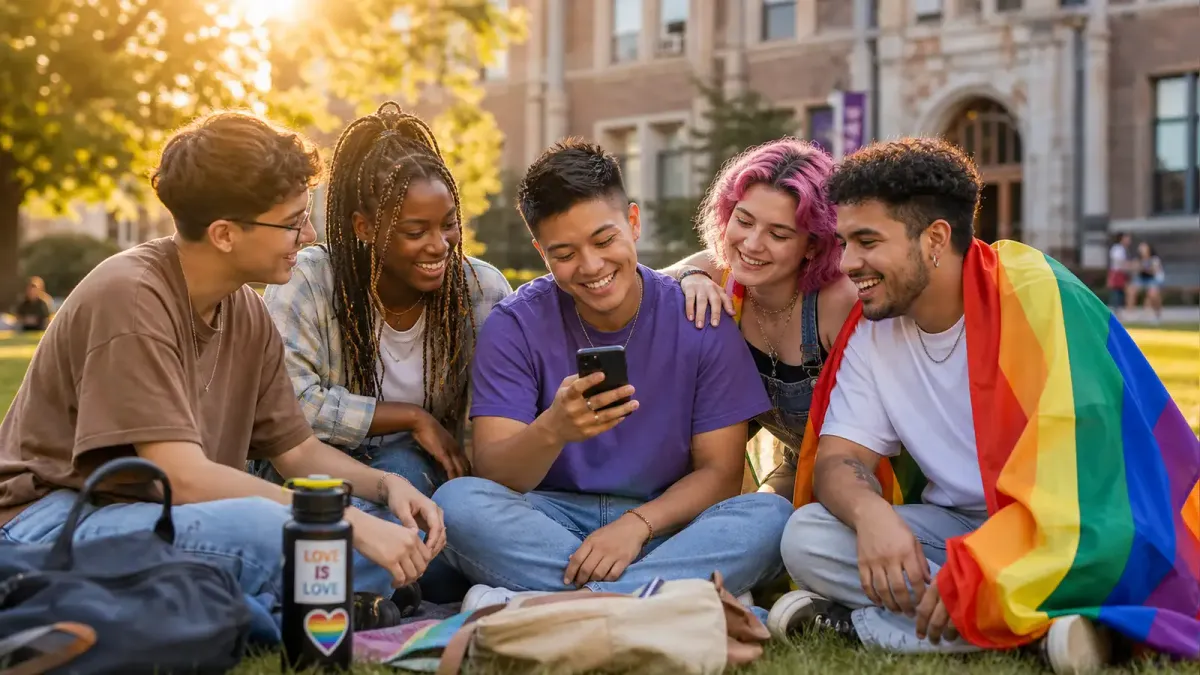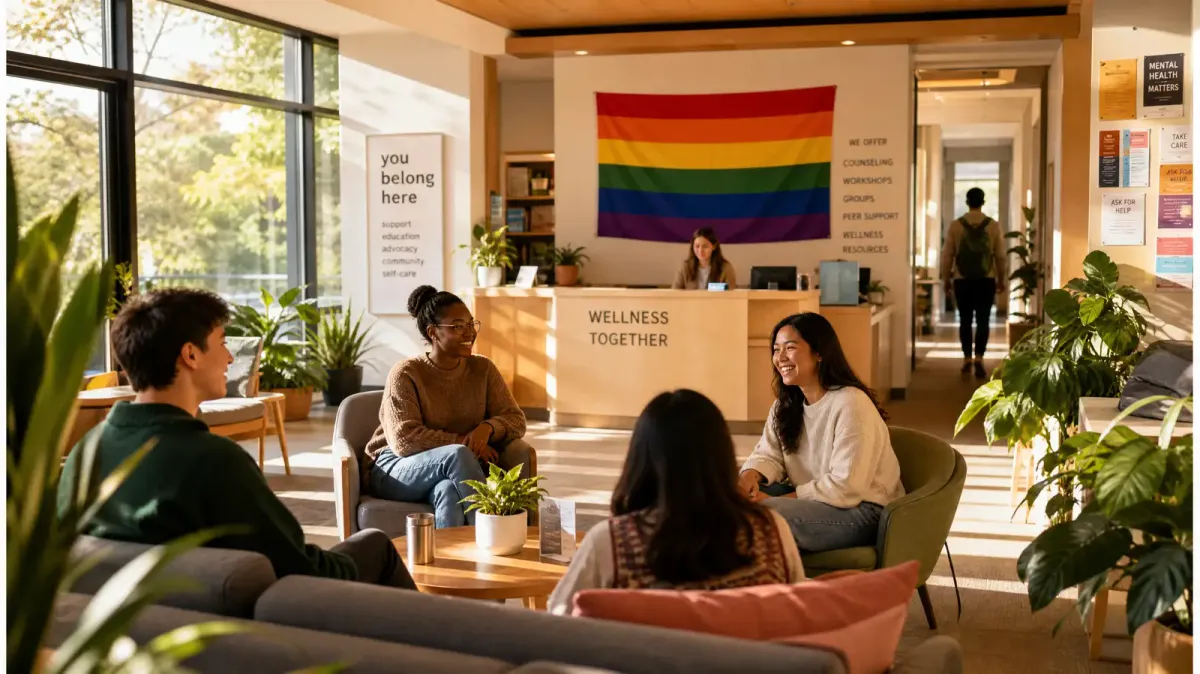
Several colleges and universities are redesigning their approach to LGBTQ+ student wellness, shifting from isolated counseling services to comprehensive support systems that tie mental health to housing, food security, financial aid, and community belonging.
The pivot comes at a moment when some institutions are quietly scaling back visible Pride programming, even as research continues to show that LGBTQ+ students face disproportionately higher rates of anxiety, depression, and housing instability compared to their peers.
CUNY’s LGBTQ+ Institute Signals Institutional Commitment
The City University of New York recently launched an LGBTQ+ Institute designed to centralize and strengthen support across its 25-campus system. Unlike standalone resource centers that operate with limited budgets and staff, the institute model embeds wellness services into institutional infrastructure — making them harder to dismantle when administrative priorities shift.
The timing matters. According to reporting from Inside Higher Ed, several colleges have dropped or reduced Pride Month displays this year, prompting student advocates to push for structural support that outlasts seasonal programming. An institute-level commitment ensures that LGBTQ+ wellness remains a line item in institutional budgets rather than an optional extracurricular.
Basic Needs Are Mental Health Issues
One insight emerging from campus wellness research is that basic needs — food, housing, transportation, childcare — cannot be separated from mental health outcomes for LGBTQ+ students. Chancellor Russell Lowery-Hart of Amarillo College, speaking about his institution’s wraparound support model, put it directly: “When we can remove basic needs barriers and make college affordable, students are much more likely to complete.”
LGBTQ+ students are more likely than their cisgender, heterosexual peers to experience food insecurity and housing instability, according to multiple studies from the Williams Institute and the Hope Center for College, Community, and Justice. A wellness program that offers counseling but ignores whether a student has a safe place to sleep or enough to eat is addressing only one layer of the problem.
Colleges building effective programs now pair mental health services with:
- Emergency grant funds that students can access within 48 hours
- Food pantries and meal-swipe sharing programs
- Housing-first initiatives for students facing family rejection
- Transportation assistance for off-campus medical appointments
- Childcare subsidies for LGBTQ+ student parents
Telehealth Expands Access for Students in Underserved Areas
The broader telehealth boom in mental health care carries particular weight for LGBTQ+ students at rural or religiously affiliated campuses where specialized in-person providers may not exist. Recent reporting from MobiHealthNews found that mental health leads all other categories in telehealth diagnoses across age groups and regions.
For LGBTQ+ students, telehealth means access to affirming therapists without relocating to urban centers. Several universities now contract with telehealth platforms that maintain directories of LGBTQ+-competent providers, ensuring students can find clinicians who understand minority stress, gender dysphoria, and the unique social pressures this population faces.
What Makes a Holistic Wellness Model Work
Campuses that report the strongest outcomes share a few common features:
Dedicated funding streams. Programs backed by permanent budget allocations survive leadership transitions. Grant-funded pilot programs often dissolve after two years.
Peer support integration. Formal peer mentoring programs complement professional counseling by giving students someone who shares their experience to turn to between scheduled appointments.
Data-driven service design. Colleges that track utilization rates by student demographic can identify gaps — such as low engagement from transgender students — and adjust their offerings accordingly.
Crisis response protocols. Clear pathways for students in acute distress, including after-hours hotlines and rapid-response counseling, prevent crises from escalating into withdrawals or worse.
The Research Backs Integrated Approaches
Multiple studies published in the past year have found that integrated wellness models — those combining mental health, basic needs, and community building — produce better retention and graduation rates for LGBTQ+ students than standalone counseling centers.
The mechanism is straightforward: a student who receives therapy but returns to a housing situation where they face harassment, or who attends support group meetings but cannot afford textbooks, will not see their wellbeing improve in any lasting way. Wellness is not a siloed experience, and campus programs are finally treating it that way.
For LGBTQ+ students navigating the college years, the difference between a resource center and a wellness ecosystem may be the difference between surviving and thriving.