College mental health services have a demand problem. Inside Higher Ed reported this May that student demand for counseling continues to outpace availability across campuses nationwide. For LGBTQ+ students, the gap is wider — not just because of overall wait times, but because finding a counselor who understands the specific stressors of navigating campus as a queer or trans person adds another layer of difficulty.
That doesn’t mean the resources don’t exist. It means you have to know where to look and, in some cases, how to build your own support network when the institutional options aren’t enough.
The Campus Counseling Reality
Most campus counseling centers offer a limited number of free sessions — typically six to twelve per semester — before referring students to external providers. That’s enough for short-term support but rarely enough for ongoing therapy. And when you factor in the reality that not every counselor on staff has training in LGBTQ+-specific issues, the effective number of sessions that feel genuinely helpful can be even lower.
A few things to keep in mind:
- You can ask for a specific counselor. Most centers let you request someone based on their stated areas of expertise. If the center’s website lists a counselor who mentions LGBTQ+ issues, gender identity, or minority stress, request them directly.
- Initial sessions are for assessment, not treatment. The first appointment is usually an intake — the counselor figures out what you need and matches you to the right level of care. Be upfront about what you’re looking for.
- If the wait is long, ask about crisis slots. Many centers hold a few same-day appointments for students in acute distress. You don’t need to be in crisis to benefit from the awareness that these slots exist.
Resources Beyond the Counseling Center
The counseling center is one piece of the puzzle. Here’s what else is usually available on campus — and how to access it:
LGBTQ+ Student Organizations
These groups are often the most accessible form of peer support. Regular meetings create a predictable space where you can talk through things with people who share your experience. The value isn’t therapeutic in the clinical sense, but isolation is one of the biggest risk factors for mental health struggles, and these groups directly counter that.
If your campus doesn’t have an LGBTQ+ student org, starting one is more straightforward than most students realize. The student affairs office typically has a process for registering new organizations, and you’ll often find faculty advisors who are eager to help.
Identity-Based Cultural Centers
Many universities have dedicated spaces — LGBTQ+ resource centers, multicultural centers, women’s centers — that offer programming, peer mentoring, and sometimes even short-term counseling from staff who specialize in identity-related stress. These are underutilized resources. Students who visit a cultural center even once per semester report feeling more connected to campus than those who never go.
Off-Campus Referrals
When campus counseling can’t meet your needs, the next step is usually an external referral. A few things that make this process easier:
- Check your student health insurance. Most student plans cover a certain number of off-campus therapy sessions. The insurance provider’s website usually has a directory of in-network therapists — filter by specialty to find ones who list LGBTQ+ care.
- Ask about sliding-scale clinics. University-affiliated psychology clinics often offer therapy at reduced rates, with graduate students providing services under licensed supervision. These clinics are more likely to have providers trained in minority stress and identity-affirming care.
- Online therapy platforms. Services like BetterHelp and Pride Counseling (which specifically serves the LGBTQ+ community) offer teletherapy that works around class schedules. These aren’t free, but they’re often more affordable than traditional private practice.
When the Institution Isn’t Supportive
Not every campus is equally welcoming. Some students find themselves at schools where the administration’s stated values don’t match the lived experience — where Pride Month goes unacknowledged or where policies around chosen names and pronouns are inconsistent.
In those situations, building external support becomes essential:
- Connect with regional LGBTQ+ organizations. Most cities and even many smaller towns have community organizations that offer support groups, social events, and mental health referrals. These exist independently of your campus and aren’t affected by its politics.
- Use online communities thoughtfully. Reddit’s r/LGBTeens, r/asktransgender, and similar spaces can provide peer support that a campus simply can’t. The caveat: they’re not a substitute for professional care, and the quality of advice varies. Use them for connection, not clinical guidance.
- Document everything. If you’re experiencing discrimination that’s affecting your mental health, keep records. Emails, policy documents, incident reports — these matter if you decide to escalate through the administration or file a complaint with the Office for Civil Rights.
What Wellness Looks Like When It’s Working
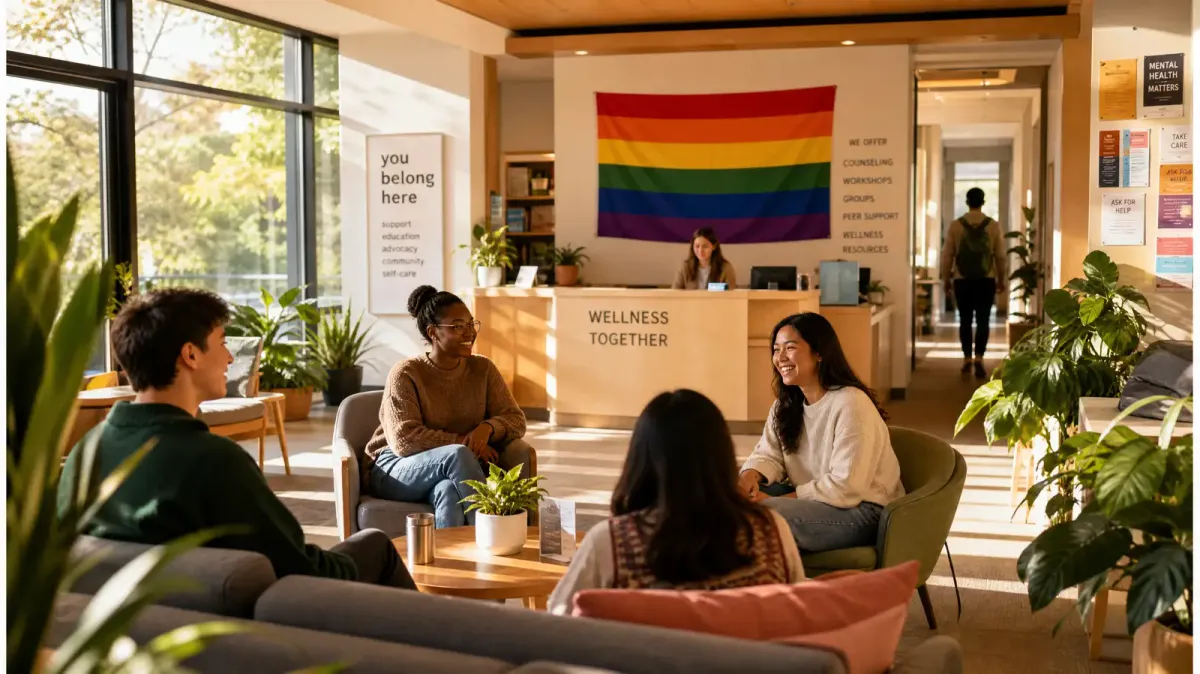
The best campus mental health support for LGBTQ+ students has a few common features:
- Affirming intake processes. Forms that include chosen names, pronouns, and gender identity options beyond a binary choice. This sounds small, but it signals something important about the environment you’re walking into.
- Staff training. Counselors who have received specific training in minority stress theory, gender-affirming care, and the unique challenges faced by queer and trans students of color.
- Integrated services. Mental health support that connects with other campus resources — academic advising, housing, health services — so that a student dealing with, say, housing insecurity and depression doesn’t have to navigate five different offices to get help.
The Bottom Line
Finding mental health support on campus as an LGBTQ+ student takes more effort than it should. The system isn’t designed perfectly, and in some places it’s actively hostile. But the resources are out there — in counseling centers, in student organizations, in off-campus clinics, and in the communities you build yourself.
Start with the counseling center. If it doesn’t work, try somewhere else. If nothing on campus fits, look outward. And if you’re the only person at your school asking for better support, you probably won’t be the only person who benefits when you get it.
Sources: