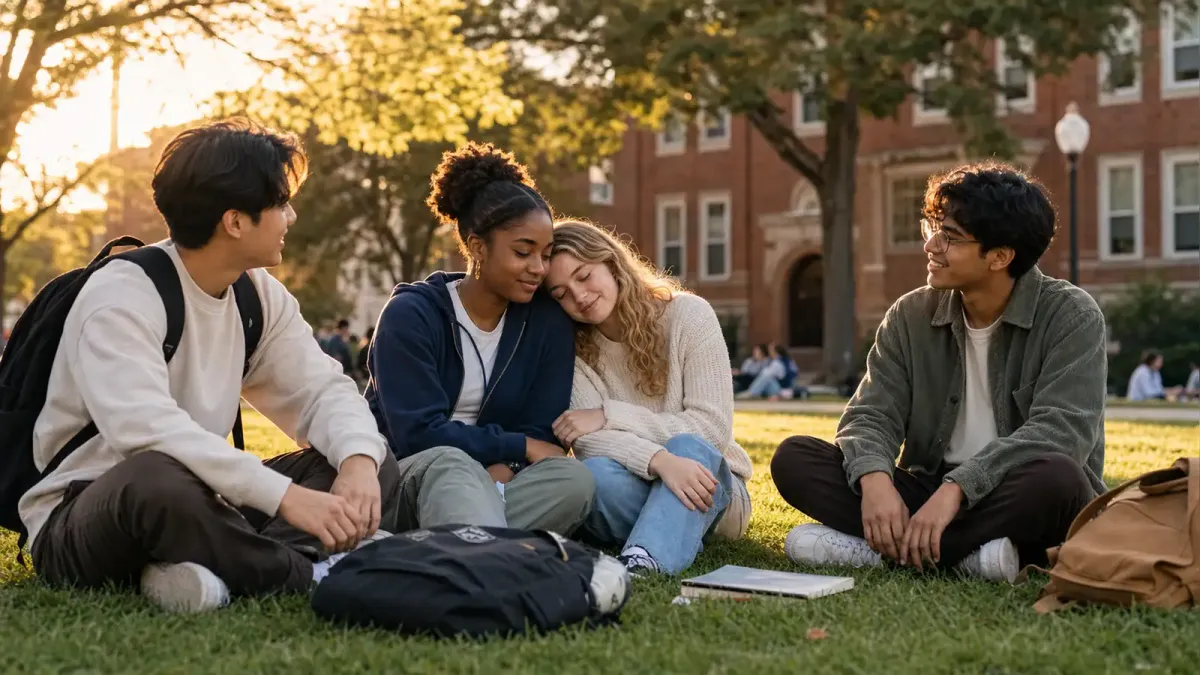
If you follow campus mental health coverage, you have heard the story: rates of anxiety, depression, and suicidal ideation among college students are soaring. Social media is destroying young people’s minds. Campuses are overwhelmed.
The first story is true. The second one has evidence behind it. But there is a third story buried in the data that gets far less attention, and it matters especially for LGBTQ+ students.
The Healthy Minds Study, an annual survey of more than 84,000 students across 135 colleges and universities, has now documented three consecutive years of improvement in rates of depression, anxiety, and suicidal ideation 1. The decline is modest but consistent. Justin Heinze, a principal investigator with the Healthy Minds Network at the University of Michigan, said the pattern is unmistakable: “sustained reductions tell me this is not a blip.”
He also noted, with some frustration, that these findings rarely generate headlines. The improvement story does not fit the crisis frame, so it gets left out 1.
Two things can be true at once
Before anyone reaches for a victory lap: 37 percent of students still report moderate-to-severe depressive symptoms. Eleven percent report suicidal thoughts. Those numbers are not fine 1.
And the averages conceal the disparities. Suicidal ideation among LGBTQ+ students remains substantially higher than among their non-LGBTQ+ peers. Racial disparities compound the problem — students of color who are also LGBTQ+ face additional barriers to accessing care 1.
Emergency department visits for self-harm and attempted suicide among young adults have genuinely worsened. But even here, interpretation matters. A single statistic rarely tells you whether you are seeing more suffering, more willingness to disclose, or more willingness to seek emergency care. As society talks more openly about mental health, young adults are more likely to share what they are going through with researchers — and that changes the numbers in ways that are easy to misread 1.
The improvement trend and the disparity data are not contradictory. They describe the same reality from different angles: mental health care on campuses is getting better for some students, but the gains are not reaching everyone equally.
Why some LGBTQ+ students do not seek care
A series of recent studies from Israel found that LGBTQ+ teens frequently avoid seeking mental and medical treatment, not because they do not need it, but because they fear being dismissed or inadequately treated by healthcare providers 2. The barrier is not access in the technical sense: a counseling center exists, appointments are available. The barrier is the real fear that the person on the other side of the door will not understand your life.
This pattern is not unique to Israel. LGBTQ+ students on American campuses report similar experiences: providers who conflate sexual orientation with mental illness, who ask invasive questions that miss the point, or who default to generic advice that does not account for the specific stressors of navigating campus life as a queer or trans student. A trans student seeking help for anxiety does not need a therapist who spends half the session asking about their transition timeline when the actual problem is an upcoming organic chemistry final.
The Israeli researchers concluded that specialized training could close the gap 2. It is a straightforward finding with straightforward implications: if you want LGBTQ+ students to use mental health services, the clinicians providing those services need to be trained to work with LGBTQ+ patients. Not as an add-on webinar. As core competency. The training needs to cover not just terminology but the actual experience of discrimination, family rejection, and the particular kind of exhaustion that comes from constantly weighing whether a new social environment is safe.
The social media factor, in court
More than 1,000 school districts across the United States, including the Los Angeles Unified School District, are now suing Meta, Google, TikTok, and other social media companies 3. The allegation: these platforms knowingly designed products that harm children’s mental health, and the cost of addressing that harm has been pushed onto schools, which have had to expand counseling, crisis intervention, and campus safety efforts.
The lawsuits are not just asking for money. Through a legal mechanism called injunctive relief, school districts are asking courts to force social media companies to redesign features that encourage compulsive use — infinite scroll, algorithmic recommendations, autoplay 3. If successful, this would change the apps themselves, not just attach a settlement check to them.
LAUSD board member Nick Melvoin compared the strategy to the district’s earlier fight against vaping and nicotine companies. The logic is the same: when a product is designed to be addictive and causes measurable harm, the manufacturer bears responsibility 3.
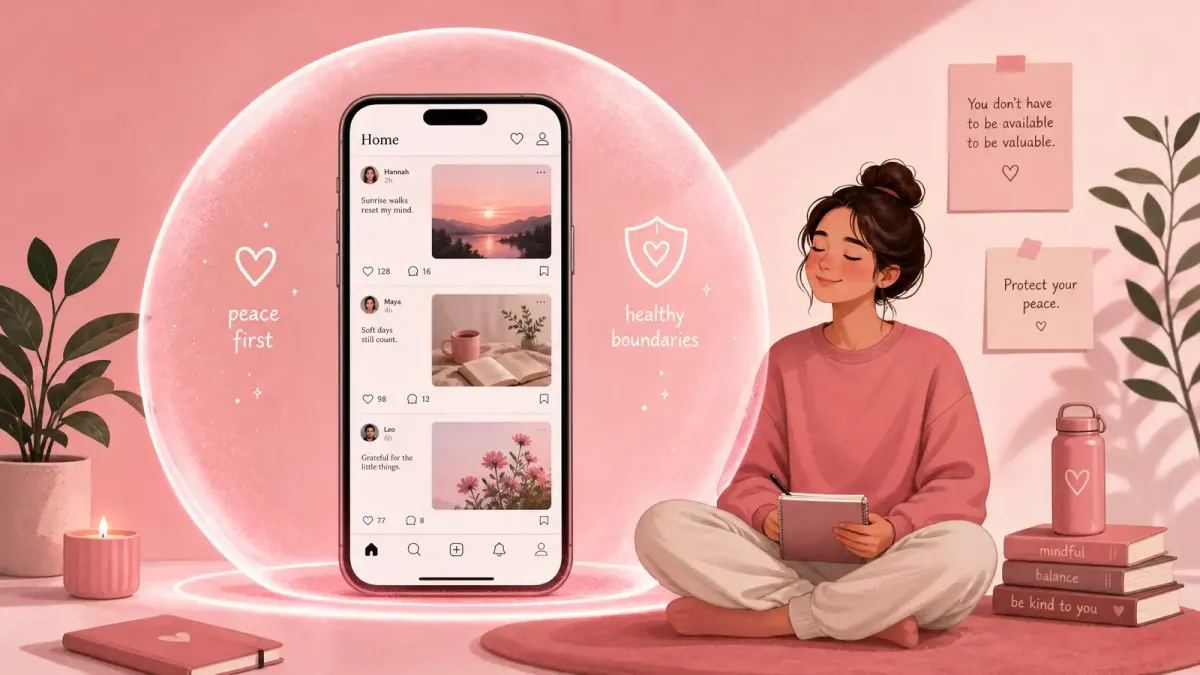
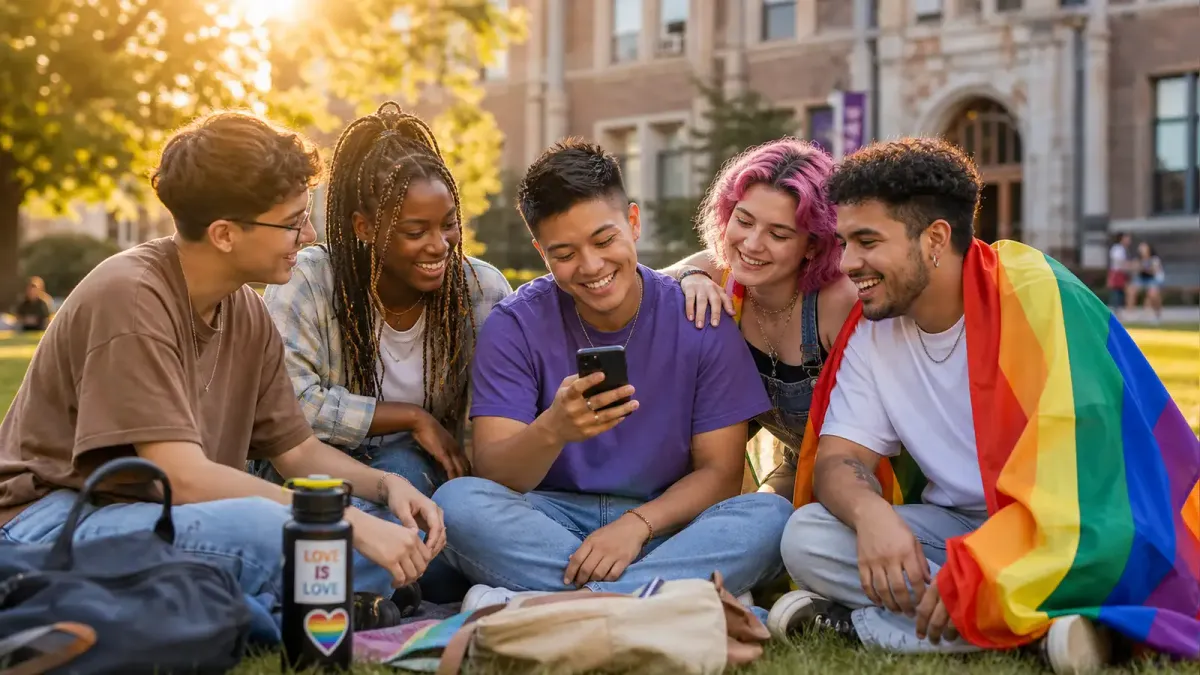
For LGBTQ+ students, social media is a complicated tool. It is a source of community and connection, especially for those who lack affirming spaces at home or on campus. A student in a small town with no visible queer community can find other people like them online in minutes. That is not trivial.
It is also a vector for harassment, comparison, and content that worsens anxiety and depression. The same platform that connects a trans teenager to a supportive community also serves them algorithmically-ranked content about anti-trans legislation, hate comments, and edited photos of people who seem to have perfect lives and perfect bodies.
A platform redesign that limits compulsive use without gutting the community-building functions is a delicate engineering problem. The lawsuits argue it is a solvable one: features like chronological feeds, meaningful time limits, and algorithmic transparency can reduce harm without removing the connective tissue that makes these platforms valuable to marginalized users 3.
What is actually moving the needle
The Healthy Minds improvement trend did not happen by accident. Something changed, and understanding what changed matters for deciding what to do next.
Increased mental health literacy is one factor. More students arrive on campus knowing the vocabulary to describe what they are feeling. They are more likely to recognize symptoms in themselves and more likely to tell someone. This shifts diagnosis rates upward, which looks like a crisis when plotted on a graph, but the underlying reality is that more people are getting identified and connected to care.
Expanded campus services are another factor. Over the past several years, colleges have invested in counseling centers, peer support programs, telehealth options, and crisis hotlines. Not every campus has done this equally, and not every student can access what exists. But the baseline is higher than it was five years ago. Campuses that once had one counselor for every 4,000 students now have two or three. The ratio is still inadequate, but it is less inadequate than before.
Telehealth deserves particular attention. For LGBTQ+ students on campuses in rural areas or conservative states, telehealth connects them to providers who are explicitly LGBTQ-affirming — providers they could not access locally even if they wanted to. The pandemic normalized remote therapy, and that normalization has quietly become one of the most significant structural improvements in mental health access for marginalized students.
The third factor is harder to measure but worth naming: the slow, uneven destigmatization of mental illness. Students who would have suffered in silence a decade ago are now more likely to tell a friend, visit a counselor, or call a hotline. This is real progress. It is also incomplete. Stigma still keeps many LGBTQ+ students from seeking help, particularly those from families or cultural backgrounds where mental health is never discussed. A student who grew up hearing that therapy is for weak people does not suddenly believe otherwise just because their RA put up a “mental health matters” poster.
What needs to happen next
The data points in a clear direction. The things that work are not mysterious.
Specialized training for campus mental health providers on LGBTQ+ competency. Not optional. Required. The small number of clinicians who already have this training are spread thin. Scaling it up is a budget decision, not a knowledge gap.
Structural changes to social media platforms. The lawsuits may force this through the courts. In the meantime, students can reduce harm by curating their feeds aggressively — unfollow accounts that trigger comparison or anxiety, follow creators who build up rather than break down — and by setting hard limits on scrolling time.
Peer support programs that are actually funded. LGBTQ+ students consistently report that talking to other LGBTQ+ students helps in ways that talking to even the most well-meaning straight or cisgender therapist does not. There is no clinical training that replicates the experience of having lived in a particular body with a particular identity. Formal peer support networks, with training and supervision, turn this informal reality into a reliable resource. A few campuses have built these well. Most have not tried.
Honest data reporting that includes both the crisis and the improvement. When journalists and researchers only amplify the worst numbers, they contribute to a sense of hopelessness that itself harms mental health. Students who believe things are only getting worse are less likely to seek help, because they assume it will not work. The data is complicated. Reporting on it should be too.
If you are an LGBTQ+ student reading this and the numbers feel abstract, here is what to hold onto: the trend line is not all doom. More students are getting care than ever before. More campuses are building services that did not exist five years ago. More people are talking openly about what they are going through. The improvements are real, measurable, and sustained across three years of data. None of this means the fight is over. It means the fight is working.
For campus-specific support resources, our guide on evaluating LGBTQ+ campus support walks through how to tell the difference between performative allyship and real services. If summer break has left you without your usual support network, maintaining wellness when campus resources are gone covers strategies for bridging the gap.
Footnotes
-
“Rethinking the campus mental health ‘crisis’,” The Journalist’s Resource, July 20, 2026. https://journalistsresource.org/education/mental-health-college-campus-3-things-journalists-should-know/ ↩ ↩2 ↩3 ↩4 ↩5
-
“Many Israeli LGBTQ Teens Fear Seeking Mental and Medical Healthcare, Studies Reveal,” Haaretz, July 6, 2026. https://www.haaretz.com/science-and-health/2026-07-06/ty-article/israeli-lgbtq-teens-fear-seeking-mental-and-medical-treatment-study-shows/ ↩ ↩2
-
“Schools are suing social media giants, seeking cash and redesigned apps,” Los Angeles Times, July 21, 2026. https://www.latimes.com/california/story/2026-07-21/school-districts-social-media-lawsuits-mental-health ↩ ↩2 ↩3 ↩4