The University of Utah threw a service night and called it suicide prevention. That is not a joke. It is also not a clinic.
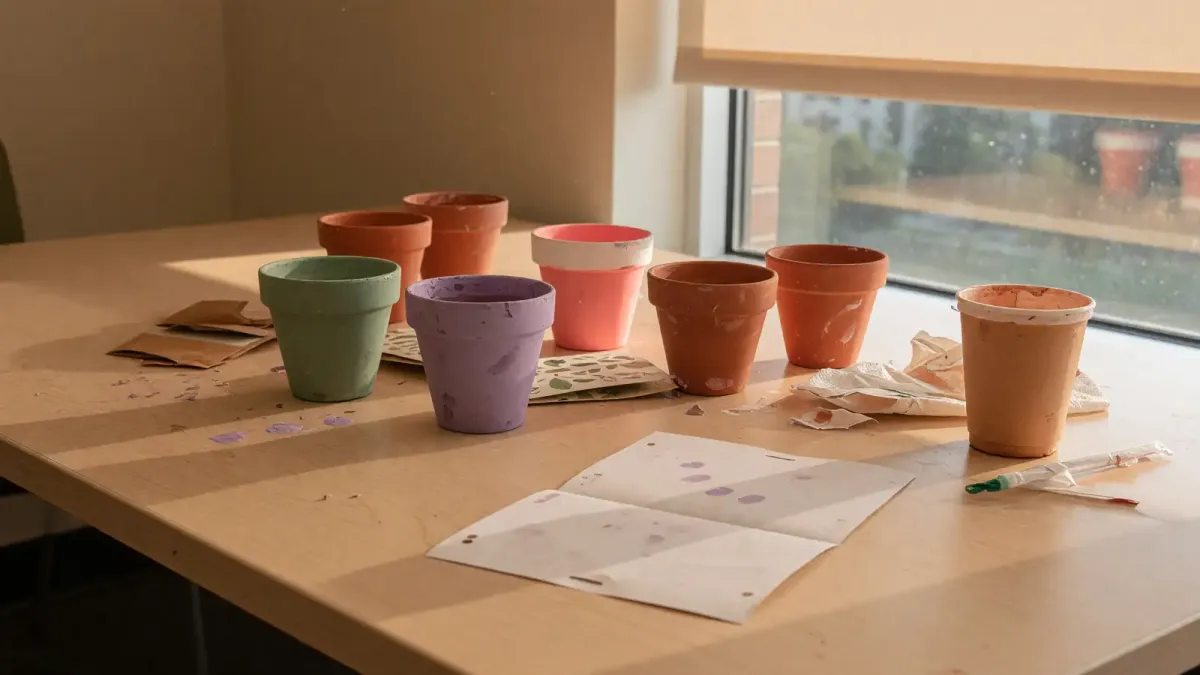
On September 10, The Daily Utah Chronicle reported a Service Corner Nite run by the Bennion Center with the Center for Campus Wellness. Students painted terracotta pots, dropped in seeds from Edible Campus Gardens, added a “plant buddy,” and packed the kits as a growth metaphor. Brett Paul, who manages community events, said student leaders “really gravitated towards the idea of growth and nurturing.” BobbiJo Kanter, the director, talked about a reciprocal relationship with community groups. The room was one of the community engagement spaces, not the counseling suite.
A queer student can use a night like that. You get a table that does not require you to disclose anything. You leave with an object. You have spoken to a person who is not taking notes for a chart. Then you still have the waitlist.
What the night actually built
Paul told the Chronicle that Service Corner Nites are mostly DIY and student-led. The suicide-prevention version existed because wellness staff mentioned the month and the volunteer office asked how to help. That sentence is the useful part. Two offices shared a room. A lot of campuses keep wellness in a medical building and volunteer work in a basement, and the students who need both never see the door.
The kits were for someone else. Recipients get a pot that looks like a student cared. Paul said that destigmatizes mental health. Maybe. A painted pot in a community fridge is a warmer object than a stack of tri-folds. It is still an object. If the person who gets the kit cannot get an appointment, the terracotta is a card.
Steal the collaboration, not the craft. Ask your LGBTQ resource center and your counseling center to share one evening on the calendar this month with a volunteer office. Food if you can. A named staffer who can say the after-hours number out loud. A sign-up sheet that is optional. If the only “prevention” on the calendar is a walk and a table of stickers, you have awareness. You do not have a pipeline.
We already mapped how 988 Press 3 sits next to the campus line and what a wellness center has to hold besides a rainbow sticker. Those pieces assume you can find the office on a Tuesday. Utah put the office next to paint.
988 on a parking sign is the other half
A day earlier, GovTech carried the North Carolina version. NCDHHS is printing 988 signs for state parking lots and giving the design away. The national 988 rollout in July 2022 came with $1.5 billion. SAMHSA’s count, quoted in the story: more than 26 million calls, texts, and chats since launch.
NAMI’s North Carolina people want the number on student IDs. Four state lawmakers, two Republicans and two Democrats, filed a bill in April 2025 to put 988 and the Warmline on student IDs, school websites, and calendars. GovTech says it has not had a committee read. That is a year and a half of a laminated idea going nowhere.
An April 2026 JAMA paper found suicide deaths among people 15 to 34 were 11 percent lower from July 2022 through December 2024 than before 988. The researchers would not say 988 caused it. Anyone who quotes the 11 percent as a campus win is doing PR.
For LGBTQ students the campus line still matters more than a parking-lot sign, because the parking lot does not know your name or your housing status. 988 is the backup when the campus line is a voicemail. Put both numbers on the ID. If student affairs says the ID is “too crowded,” they have room for a sports schedule.
Ask for the PDF of the sign. Ask whether 988 is on the back of the student ID, the housing emergency magnet, and the LMS login page. Those are inventory questions. They are harder to dodge than “do we care about Suicide Prevention Month.”
The waitlist is still the product
Worcester Business Journal reported on September 10 that Nichols College is launching a 60-credit, three-year mental health counseling master’s, hybrid, built to meet Massachusetts LMHC rules. Michelle Ledoux, the inaugural director, called the target “generalist counselors.” Nichols had 1,017 full-time students in fall 2025. The story is about a statewide outpatient shortage, not about Utes with paint.
It belongs in the same week because the kits and the signs are what you do when you cannot hire. A new master’s cohort will not sit in your counseling center this semester. If your campus is replacing clinicians with peer listeners and a plant night, name that. Peer listeners are a real layer. They are not a license.
Access still fails at the front desk. Affirming care is a separate filter: who is on the referral list after hours, whether the electronic record deadnames you, whether the session limit is six and the wait is eight weeks. A Service Corner does not change any of those numbers. It can change whether a first-year has spoken to a human in the wellness orbit before the crisis.
If you work in a student org, write down three facts this week:
- The after-hours number, campus and 988, both printed.
- The actual wait for a first counseling appointment, in days, from someone who booked this month.
- Whether the LGBTQ office and counseling share a staff meeting or only a Pride Month graphic.
Bring those three to student affairs. Do not bring a request for more terracotta.
How to copy Utah without the metaphor
You do not need Edible Campus Gardens. You need a room, a time, and two offices on the invite.
Keep the activity optional and short. People who are not ready to talk can still sit. People who need to talk should not have to glue seeds first. Have a staffer from counseling in the room who is not running the craft, so a quiet pull-aside is possible. That person should know the same-week crisis protocol, not just the month’s theme.
If your campus forbids naming LGBTQ students in wellness copy, run the night anyway and put the resource center hours on the table tent. The students who need the tent will find it. The ones who do not will paint a pot and leave. Both outcomes are fine.
Do not livestream faces. Do not require a check-in form that asks for a student ID unless you need it for room capacity. Prevention events die when they feel like attendance tracking.
Send leftover kits to the LGBTQ office, the international student office, and off-campus partners who already do housing and food. A pot in a closet of the volunteer center is inventory, not care.
What not to take from North Carolina
A parking-lot sign is cheap and correct. It is not a substitute for a bill that dies in committee. If your student government wants a win, the ID reprint is the win. Websites and calendars are a PDF and a CMS field. None of that requires a ribbon cutting.
Do not quote the JAMA 11 percent in a student senate resolution. Quote the 26 million contacts if you need a volume number, then say you cannot see how many of those were your campus. Ask counseling for their own after-hours volume. If they will not share it, that is data.
988 is a national line. Your campus still owes a local one. We already said Press 3 is a state backup. North Carolina’s signs do not change that sentence.
The Tuesday after the month
Suicide Prevention Month ends. The pots dry. The signs stay if someone bolted them down.
The test is the first Tuesday in October. Can a student walk into the LGBTQ office and get a same-day warm handoff, or a next-day appointment, or a documented reason why not. If the answer is “we had a great event in September,” the event failed.
Utah’s useful export is the shared room. North Carolina’s useful export is the number in physical space. Nichols is a reminder that the labor pipeline is slow. None of those replace a clinician who knows how to talk to a trans undergrad at 1 a.m.
What LGBTQ students should ask in the room
A Service Corner is built so you can sit without a speech. That helps if you are not out to the volunteer who is handing you soil. It fails if the only staffer in the room will not say “trans” when someone asks where to go after a roommate incident.
Before you copy Utah, ask the counseling partner three questions and get answers in writing:
- Do you have a same-week slot for students who show up from this event in distress, or is the next new-patient date in November.
- Who on the after-hours rotation has actually worked with trans and nonbinary students in the last year, not a module.
- If the electronic health record still prints a deadname on the after-visit summary, when is that patched.
If they cannot answer, the painted pot is a diversion. The Bennion night can still exist. It should not be the slide student affairs uses when a parent asks what you did for the month.
Queer students also use 988 differently than the parking-lot poster assumes. Press 3 and state-level LGBTQ options exist in some places and not others. Train the student leaders on what 988 will and will not know about campus housing. A national line cannot call your RA. Your campus line can. Put both on the table tent with one sentence each.
Nichols adding a three-year counseling master’s is good for Massachusetts in 2029. It does not staff your Pride office on Thursday. If your university is launching a similar degree, ask whether practicum students can sit in the resource center with supervision. That is a labor ask. It is more useful than another ribbon on a sign.
Keep the plant if it gets a first-year into a room. Keep the Chronicle’s detail that the night lived in a community engagement room, not a clinic hallway. Some students will not cross the student-health threshold. They will cross a volunteer threshold. Build the handoff at that door, then print the numbers, then count the wait.