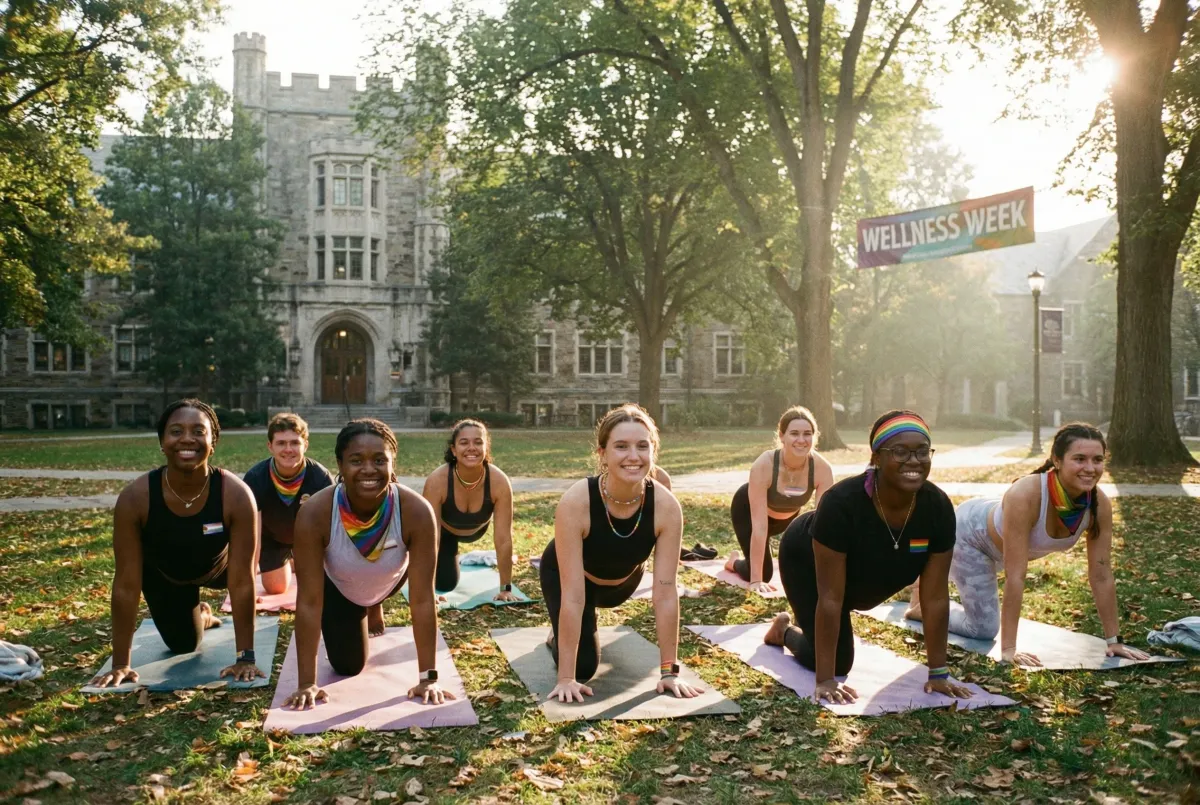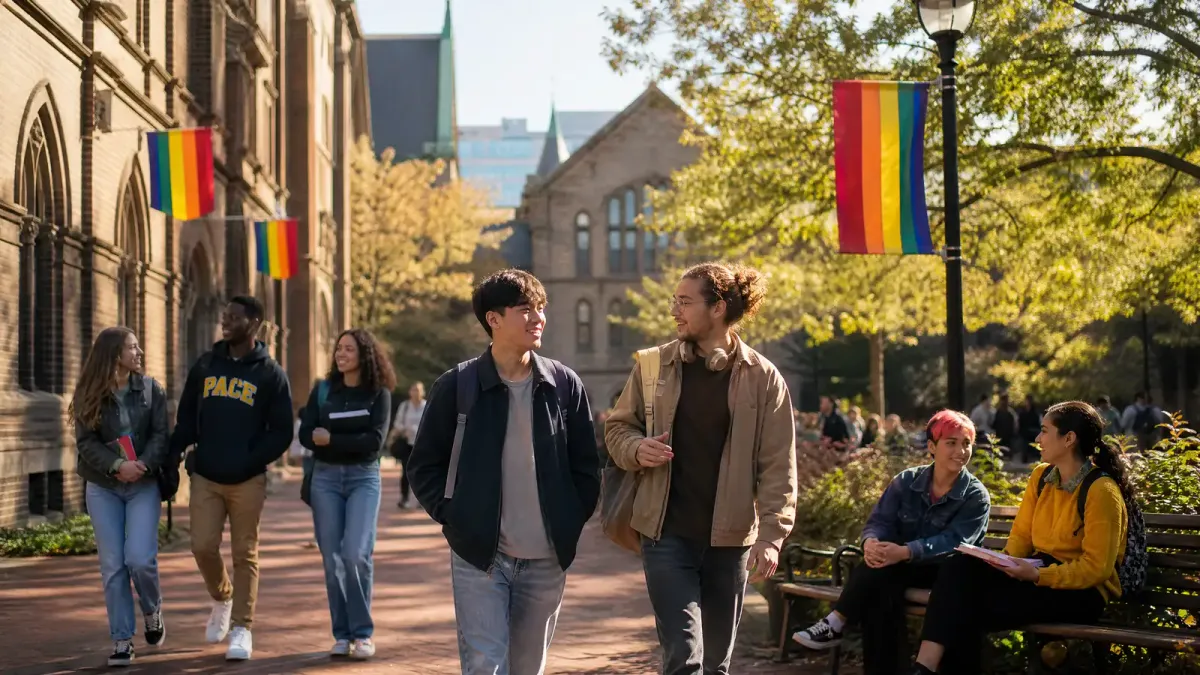
When a college student comes out, their mental health doesn’t just depend on their personal resilience. It depends on the climate of the campus they live on, the programs available to them, and whether the institution treats their wellbeing as an afterthought or a priority.
That’s not an opinion — it’s what the data keeps telling us, year after year, survey after survey.
The Research That Changes Everything
For the past seven years, The Trevor Project has been conducting the largest national survey on the mental health of LGBTQ+ young people. The 2026 results arrive at a moment when anti-LGBTQ+ legislation has reached unprecedented levels, making the data both more urgent and more revealing than ever.
The numbers are hard to ignore: LGBTQ+ youth who reported living in communities they described as “very accepting” attempted suicide at less than one-third the rate of those living in “very unaccepting” communities. That’s not a marginal difference. It’s a gap wide enough to reshape how we think about institutional responsibility.
Dr. Ronita Nath, vice president of research at The Trevor Project, puts it plainly: accepting environments don’t just feel nicer. They literally save lives. The protective effect of community acceptance is so strong that it cuts suicide attempt rates by roughly two-thirds — a magnitude that rivals many clinical interventions.
But here’s the part that should keep every campus administrator awake at night. Of the LGBTQ+ youth who actively sought mental health support in the past year, only 44 percent were able to access it. More than half of the students who reached out for help found the door locked.
That’s the gap campuses need to close.
Beyond the Counseling Center
For years, the standard institutional answer to student mental health was straightforward: point students toward the counseling center. But a growing number of campus leaders are realizing that approach doesn’t go far enough.
Zoe Ragouzeos, vice president for student mental health and well-being at New York University, has been making this case publicly for some time. In a recent conversation with Inside Higher Ed’s student success reporter Joshua Bay, she argued that colleges need to move beyond reactive, counseling-center-only approaches and embed wellbeing into the entire college experience.
Think about what that looks like in practice. Instead of waiting for a student to schedule an appointment after a crisis has already unfolded, the institution builds support into residence life, classroom culture, peer mentoring, first-year orientation, and campus programming. One approach reacts to crisis. The other prevents it.
NYU isn’t working in isolation on this. Across the country, universities are rethinking what student success actually requires when the data consistently shows that loneliness, food insecurity, and housing instability hit LGBTQ+ students harder than their peers. The question Ragouzeos raises is one that more institutions are being forced to answer with action, not just mission statements: what responsibility do colleges actually have in ensuring student wellbeing?
The Basic Needs Connection
One of the most underreported findings in student wellness research is how tightly mental health is bound up with basic material security.
A recent analysis from the Institute for Higher Education Policy found that Pell Grant recipients are nearly twice as likely to experience food insecurity compared to students who don’t receive the federal grant. For LGBTQ+ students specifically, the stakes are even higher. Studies have consistently shown that LGBTQ+ young people experience higher rates of family rejection, housing instability, and economic vulnerability. All of these factors compound mental health challenges.
When a student is worried about their next meal or where they’ll sleep over break, a weekly therapy appointment misses the point. The institutions that are making real progress have started treating basic needs support as mental health infrastructure.
Some colleges are experimenting with integrated models. Dax House, for instance, combines stable housing with case management and provides students with a permanent address they can use to connect with social services. Emergency housing programs that offer a few nights of shelter before sending students back into instability are treating symptoms. Dax House treats the cause. It’s not just a dorm. It’s an ecosystem of support that addresses the full chain of needs — housing, stability, access to services, and community.
What Works: Evidence-Based Approaches
The Trevor Project’s research points to several clear patterns about what actually helps LGBTQ+ students, and they’re worth taking seriously:
Community acceptance is the single most protective factor. The data consistently shows that students in accepting environments have dramatically better mental health outcomes than those facing rejection or indifference. This isn’t about teaching individual coping skills — it’s about changing the environment itself. Campuses that invest in LGBTQ+ student centers, visible ally programs, inclusive curricula, and anti-discrimination policies are essentially creating micro-environments of acceptance that mirror the protective effects the research documents at the community level.
Access is the real bottleneck, not availability. That 44 percent access rate tells a specific story. Many campuses have mental health services listed on their websites. The problem is that students can’t actually reach them. Barriers include long wait times for initial appointments, providers who lack LGBTQ+ competency training, appointment scheduling systems that don’t accommodate class schedules, and students who simply don’t know that services exist. The campuses that are closing this gap use peer navigation programs — training students to help other students find the right resources quickly and without stigma.
Peer support outperforms top-down interventions. LGBTQ+ students consistently report feeling more comfortable seeking help from peers who share their identities or experiences. Programs that pair incoming LGBTQ+ students with trained peer mentors see higher utilization rates than programs that rely exclusively on professional staff. This doesn’t mean replacing clinicians — it means building bridges between students and the services that exist.
CUNY’s Institutional Model
In April 2026, the CUNY Board of Trustees took a step that other university systems are watching closely: they unanimously voted to create the Institute for LGBTQIA+ Community Engagement and Public History, a formal institution dedicated to supporting LGBTQ+ students across all CUNY campuses.
Allie Brashears, who directs CUNY’s LGBTQIA+ Consortium, has described the consortium as one of the largest sources of LGBTQ+ programming support within the university system. The transition from a consortium to a formal institute means something concrete in budget terms: it strengthens the program’s ability to secure funding, apply for grants, and hire dedicated staff.
Here’s why that matters: it’s a structural solution to a structural problem. Instead of asking individual campuses within a large university system to build LGBTQ+ support from scratch — with varying levels of resources, commitment, and expertise — CUNY created a central institution that serves every campus. It’s a model that could be adapted by other large public university systems looking to provide consistent, well-resourced support to their LGBTQ+ students.
The Mental Health and AI Question
Campus mental health is also facing a conversation that didn’t exist five years ago: the role of artificial intelligence in student wellness.
The University of Utah has been at the forefront of this discussion. As reported by the Daily Utah Chronicle, the university has been developing a framework that uses AI to support — not replace — human-centered mental health services. Public AI tools aren’t equipped to handle the complexity of student mental health. Students who turn to chatbots instead of campus resources miss out on the human connection that actually helps.
For LGBTQ+ students specifically, this question carries extra weight. AI chatbots don’t understand the nuance of coming out in a hostile environment. They can’t recognize the subtle language patterns that suggest a student is in crisis. They can’t create the accepting community that the Trevor Project’s data shows is the single most protective factor for LGBTQ+ youth mental health.
Technology should support human judgment, not substitute for it. A counselor who understands a student’s experience, a peer who has walked a similar path, a campus community that actively affirms their identity — none of that can be automated.
What Students Can Look For
If you’re an LGBTQ+ student evaluating potential campuses, the research suggests there are specific questions worth asking — and specific answers worth listening for:
- Is there a dedicated LGBTQ+ resource center or staff member? Not just a student organization — an institutional presence with its own budget, physical space, and staff with decision-making authority.
- How are mental health providers trained? Ask whether counseling center staff have received LGBTQ+ competency training and whether they have providers who specialize in LGBTQ+ student issues. If the answer is vague, that’s information.
- What basic needs support exists? Food pantries, emergency housing, transportation assistance, and laundry access are all mental health infrastructure, even when they don’t look like it on the college website.
- Are students involved in wellness program design? Peer-led programs consistently outperform top-down interventions for LGBTQ+ students. Look for evidence that students have a voice in how services are structured.
- What does the broader campus climate look like? Acceptance can’t be confined to one building on campus. It needs to show up in classroom syllabi, residence hall programming, athletic department policies, and administrative messaging.
The Bottom Line
The research is consistent, and the message doesn’t leave much room for interpretation: where LGBTQ+ students study matters as much as what they study. Institutions that treat student wellbeing as a systemic responsibility are seeing results that the old counseling-center-only model never achieved. Housing, food security, curriculum, campus culture, and mental health services all factor in.
The Trevor Project’s seven years of data give us something that’s still rare in the wellness conversation: a measurable, evidence-based case for why accepting campus environments aren’t just the right thing to do. They’re clinically effective. They reduce suicide attempts, improve access to care, and make a difference you can actually measure.
For colleges still treating LGBTQ+ student wellness as an optional add-on, the numbers don’t leave much room for debate. The students who need support are showing up. The question is whether campuses are ready to meet them.
Sources: The Trevor Project National Survey on LGBTQ Youth Mental Health (2026); Inside Higher Ed reporting on CUNY’s Institute for LGBTQIA+ Community Engagement and Public History (June 2026); Inside Higher Ed Voices of Student Success podcast featuring Dr. Zoe Ragouzeos, VP for Student Mental Health and Well-Being at NYU (June 2026); Institute for Higher Education Policy analysis on basic needs insecurity; Daily Utah Chronicle reporting on human-centered mental health support at the University of Utah (June 2026).