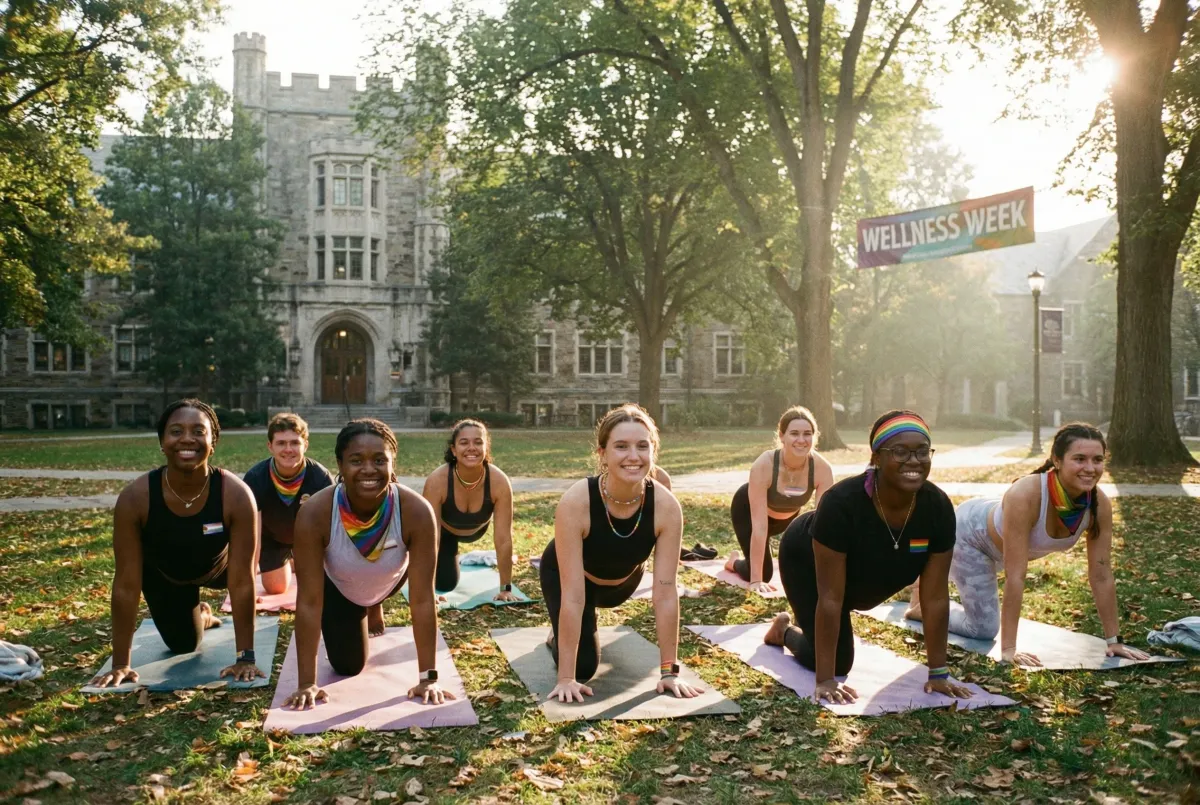
Self-care has become a buzzword, but for LGBTQ+ students, genuine self-care isn’t optional—it’s essential for survival and thriving.
This guide offers practical, research-backed self-care strategies specifically for LGBTQ+ students navigating the unique challenges of college life.
Understanding LGBTQ+ Self-Care
Why Self-Care Matters More for LGBTQ+ Students
LGBTQ+ students face elevated rates of mental health challenges, not because of who we are, but because of how the world treats us:
Minority stress:
- Chronic stress from discrimination and stigma
- Hypervigilance about safety
- Identity concealment when unsafe
- Internalized stigma
Higher rates of:
- Depression and anxiety
- Substance use challenges
- Suicidal ideation and attempts
- Trauma and PTSD
But community and self-care protect: LGBTQ+ students with supportive communities and strong self-care practices show dramatically better outcomes.
What Self-Care Actually Is
Self-care isn’t face masks and bubble baths (though those can help). Real self-care:
Is comprehensive:
- Physical health
- Mental and emotional health
- Social connection
- Spiritual and existential wellbeing
- Environmental safety
Is ongoing, not emergency-only:
- Daily practices, not crisis response
- Prevention alongside intervention
- Building resilience for future challenges
Is personalized:
- What works for others may not work for you
- Self-care is self-discovery
- Experiment and adjust
Physical Self-Care
Sleep
Sleep affects everything—mood, cognition, immune function, and resilience:
Sleep hygiene basics:
- Consistent sleep and wake times
- Cool, dark, quiet bedroom
- No screens one hour before bed
- Avoid caffeine after early afternoon
LGBTQ+-specific considerations:
- Nighttime can be when difficult emotions surface
- Sleep disruption from anxiety or nightmares is common
- Safe spaces help—dorm rooms where you can be yourself
- Consider sleep aids if recommended by a provider
Nutrition
Eating well supports mental health:
Practical approaches:
- Regular meals, even when busy
- Adequate protein and nutrients
- Stay hydrated
- Limit excessive caffeine and sugar
College challenges:
- Dining hall limitations
- Budget constraints
- Stress eating or undereating
- Food insecurity
Resources:
- Campus food pantries
- Nutrition counseling services
- Budget-friendly eating strategies
- Meal planning for busy students
Exercise
Physical activity reduces anxiety and depression:
Finding movement you enjoy:
- Not everyone loves the gym
- Dance, sports, hiking, swimming, yoga
- Walking to class counts
- Short bursts help
LGBTQ+-friendly options:
- LGBTQ+ sports leagues
- Inclusive fitness classes
- Outdoor activities
- Exercise with friends
Body Image
LGBTQ+ people often have complicated relationships with our bodies:
Specific challenges:
- Gay men and body image concerns
- Lesbian and bisexual women and body standards
- Transgender and nonbinary dysphoria
- Effects of discrimination on self-image
Working toward body neutrality:
- Bodies are vehicles, not decorations
- Movement feels good regardless of appearance
- Seek media with diverse bodies
- Challenge harmful standards when you can
Mental and Emotional Self-Care
Mindfulness and Meditation
Mindfulness practices reduce stress and improve emotional regulation:
Starting practices:
- Five-minute daily practice
- Apps like Headspace or Calm
- Guided meditations online
- Campus mindfulness programs
LGBTQ+-specific considerations:
- Some meditation traditions have problematic histories
- Seek inclusive teachers and communities
- Adapt practices to your needs
- Body-based practices may be especially helpful
Therapy and Professional Support
Professional mental health support is a form of self-care:
Finding affirming providers:
- Campus counseling centers
- LGBTQ+-specialized therapists
- Identity-specific providers (QT therapists of color)
- Community mental health centers
Types of support:
- Individual therapy
- Group therapy
- Support groups
- Psychiatric services if needed
Making the most of therapy:
- Give it time to work
- Advocate for your needs
- It’s okay to switch providers
- Homework and practice between sessions
Coping with Discrimination
Discrimination happens. How you process it matters:
Immediate response:
- Remove yourself if safe
- Ground yourself physically
- Reach out to trusted support
- Document if appropriate
Processing:
- It’s okay to feel upset
- Process with trusted people or professionals
- Don’t minimize your experience
- Remember: it’s about them, not you
Long-term strategies:
- Build community that affirms you
- Limit exposure when possible
- Channel pain into purpose
- Advocate for change
Managing Internalized Stigma
We all absorb societal messages. Managing internalized homophobia, biphobia, and transphobia is ongoing work:
Recognizing internalized stigma:
- Hating parts of your identity
- Assuming others are prejudiced
- Compulsive heterosexuality or cisgender assumptions
- Self-blame for discrimination
Working through it:
- Affirming community exposure
- Therapy, especially identity-affirming
- Celebrating LGBTQ+ role models
- Journaling and self-reflection
Social Self-Care
Building Community
Social connection is fundamental to LGBTQ+ wellbeing:
Finding your people:
- LGBTQ+ student organizations
- Chosen family relationships
- Identity-specific groups
- Interest-based communities
Quality over quantity:
- Deep connections matter more than many acquaintances
- Some friends for different purposes
- Community spaces matter
Setting Boundaries
Boundaries protect your energy:
Types of boundaries:
- Time boundaries (when and how you engage)
- Emotional boundaries (what you share and with whom)
- Physical boundaries (personal space, touch)
- Digital boundaries (social media, availability)
Practical boundary-setting:
- “I can’t talk about this right now”
- “I’m not going to that event”
- “I need some time alone”
- “That comment isn’t okay with me”
Managing Family Relationships
Family can be source of both pain and support:
Different situations need different approaches:
- Some students have accepting families
- Some have rejecting families
- Most have complicated situations
Strategies for complicated families:
- Limit contact that harms you
- Create communication boundaries
- Build chosen family
- Process grief for relationships you wanted but can’t have
Conflict in LGBTQ+ Communities
Even our communities can have conflict:
Navigating drama:
- Not everyone will like you
- Different opinions exist
- It’s okay to step back
- Multiple communities exist
When conflict harms:
- You don’t have to engage
- Seek mediation if helpful
- Protect your peace
- Some people aren’t worth the energy
Spiritual Self-Care
Defining Spirituality for Yourself
Spirituality means different things:
Secular approaches:
- Connection to nature
- Meaning through relationships
- Personal values and ethics
- Community and belonging
Religious approaches:
- Many faith traditions welcome LGBTQ+ people
- Reconciling communities exist
- Your spirituality is yours to define
- Walking away is okay if your tradition hurts you
Practices That Nurture Spirit
Whatever spirituality means to you:
Nature connection:
- Time outdoors
- Hiking, gardening, being in green spaces
- Ecological or climate spirituality
- Seasonal awareness
Contemplation:
- Meditation and prayer
- Journaling and reflection
- Mindful practices
- Silence and solitude
Service:
- Helping others
- Volunteering
- Activism and advocacy
- Contribution to community
Environmental Self-Care
Creating Safe Spaces
Your physical and social environments matter:
Dorm or apartment:
- Make it yours
- Pride items and affirming media
- Safe people in your space
- Things that bring you joy
Campus navigation:
- Know safe spaces and people
- Identify allies and support
- Avoid known unsafe areas
- Have exit strategies
Digital environments:
- Curate social media
- Unfollow harmful accounts
- Follow affirming content
- Set screen time boundaries
Financial Self-Care
Financial stress affects everything:
Practical steps:
- Know your resources and limits
- Budget realistically
- Seek financial aid and scholarships
- LGBTQ+-specific scholarships exist
Mental management:
- Money anxiety is real
- Community resources help
- You won’t be poor forever
- Worth isn’t net worth
Crisis Self-Care
When Things Get Hard
Crisis moments require specific tools:
Immediate coping:
- Grounding techniques (5-4-3-2-1)
- Safe person to call
- Crisis hotlines
- Physical safety first
After crisis:
- Process what happened
- Reach out for support
- Adjust your practices
- Seek professional help if needed
Crisis Resources
Know these resources before you need them:
Immediate crisis:
- Trevor Project: 866-488-7386
- 988 Suicide and Crisis Lifeline
- Crisis Text Line: Text HOME to 741741
Campus resources:
- Counseling Services 24/7 line
- On-call dean
- Campus security
- Trusted professor or staff
Longer-term support:
- Regular therapy
- Support groups
- Medication if appropriate
- Ongoing assessment
Building a Self-Care Practice That Lasts
Starting Small
Don’t try to do everything at once:
Pick one practice:
- Start with one self-care activity
- Make it tiny and sustainable
- Five minutes of walking
- One conversation with a friend
- One healthy meal
Build from there:
- Add practices gradually
- Adjust based on what works
- Check in regularly
Adapting to Circumstances
Self-care changes with life:
During stress:
- Simplify
- Prioritize essential practices
- Ask for help
- Be gentle with yourself
During stability:
- Build more practices
- Experiment with new approaches
- Deepen existing practices
- Share with others
During transitions:
- Keep core practices
- Adapt to new circumstances
- Find community in new places
- Be patient with adjustment
Making Self-Care Accessible
Barriers are real:
Time:
- Integrate self-care into existing routines
- Five minutes matters
- Combine activities (walk with friend)
Energy:
- Low-energy self-care exists
- Rest is self-care
- Ask others to help
Money:
- Free self-care options
- Campus resources
- Community programs
LGBTQ+-Specific Self-Care Wisdom
From Community Elders
LGBTQ+ people have developed survival wisdom:
Chosen family is real family: Build relationships that nourish you.
Joy is resistance: Celebrating ourselves is radical.
We survive: Our ancestors survived. We are their legacy.
Community heals: Isolation harms. Connection heals.
Daily Affirmations
Consider these truths:
- My identity is valid.
- I deserve love and belonging.
- My feelings are legitimate.
- I am not responsible for others’ prejudice.
- I can grow and change.
- My past doesn’t define my future.
- I am worthy of care.
- Asking for help is brave.
- I am not alone.
- Thriving is possible.
Resources
LGBTQ+-Affirming Services
- Trevor Project: thetrevorproject.org
- GLMA Provider Directory
- National Queer and Trans Therapists of Color Network
Apps and Online
- Headspace, Calm, Insight Timer
- LGBTQ+ specific apps
- Crisis text lines
On Campus
- Counseling Services
- LGBTQ+ Center
- Health Services
- Peer Support Programs
Moving Forward
Self-care isn’t selfish. It’s not optional. It’s the foundation from which everything else grows.
As an LGBTQ+ student, you’ve already shown resilience just by being here. Adding intentional self-care practices can help you not just survive but thrive.
Start today. Start small. Be consistent. Adjust as needed. And remember: you deserve care.
The world needs the full, healthy, thriving you. Take care of yourself so you can continue this journey—and so you can contribute your gifts to the world.
You matter. Your wellbeing matters. Your thriving is possible.