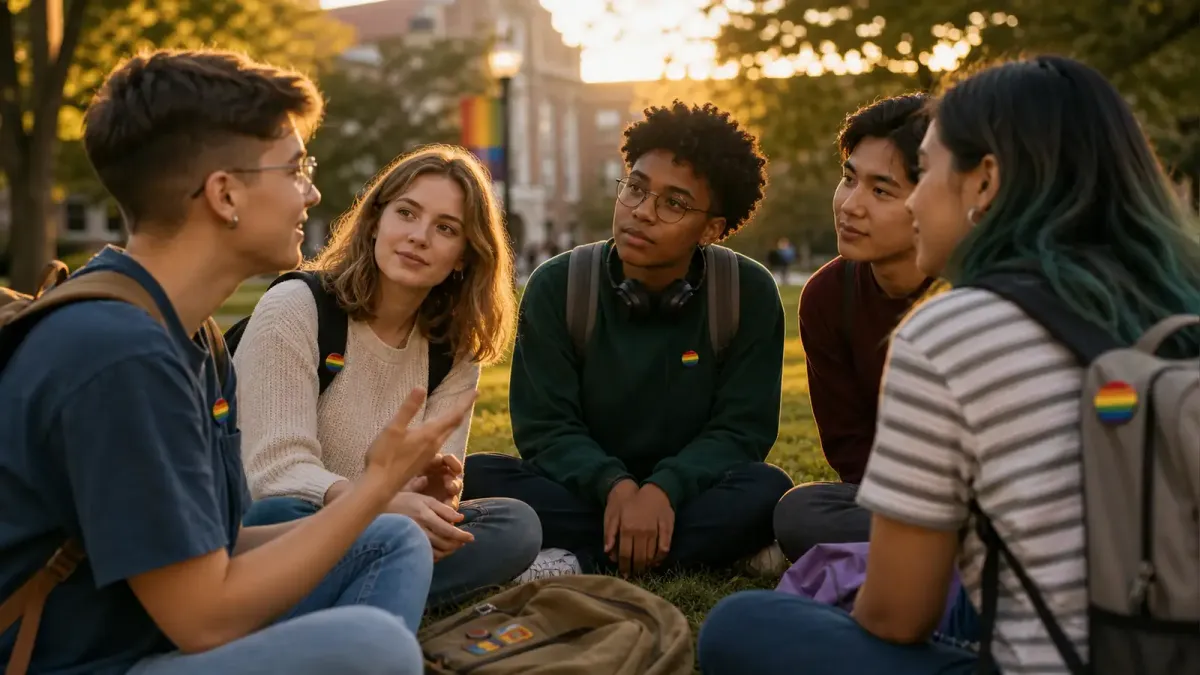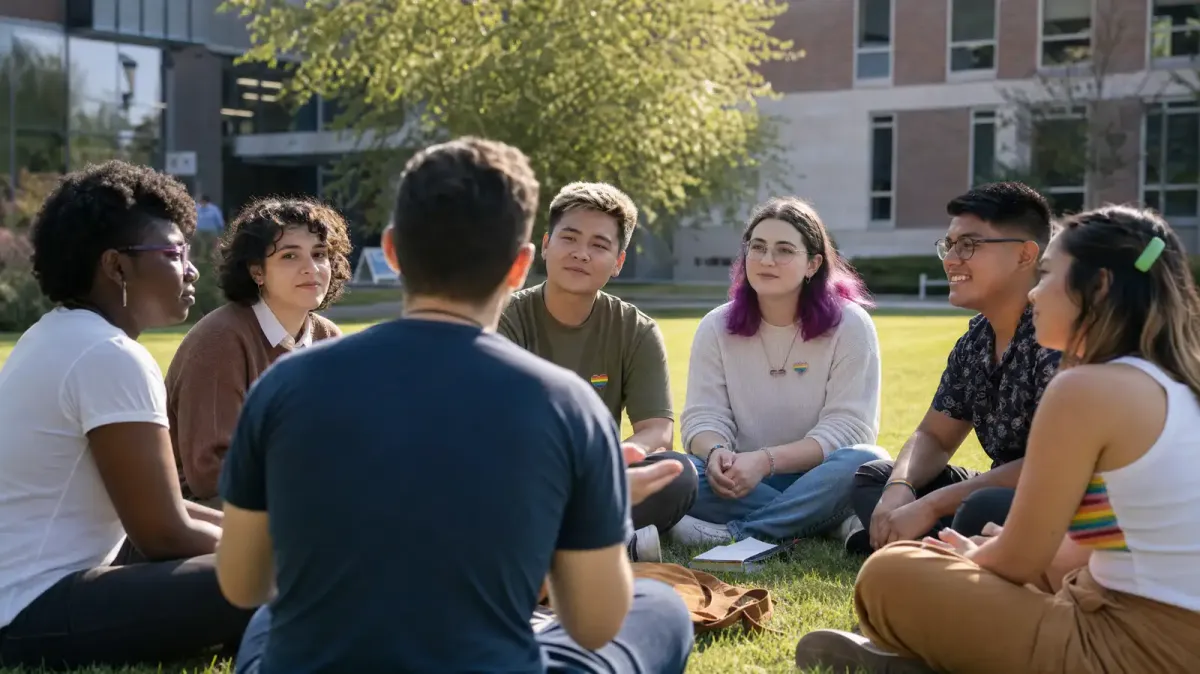
If you’re an LGBTQ+ student on a college campus, you already know that connection isn’t a luxury. It’s a lifeline. When the rest of the world doesn’t always feel safe, when family dynamics complicate things, or when navigating identity feels like walking through a minefield, having people who actually get it makes all the difference.
That’s where peer support programs come in.
These aren’t just feel-good club meetings. They’re structured, often professionally supervised programs designed to connect LGBTQ+ students with peers who share similar experiences. The research is clear: students with strong social support handle discrimination better, experience less depression and anxiety, and are more likely to graduate. Peer support is one of the most effective ways to build that support system intentionally.
This guide walks you through what peer support programs are, why they work, how to find them on your campus, and how to make the most of them whether you’re a freshman or a senior.
Why Peer Support Works
Peer support works for a simple reason: shared experience. When someone else has walked the same path, their understanding isn’t theoretical. It’s real. Dr. Jennifer T. Tran, a postdoctoral fellow with the Eidos LGBTQ+ Health Initiative at the University of Pennsylvania, explains that peer support provides a safe space where LGBTQ+ individuals can share experiences with others who have inherent understanding. That shared understanding impacts feelings of belonging, decreases isolation, and directly improves mental health.
A 2025 study published in PLoS One surveyed 218 LGBTQ+ youth and found that more than 80% emphasized the importance of having someone to confide in. Three-quarters expressed a desire for deeper connection with other LGBTQ+ individuals. These numbers aren’t abstract statistics. They represent real students sitting in dorm rooms wondering if anyone else feels the same way they do.
Peer support also acts as a buffer against the harmful effects of discrimination. Research published in Social Sciences by Cabral and Pinto found that social support reduces the impact of discrimination on internal shame, depression, and anxiety among LGBTQ+ individuals. Having peers who affirm your identity literally changes how you process negative experiences.
Types of Peer Support Programs
Peer support programs come in many shapes. Understanding the landscape helps you choose the right fit for your needs.
Peer-Led Support Groups
These are perhaps the most common form of peer support. Groups typically meet regularly, either weekly or biweekly, and are facilitated by trained student leaders. The University of Michigan runs an LGBTQ+ Peer Led Support Group, for example, created in partnership between two on-campus departments. These groups provide a structured space to discuss shared experiences, navigate identity challenges, and build community in a confidential setting.
Some groups are identity-specific, focusing on trans and nonbinary students, queer students of color, or asexual and demisexual students. Others are open to the broader LGBTQ+ community. Both types offer different benefits. Identity-specific groups allow deeper exploration of particular experiences, while broader groups expose you to the full diversity of the LGBTQ+ community.
Mentorship Programs
Formal mentorship programs pair newer or struggling students with more experienced peers who provide ongoing guidance. These relationships typically span an academic year and include regular check-in meetings. A mentor might help you navigate campus resources, provide advice on coming out, assist with academic planning, or simply serve as someone who checks in regularly to see how you’re doing.
Informal mentorship also develops naturally through student organizations and LGBTQ+ centers. A senior student who shares wisdom about difficult professors, a graduate student who offers perspective on identity and career, or a peer who listens during tough moments — all of these contribute to your mentorship network.
Digital Peer Support
The rise of digital platforms has expanded peer support beyond physical campuses. A 2025 study by Dr. Tran and colleagues demonstrated the feasibility of a digital peer mentoring program called STARS (Supporting Transitions to Adulthood and Reducing Suicide), which was designed to improve suicide prevention among at-risk LGBTQ+ youth. Peer mentors were trained by licensed clinical therapists to facilitate a structured six-session intervention.
Digital peer support is particularly valuable for students at smaller institutions without robust LGBTQ+ programming, students who live far from campus, or those who aren’t yet comfortable attending in-person meetings. Online communities, Discord servers, and moderated platforms like Togetherall provide peer-to-peer support backed by licensed mental health practitioners.
Finding Peer Support on Your Campus
If you’re not sure what your campus offers, start here.
Check Your LGBTQ+ Center
Most universities with LGBTQ+ centers maintain lists of active peer support programs and mentorship opportunities. Center staff can connect you with groups, provide information about meeting times and locations, and sometimes facilitate introductions to group facilitators. Even if your campus doesn’t have a dedicated LGBTQ+ center, student affairs or the diversity and inclusion office may coordinate peer support programming.
Look Into the Counseling Center
University counseling centers increasingly partner with peer educators and peer support programs. Some centers train peer health educators who provide mental health information, lead workshops, and serve as first points of contact for students who may not be ready for formal counseling. The University of Michigan’s PLSG model, for example, was created through partnerships involving campus departments that include counseling services.
Ask About Peer Health Educator Programs
Many campuses run peer health educator programs through student wellness centers. These programs train students to provide relevant mental health information, lead discussions, and connect peers with resources. Look for titles like Wellness Ambassador, Peer Health Educator, or Active Minds chapter on your campus. These organizations often have LGBTQ+-focused subgroups or can connect you with them.
Explore Online Resources
If your campus lacks structured peer support, online communities fill the gap. Social media platforms host active LGBTQ+ student communities. Discord servers provide real-time conversation with dedicated channels for identity-specific discussions. Following LGBTQ+ creators, activists, and student organizations on social media connects you with perspectives beyond your campus.
When engaging online, prioritize spaces that are moderated and that encourage respectful dialogue. Not every online community is healthy, and it’s okay to leave spaces that don’t serve you well.
What to Expect at Your First Meeting
Walking into your first peer support meeting can feel intimidating. That’s completely normal. Here’s what typically happens.
Most peer support groups begin with a brief introduction round. You’ll usually be asked for your name and pronouns. Some groups invite participants to share why they came, while others don’t require personal disclosure beyond what you’re comfortable with. Good facilitators make it clear that you control how much you share.
Group discussions may follow a structured format with a specific topic, or they may be open-ended, allowing participants to bring up whatever’s on their minds. Common discussion themes include navigating identity in academic settings, managing family relationships, finding community on campus, and processing experiences of discrimination.
Confidentiality is a cornerstone of most peer support groups. What’s shared in the group typically stays in the group. Facilitators usually establish ground rules during the first meeting, and participants are expected to respect each other’s privacy.
Making the Most of Peer Support
Attending meetings is the first step. Getting the most out of peer support requires a bit more intention.
Show Up Consistently
The real benefits of peer support build over time. Attending one meeting gives you a glimpse. Attending regularly builds relationships, trust, and the kind of community that carries you through difficult semesters. See the same faces often enough and conversations happen naturally. Your closest college friendships often start this way.
Be Open But Set Your Own Boundaries
Peer support works best when participants share authentically, but authentic doesn’t mean revealing everything at once. Move at your own pace. If a topic feels too personal, it’s okay to pass. Skilled facilitators respect boundaries and never pressure anyone to disclose more than they want.
Consider Becoming a Peer Mentor
Research has shown that providing support to others benefits the supporter just as much as the recipient. Dr. Brandon Andrew Robinson, chair and associate professor in the Department of Gender and Sexuality Studies at UC Riverside, notes that deriving meaning from helping fellow community members is a documented positive outcome of peer support. Once you feel established in a group, volunteering to help facilitate or mentoring a newer student deepens your own connection and builds leadership skills.
Use Your Network Beyond Group Meetings
The connections you build in peer support groups often extend into other areas of campus life. A peer from your support group might become a study partner, introduce you to a professor who’s an ally, or tell you about a scholarship you never knew existed. Treat peer support as the foundation for a broader network of campus connections.
Peer Support and Intersectional Identity
Peer support isn’t one-size-fits-all. Research increasingly shows that race, gender identity, and other intersecting identities shape how LGBTQ+ students experience and benefit from peer support.
A 2024 qualitative study by Dr. Robinson and colleagues examined interviews with 83 LGBTQ+ teens and found that race and gender significantly influence support experiences. For a Black LGBTQ+ student, a Black LGBTQ+ peer can provide culture-specific and race-specific support that others can’t. Trans students can offer each other practical, informational support about accessing hormones and gender-affirming care that cisgender LGBTQ+ peers may not be able to provide.
When exploring peer support programs, look for groups that acknowledge and center these intersectional experiences. If your campus offers identity-specific groups alongside broader ones, consider attending both. The intersectional groups provide targeted understanding, while broader groups expose you to the full spectrum of LGBTQ+ experiences.
Important Caveats
Peer support is powerful, but it’s not a substitute for professional mental health care. Experts emphasize that peer connection complements clinical care rather than replacing it. If you’re experiencing severe depression, suicidal thoughts, or trauma, reach out to a licensed mental health professional in addition to participating in peer support.
Your campus counseling center is a good starting point. Many universities offer free sessions for enrolled students. Some also provide 24/7 crisis lines and telehealth options for after-hours support.
Additionally, peer mentors themselves need training and supervision. The 2025 STARS study highlighted that peer mentors require varied training experiences, ongoing supervision, and regular team meetings to be effective. If you join a program as a facilitator, advocate for the resources and support you need to do the role well.
Starting Your Own Peer Support Group
If your campus doesn’t have an LGBTQ+ peer support program, you can start one. Here’s how.
First, connect with student affairs or the counseling center to understand institutional requirements for student groups. Most universities have processes for registering official student organizations, which provides access to meeting spaces and institutional support.
Second, find a faculty or staff advisor who supports the initiative. This person doesn’t need to run the group, but their involvement helps with legitimacy, institutional navigation, and sometimes funding.
Third, develop a basic structure. How often will the group meet? Where? Who can attend? Will meetings have specific topics or be open discussion? Having a basic framework makes the group feel established and attracts participants.
Fourth, promote the group through existing channels. LGBTQ+ centers, campus newspapers, social media, and department email lists are all effective. Word of mouth grows groups quickly once they’re established.
Finally, prioritize sustainability. Train multiple facilitators, document processes, and build relationships with the counseling center for ongoing support. Groups that survive beyond their founding members tend to have institutional partnerships in place.
Resources and Hotlines
If you need immediate support, these resources are available 24/7:
- Trevor Project: Call 1-866-488-7386 or text START to 678-678
- Crisis Text Line: Text HOME to 741741
- Suicide and Crisis Lifeline: Call or text 988
- The Steve Fund: Text STEVE to 741741 (for young people of color)
For longer-term peer support and mental health resources:
- Active Minds: Start or join a chapter at your campus (activeminds.org)
- Togetherall: Peer-to-peer mental health support community with clinical oversight
- The Jed Foundation: Campus mental health promotion and suicide prevention resources
- Campus Pride Index: Find LGBTQ+-friendly campuses and resources
Your Community Is Waiting
Peer support programs exist because students like you recognized that going through college as an LGBTQ+ person is easier when you don’t have to go through it alone. Whether your campus has a well-established program with trained facilitators or a small group of students meeting in a residence hall lounge, the core benefit is the same: finding people who understand without explanation.
You don’t have to be struggling to benefit from peer support. Even if things are going well, connecting with peers who share your experiences enriches your college life, builds resilience, and creates relationships that last far beyond graduation.
The first step is showing up. That single act of walking into a room where you might finally feel seen is often the hardest part. But the students who came before you felt the same hesitation. The facilitators running the groups were once newcomers too. The community is there, and it’s ready to welcome you.