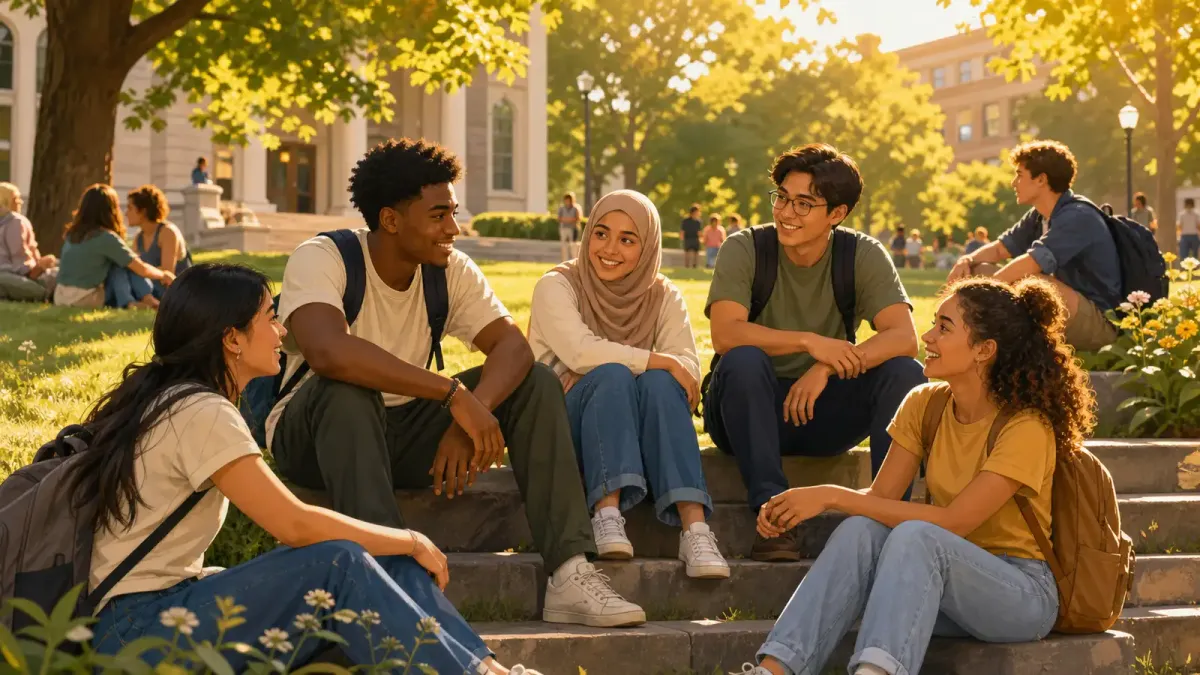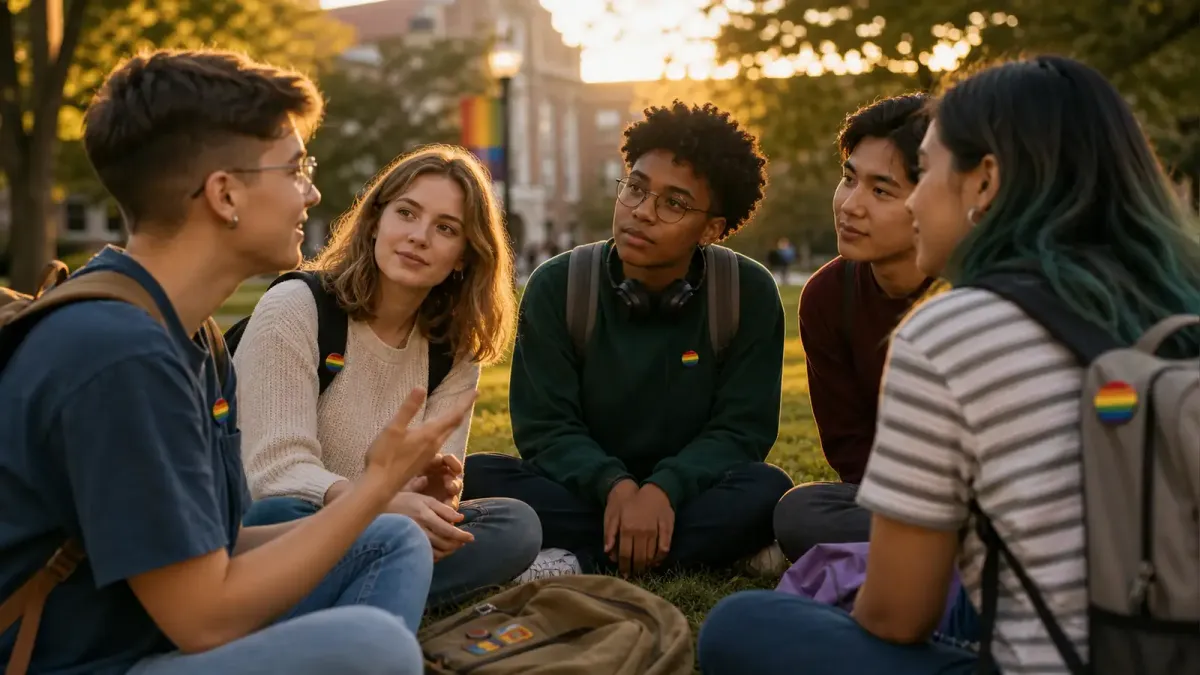
Long before universities built LGBTQ+ resource centers or hired diversity coordinators, queer people were supporting each other in living rooms, independent bookstores, online forums, and conversations that happened in the margins of every community. The institutions caught up later. The networks were always there.
A new research project at the University at Albany is trying to do something unusual: take those informal, community-built support systems and give them structure, funding, and academic legitimacy without stripping away what made them work in the first place. The project, called LGBTQ SOLACE (Support, Opportunities for Learning, And Community Empowerment), launched in 2023 and recently shared its findings. The core idea is simple enough that it applies to campus communities anywhere: train LGBTQ+ people to support each other’s mental health, build a pipeline from peer support into professional helping careers, and root the whole thing in the strengths the community already has.
What the Research Actually Found
Dr. Angie Wootton, the assistant professor at UAlbany’s School of Social Welfare who leads SOLACE, started the project after moving to Albany and noticing something that gets lost in national conversations about LGBTQ+ rights. “While we tend to think of New York as a haven for LGBTQ+ life, the amount of connection and support that people receive from others who are LGBTQ+ can vary greatly by location, age, identity and more,” she told the university’s news team. The difference between a student at NYU with five identity-based clubs within walking distance and a student at a SUNY campus in a rural county is enormous. Geography, more than state policy, determines what kind of support you actually receive.
The SOLACE team spent 2024 and 2025 running focus groups with LGBTQ+ women across upstate New York to understand what kind of peer mental health support people actually want — not what clinicians assume they need. The results, currently under review for publication, point toward something that should not be surprising but somehow keeps getting rediscovered: people want support from people who get it. Not just clinicians who are “affirming” on paper, but people who have lived through similar experiences and don’t need anything explained to them.
Kyra Gerdes, a social welfare major and undergraduate researcher on the project, put it directly: “Finding mental health support that views you holistically shouldn’t feel like an impossibility. In my own life I’ve found the most healing through fellow queer people, and I love that this project is rooted in that same collective healing.”
Why This Matters for Campus Communities
The SOLACE project focuses on upstate New York, but the model translates directly to college campuses, where the same dynamics play out in compressed form. A student who arrives on campus in August has roughly four years to build a support system from scratch. The official resources — counseling centers, diversity offices, identity-based student organizations — help, but they have limits. Counseling centers are overwhelmed nearly everywhere. Diversity offices depend on institutional funding that can shift with a new administration. Student orgs turn over every time seniors graduate.
Peer support networks fill the gaps between those formal structures. They don’t require a budget or an office. They require people willing to show up, listen, and pass along what they know. The SOLACE research validates something that has been true for decades: the most reliable mental health resource in many queer communities is other queer people who have learned, through experience, how to hold space for someone in crisis.
The project’s next phase is developing a free, LGBTQ+-specific peer mental health and suicide prevention training curriculum that can be offered through partner organizations. For campus communities, this is the kind of resource that student groups can adapt and run themselves. The training is designed for three tiers: people who just want basic skills to support friends and classmates, people interested in becoming registered peer support workers, and people considering graduate degrees in helping professions. A student who starts by taking the training as a freshman could, by senior year, be a registered peer support worker with years of practice — and a clear path into a career.
The training pipeline matters because it addresses a structural problem in mental health care: the shortage of LGBTQ+-identified providers. Nationally, only a small percentage of mental health professionals identify as LGBTQ+, and the number drops further outside major cities. Peer support training creates a pathway that doesn’t require a graduate degree to make a difference. A registered peer support worker can provide care that a friend with good intentions cannot, including structured check-ins, crisis de-escalation, and warm handoffs to clinical care when needed. For students weighing whether to invest years in a counseling or social work degree, starting with peer support certification is a low-risk way to test the waters — and the experience makes graduate applications stronger.
The difference between “I’m here for you” and actual peer support. There is a meaningful gap between being a supportive friend and providing peer support. A supportive friend says “I’m here if you need anything” and waits for the phone to ring. A trained peer supporter checks in proactively, asks direct questions about safety and suicidality without flinching, and knows when to escalate to professional care. The training teaches skills that don’t come naturally to most people: how to sit with someone’s distress without rushing to fix it, how to ask about self-harm without making the question feel like an accusation, how to set boundaries so you don’t burn out after six months. These are learnable skills, not personality traits.
The SOLACE project’s student researchers embody this progression. Forrest Vildor started on the project as an undergraduate and is now enrolled in UAlbany’s Master of Public Health program. “The entire experience has made me fall in love with research,” Vildor said. “It’s made me want to incorporate this into my future career plans.” That trajectory — from curious undergrad to trained researcher to public health professional — is exactly the pipeline the project aims to build at scale.
What to do when formal resources disappear. One of the unspoken realities of campus LGBTQ+ life is that resources are fragile. A hostile state legislature can defund a diversity office. A new university president can deprioritize identity-based programming. A key staff member leaves and the position stays vacant for two years. Peer support networks are more resilient than institutional programs because they don’t depend on a budget line or a job description. They depend on relationships, which persist when funding doesn’t.
That is not an argument against institutional resources — students deserve funded, professional support. It is an argument for building both at the same time. The formal resources get you access to hormones, legal name changes, and clinical mental health care. The peer networks get you through the gaps between appointments, the summers when campus empties out, and the periods when the formal resources are understaffed or under attack. Both are necessary. Neither is sufficient alone.
How to Build Peer Support on Your Campus Right Now
You don’t need to wait for a UAlbany-scale research project to land on your campus. The principles are portable.
Find the people who are already doing it. Every campus has students who have become informal peer supporters — the person everyone texts at 2 a.m., the upperclassman who walks freshmen through name-change paperwork, the RA who keeps emergency snacks and a box of tissues in their room. These people are often invisible to the administration and exhausted. Identifying them, acknowledging what they do, and making sure they have support themselves is the first step.
Share what you know about navigating systems. One of the most practical forms of peer support is institutional knowledge: which professors update pronouns without making it weird, which health center provider actually listens, how to file a discrimination complaint without getting stonewalled, where to get low-cost gender-affirming care in town. This information lives in conversations and group chats and disappears when people graduate. Writing it down and passing it forward is peer support in its most concrete form.
Train people, don’t just ask them to care. The emotional labor of supporting friends through mental health crises is real and heavy. Without training, it burns people out. Campus counseling centers sometimes offer Mental Health First Aid or similar trainings. Student groups can request these and open them to members. Knowing how to ask someone directly whether they are thinking about suicide, and what to do if the answer is yes, turns good intentions into actual capacity.
Respect that some support is better kept informal. Not every peer support structure needs to be registered with the university, funded by student government, or supervised by a faculty advisor. Some of the most effective networks operate in group chats, Discord servers, and living room conversations precisely because they don’t have institutional overhead. The SOLACE project’s advisory board model — seven LGBTQ+ women from the community meeting quarterly to guide the work — is a structure that keeps the work grounded without making it bureaucratic.
The Bottom Line
“We support us!” Wootton said when asked about the project’s long-term significance. “We have each other’s backs, historically, presently and always will.”
The institutions are catching up, slowly. The counseling centers are getting better, sometimes. The policies shift with every election cycle. In the meantime, the peer networks keep working, the way they always have. What the SOLACE research adds is evidence that this approach is not a stopgap until something better comes along. It is the thing itself — and it works best when the people doing it get training, resources, and the recognition that what they are doing is real mental health care, not just being a good friend.
If you are a student reading this and already serving as the unofficial peer supporter for your friend group, your floor, or your student org, you are not alone in that role. You are part of a long tradition of community care that predates every institutional program on your campus by decades. The difference now is that research projects like SOLACE are building the training frameworks to support people like you — so you don’t have to figure it out alone, and so the next generation of peer supporters starts with skills instead of trial and error.