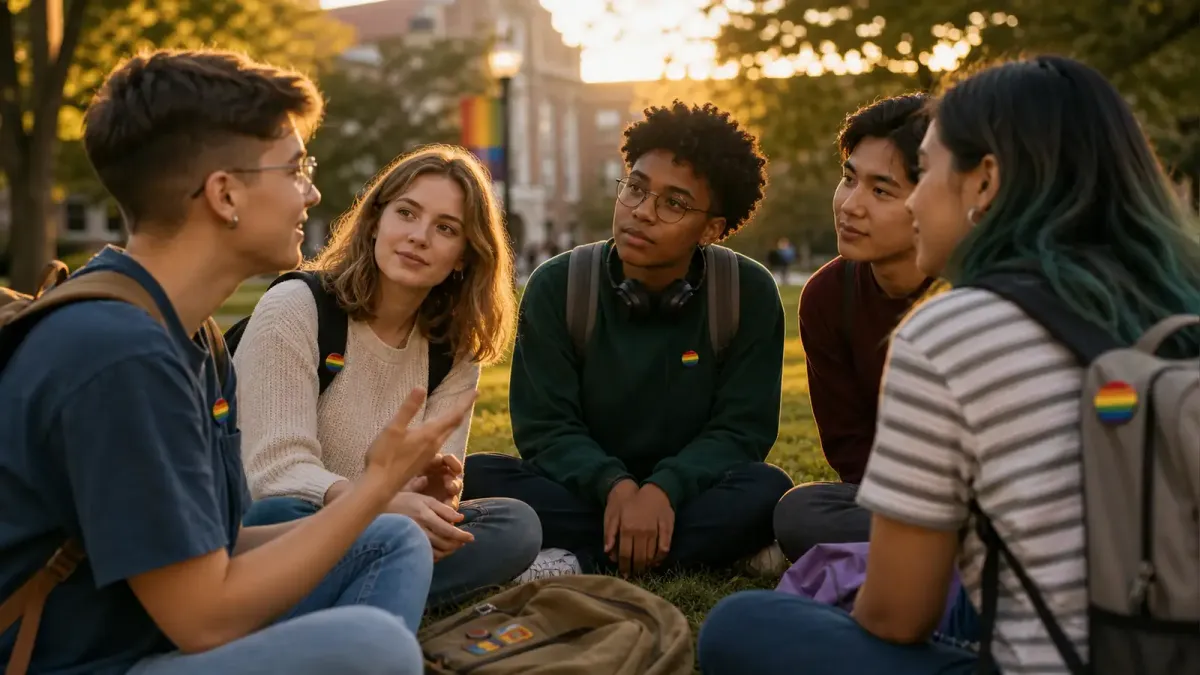
The parades wrapped up. The corporate rainbow logos went back to blue. Campus resource centers shifted to summer hours. And millions of LGBTQ+ students scattered from their college communities to hometowns, family homes, and summer jobs where the support structures they relied on all semester aren’t within walking distance anymore.
This post-Pride drop-off isn’t new, but it’s worth naming every year: the gap between June’s visibility and July’s reality is where isolation does its quietest work.
Data from the Trevor Project’s 2025 national survey found that LGBTQ+ young adults who reported having at least one accepting adult in their lives were 40% less likely to attempt suicide. During the academic year, that accepting adult might be a professor, an advisor, or a resident director. During summer, students often lose access to every accepting adult they know in a single weekend. The structural problem isn’t that support disappears — it’s that it’s tied to a location students leave behind.
The Summer Support Gap
Research consistently shows that LGBTQ+ college students report higher rates of loneliness and mental health challenges during academic breaks than during the semester. Campus counseling centers, identity-based student organizations, and affirming friend groups are all tied to physical presence on campus. When students leave, those resources don’t follow.
For students returning to unsupportive home environments — which remains the reality for a significant portion of LGBTQ+ young adults — summer isn’t a break. It’s a period of code-switching, self-editing, and waiting to return to a place where they can be themselves.
Building a Summer Support Plan
The students who navigate this gap best tend to do one thing differently: they treat summer support as something you plan for, not something that just happens. A few practices that students and recent graduates have shared:
Schedule regular check-ins. A standing weekly video call with a trusted friend or two replaces the casual dining-hall conversations that kept you grounded during the semester. Fifteen minutes on Sunday evening makes the difference between a week of isolation and a week with one connection point.
Find the nearest affirming space. Even if it’s a coffee shop an hour away, knowing there’s a physical place where you’re not the only LGBTQ+ person in the room provides a psychological anchor. Pride community centers, LGBTQ+ bookstores, and affirming places of worship often have summer programming specifically designed for students home on break.
Use digital communities intentionally. Discord servers, group chats, and LGBTQ+ forums can fill the gap, but they work best when you engage actively rather than lurk. Post something. Respond to someone. The algorithm won’t build your support network — you have to show up.
Know your emergency resources. The Trevor Project’s crisis line (1-866-488-7386) operates 24/7, as does the National Suicide Prevention Lifeline (988). Program both into your phone before you need them. Campus counseling centers often offer a limited number of summer telehealth sessions even when the physical office is closed — check your school’s policy before you leave.
What Lasts Beyond June
Forbes published a piece last week about “legacy trusts” for LGBTQ+ families — the idea that estate planning can reflect chosen family and community values, not just biological inheritance (Forbes, June 30, 2026). The article is aimed at older adults with assets to manage, but the core idea translates to student life: the support structures you build now — the friends, the mentors, the organizations you join — are the foundation of a community that lasts decades, not just a semester.
The Pride flags come down every July. The work of staying connected doesn’t. A few intentional habits, a weekly call, and one safe physical space can carry you through until campus comes back to life in the fall.
If you’re reading this as an ally or a faculty member: the single most impactful thing you can do this summer is send one message to an LGBTQ+ student you know. “Thinking of you — no need to reply, just wanted you to know someone’s in your corner.” It takes thirty seconds. For a student spending the summer in an environment where nobody uses their correct pronouns, it might be the only affirmation they get all week.