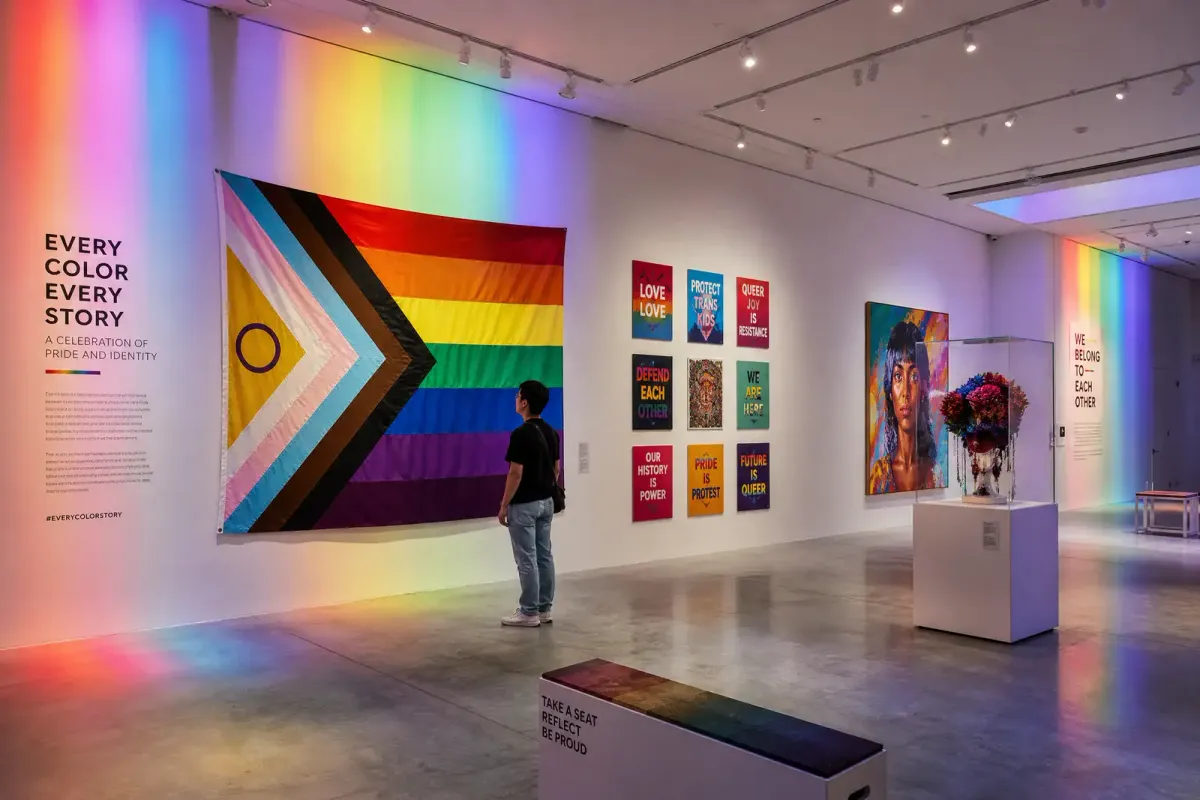
On a quiet street in San Francisco Chinatown — America’s oldest, dating back to the 1850s — something unprecedented is happening. The OUT Museum opened its doors in 2026 as the first museum in the world dedicated to Chinese LGBTQ+ artists and their stories. It sits in a neighborhood that has historically been defined by tradition, family, and cultural preservation, and its presence there is both quietly radical and entirely necessary.
For Xiangqi Chen, the museum’s founder, the location carries a weight that’s hard to overstate. She left China as an LGBTQ+ activist who faced real risk for her work — the kind of risk that, as she put it, could result in punishment. Finding a platform for Chinese queer art in the heart of Chinatown wasn’t just symbolic. It was a reversal of everything she’d experienced back home.
“Here in San Francisco Chinatown, I still continued my journey and met so many like-minded community members and friends,” Chen told The Associated Press through an interpreter. “It kind of actually encouraged me and gave me lots of strength to do what I know is my mission, my calling.”
That mission is not about creating a gallery for art’s sake. It’s about creating a haven for people who, in many cases, cannot safely claim their identities anywhere else.
The Gap in Representation
Chinese LGBTQ+ artists occupy a narrow corridor between two worlds. Within mainstream LGBTQ+ spaces in the United States, their cultural identity is often flattened or overlooked — the focus on Western queer narratives leaves little room for the specific tensions that come with being queer and Chinese. Within Chinese communities, particularly immigrant communities in cities like San Francisco, LGBTQ+ identity can still be met with silence, stigma, or outright rejection.
The OUT Museum addresses this double invisibility. It doesn’t ask Chinese queer artists to choose between their cultural heritage and their identity. Instead, it centers the intersection of the two, treating it as the source of creative richness that it actually is.
The museum’s current collection includes Chen’s own piece, “The Weight of Kindness,” which explores the tension between gentleness and resistance — a theme that resonates deeply with artists who navigate cultures where direct confrontation with authority carries serious consequences. Also on display is “Tracing: Queering Chinese Historical Archive,” a project that reexamines Chinese history through a queer lens, and porcelain artwork by Dixon Ngai that transforms a traditional Chinese craft medium into a vehicle for contemporary queer expression.
Why Chinatown Matters
Placing the museum in Chinatown is not accidental. It’s a statement about belonging — that queer Chinese artists have as much right to claim that space as anyone else. Chinatown has always been about community survival, from the laundry workers of the 19th century to the restaurant families who built it into a cultural landmark. The OUT Museum extends that tradition by arguing that queer Chinese people are not a threat to the community’s identity but an integral part of it.
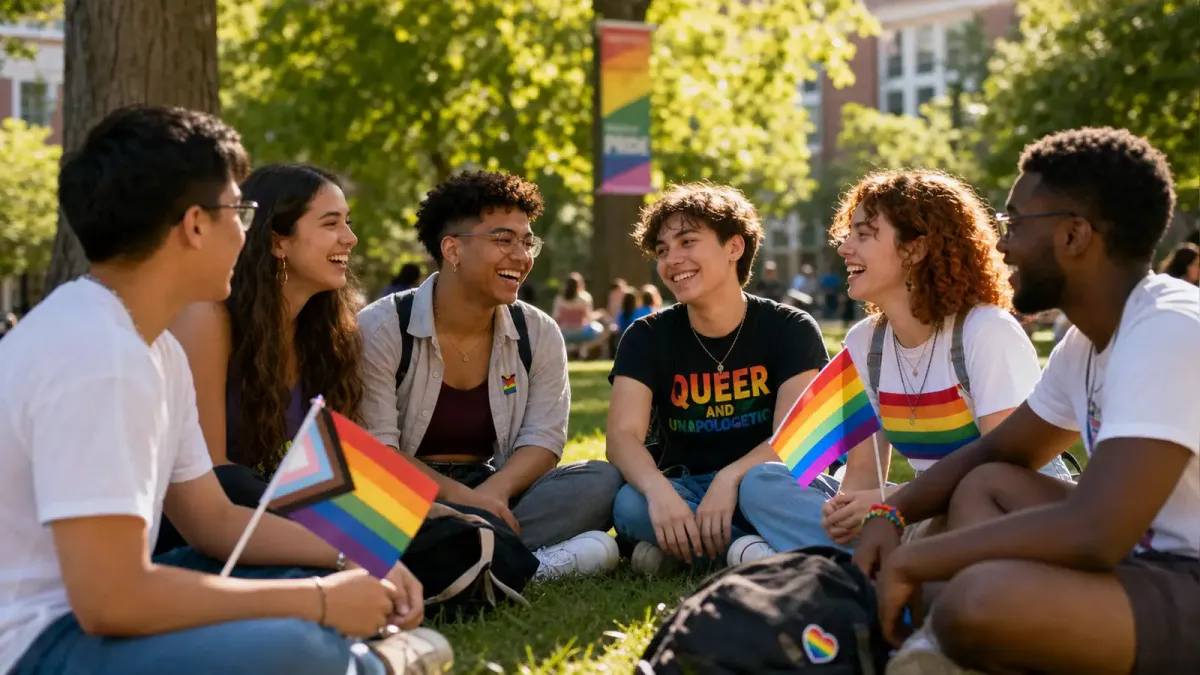
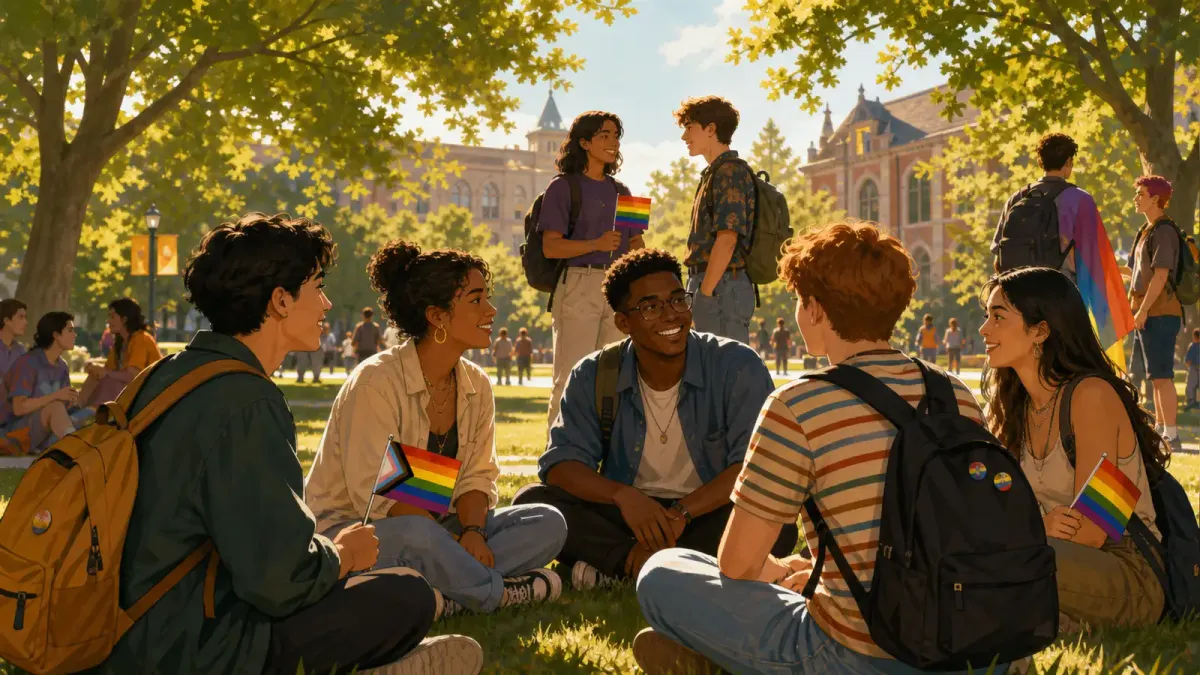
For international students from China who arrive at American universities carrying the weight of family expectations, cultural displacement, and often the fresh realization that they might be able to live openly for the first time, this museum represents something tangible. It’s proof that a future exists where they don’t have to hide one part of themselves to honor another.
The psychological impact of that kind of representation shouldn’t be underestimated. Research consistently shows that visible, affirming spaces reduce isolation and improve mental health outcomes for LGBTQ+ youth. For students whose families are thousands of miles away and whose cultural context at home may not include the concept of “coming out” as it’s understood in Western discourse, a museum like this offers a model for what integration — not assimilation — looks like.
The Broader Context: Pride Under Pressure in 2026
The OUT Museum’s opening comes at a moment when LGBTQ+ visibility is facing new and complicated pressures across multiple arenas. In June 2026, the Department of Justice announced an investigation into Major League Baseball after the San Francisco Giants issued warnings to three pitchers — Landon Roupp, JT Brubaker, and Ryan Walker — who wrote verses from Genesis on their rainbow-themed caps during the team’s Pride night celebration. The incident laid bare the tension between religious expression and LGBTQ+ pride that continues to play out in public spaces.
These conflicts matter because they happen in full view, in spaces that are supposed to be welcoming to everyone. For LGBTQ+ students watching these debates unfold — whether it’s a sports league’s internal struggle or a political fight over bathroom access — the question isn’t abstract. It’s personal. It’s about whether the world they’re entering will have room for them.
The OUT Museum offers a different kind of answer than a press conference or a policy statement. It says: here is our art, here is our history, here is our presence. It’s harder to argue with a museum than with a protest. The objects on display carry a kind of permanence that a news cycle cannot match.
What Students Can Take From This
If you’re an LGBTQ+ student — and especially if you’re navigating the dual identity of being queer and part of a cultural minority — the OUT Museum’s model offers several practical lessons:
Your intersection is your strength, not your complication
Academic and social spaces often try to sort you into a single category. Are you part of the Asian student organization or the LGBTQ+ group? The answer is both, and the tension between those identities is not a problem to be solved — it’s a perspective to be developed. The artists at the OUT Museum don’t present work that is “Chinese art with a queer twist” or “queer art that happens to be Chinese.” They present work that exists at the intersection and draws its power from that exact position.
Create spaces when they don’t exist
Xiangqi Chen didn’t wait for an existing museum to make room for Chinese queer art. She built one. On campus, this might look like starting a reading group, organizing a zine, or creating a small exhibition of work by queer artists from your cultural background. The scale doesn’t matter. The act of creation — of saying “this deserves to exist” — is what builds momentum.
Find your like-minded community
Chen’s quote about meeting “like-minded community members and friends” in San Francisco Chinatown points to something every LGBTQ+ student eventually discovers: the people who understand your specific experience are out there, but you have to look for them intentionally. They’re not always in the biggest group or the most visible organization. Sometimes they’re in a small club, a class discussion, or a conversation after a lecture.
The Museum as a Model for Campus Spaces
Universities are increasingly investing in LGBTQ+ support — wellness centers, housing options, counseling services. But cultural programming often lags behind. The OUT Museum demonstrates that representation isn’t only about support services. It’s about celebration, about creation, about the kind of visibility that says “you belong here” without needing to add the word “despite.”
Campus cultural centers could take a page from this model. Instead of treating LGBTQ+ identity as a support issue alone, they could create platforms for creative expression — art shows, poetry readings, film screenings — that center the work of queer students from diverse cultural backgrounds. The therapeutic value of these spaces is real, but the community-building value is equally important. Students who see their stories reflected in creative work are more likely to stay engaged, to persist through difficulties, and to build the kinds of networks that sustain them long after graduation.
Looking Ahead
The OUT Museum is in its early stages. Like many new cultural institutions, it’s building its audience, its collection, and its reputation one exhibition at a time. But its existence — in Chinatown, in San Francisco, in 2026 — is already significant. It tells Chinese LGBTQ+ artists around the world that their work matters, that their stories deserve a permanent home, and that the intersection of their identities is not something to be managed but something to be celebrated.
For LGBTQ+ college students who carry multiple identities — racial, cultural, sexual, gender — this is more than a museum. It’s a blueprint. The spaces that will sustain you are the ones you help build, the communities that recognize your full complexity, and the creative work that refuses to ask you to simplify yourself for anyone’s comfort.
The OUT Museum didn’t ask for permission to exist. It simply opened its doors. That’s the lesson worth carrying forward.