Pride Month in June is loud. Parades, campus events, rainbow merch in every bookstore window, allyship statements from university presidents who suddenly remember the LGBTQ+ center exists. Then July hits. The interns go home. The flags come down. The campus LGBTQ+ center — if your school even has one — cuts its hours or closes entirely until August.
For students who rely on those spaces for community, identity affirmation, and sometimes basic safety, summer isn’t a break. It’s a gap. Some go home to families who don’t accept them. Others stay on campus but find the infrastructure they depended on has gone dormant. International students and those working summer jobs may not have the time or money to travel to big-city Pride events.
But across the country, student organizers, community nonprofits, and a growing network of summer programs are quietly filling that gap. They’re building community infrastructure that doesn’t disappear when the academic year ends.
The Summer Problem Nobody Talks About
LGBTQ+ resource centers on college campuses serve functions that go well beyond event programming. They’re often the first point of contact for students questioning their identity. They connect students to affirming mental health providers. They provide emergency housing referrals for students whose families cut them off after they came out. A 2022 report from the Trevor Project found that LGBTQ+ college students with access to affirming campus spaces reported significantly lower rates of suicidal ideation than those without.
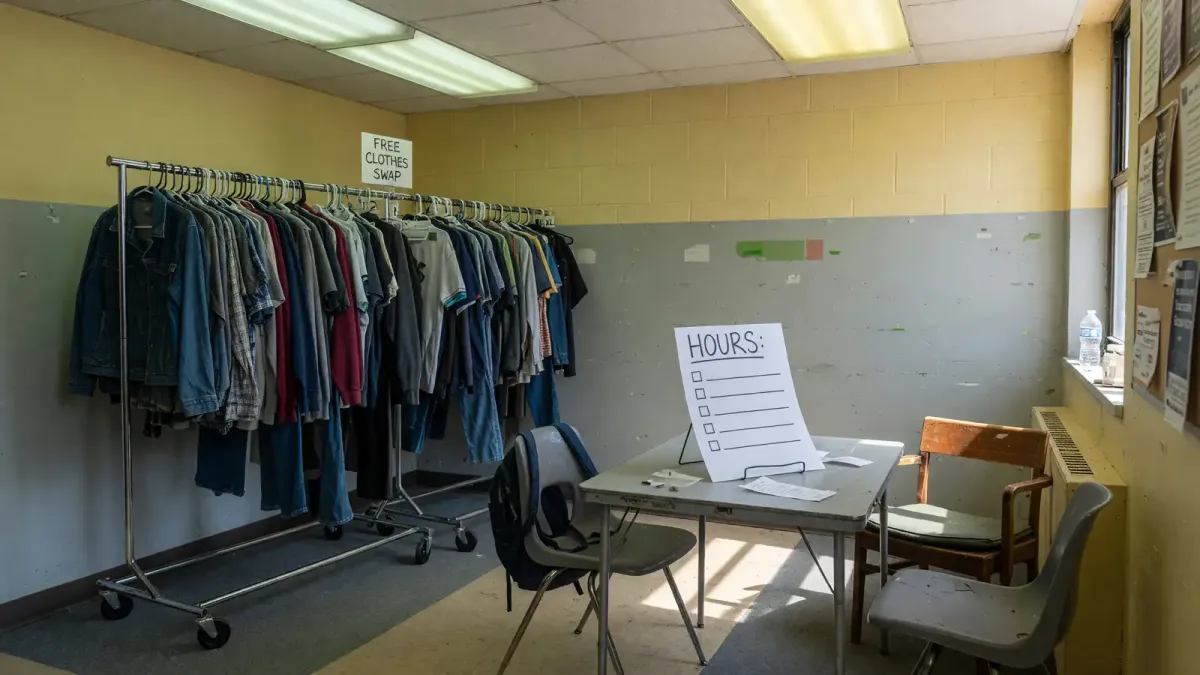
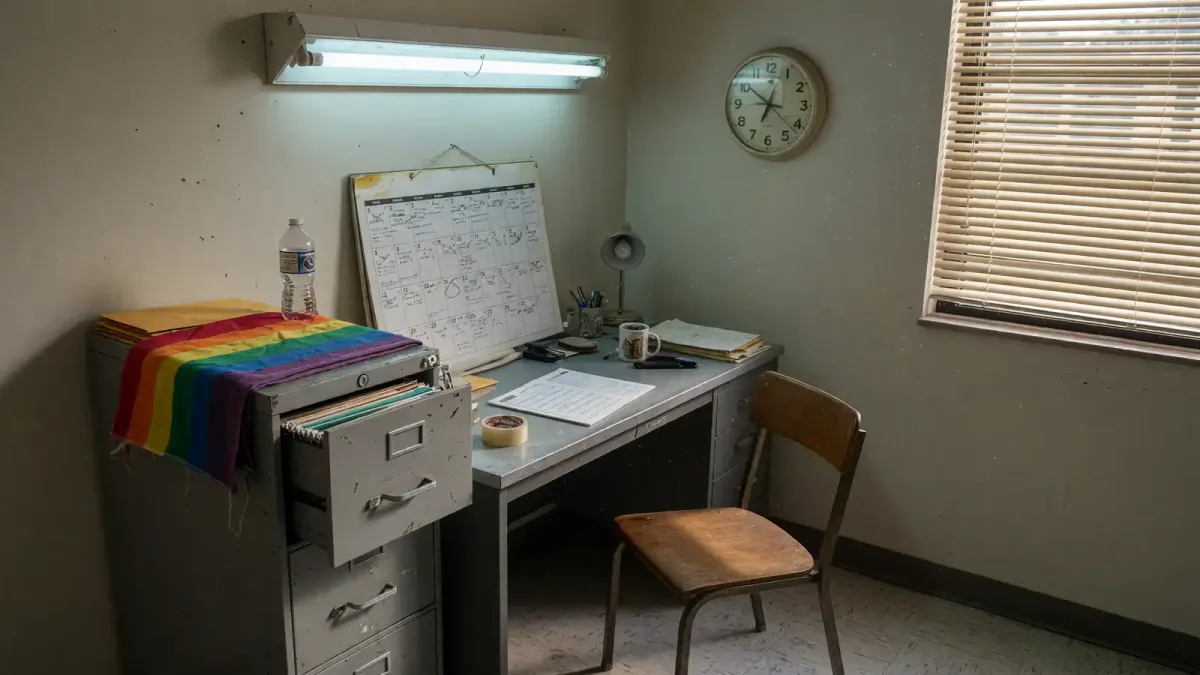
Summer dismantles that infrastructure. Many centers reduce to skeleton staffing or close outright from June through August. Student organizations go dormant when leadership scatters across the country. For a first-year student who spent spring semester finally finding their people, watching that community dissolve in May can feel like starting over.
The timing also aligns poorly with the academic calendar. Fall semester is when new students arrive, many of them closeted or questioning, looking for community they’ve never had before. If the campus LGBTQ+ infrastructure has been dormant all summer, it takes weeks to spin back up. Those first six weeks of fall — when new students are most vulnerable and most open to building connections — are often the period when support is thinnest.
A 2025 survey by the Association of American Universities found that 17% of LGBTQ+ undergraduates reported experiencing housing instability during college, compared to 11% of non-LGBTQ+ students. For these students, the campus is not just a social space. It’s a safety net. When the safety net retracts in May, the consequences are material, not just emotional.
Community That Doesn’t Clock Out
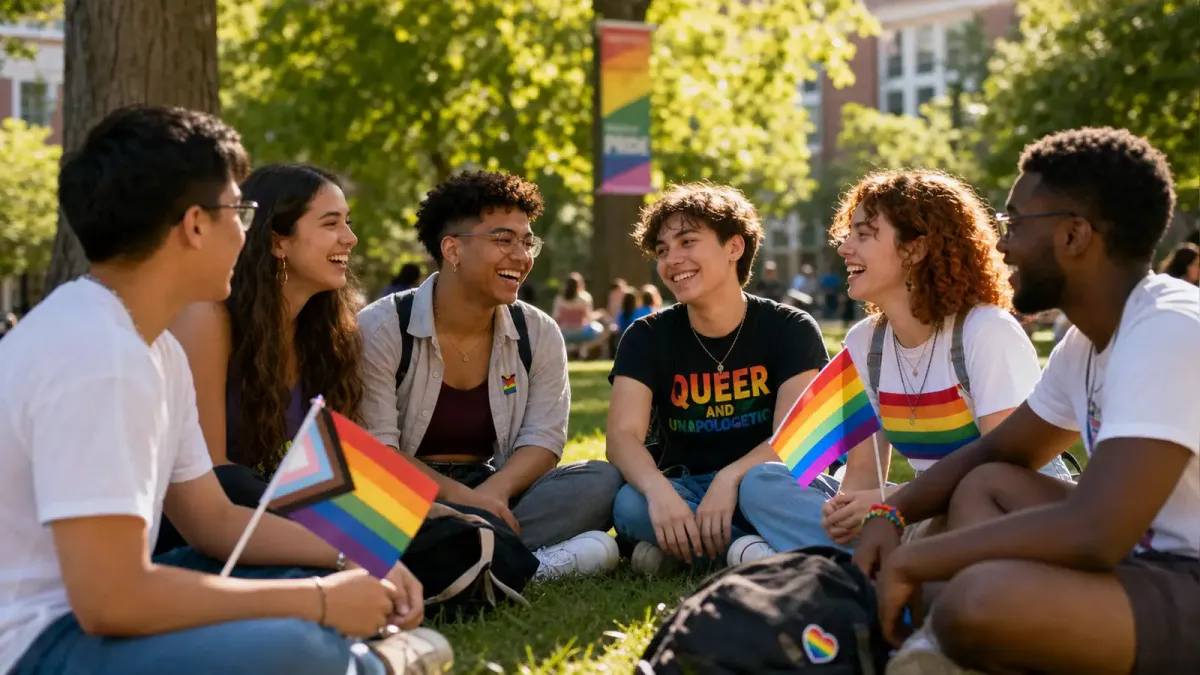
Some campuses have started treating summer as a design challenge rather than an unavoidable gap. The University of Michigan, for example, coordinates its Spectrum Center’s summer programming to overlap with Ann Arbor Pride in July. Students who stay in town for summer classes or jobs can participate in both campus-organized events and the broader city celebration, creating a bridge between academic and community identity.
Penn State’s Center for Sexual and Gender Diversity runs programming well into the spring semester with events designed to carry momentum across the summer. Their April Campus Pride Month calendar this year included a Super Gay 5K, a STEM mixer for LGBTQ+ students and allies, and a Lavender Recognition ceremony for graduating seniors. The goal isn’t just to celebrate in the moment — it’s to build relationships strong enough to survive three months of distance.
The Lavender Graduation model, now adopted by hundreds of universities, serves a similar function. By creating a dedicated ceremony for LGBTQ+ graduates, it sends a signal that the community will remain visible even after individual members leave. It also creates a pipeline: graduates become alumni mentors, and the cycle continues.
What these programs share is an understanding that community isn’t an event. It’s infrastructure. Events are the visible part — the drag shows, the pride marches, the speaker series. Infrastructure is what holds when the events stop: the group chats, the alumni networks, the Discord servers where students from hostile home environments can still check in at 2 a.m.
The Camp Model: Intensive Community, Short Duration
Off-campus, a parallel ecosystem of summer camps for LGBTQ+ youth has grown rapidly over the past decade. These aren’t new — Camp Aranu’tiq, the first summer camp for transgender and gender-nonconforming youth, opened in 2009 — but the demand has surged as anti-LGBTQ+ legislation has made home environments more precarious.
A Washington Blade feature from July 21 profiled a summer camp in the Bible Belt that creates what its organizers call “a week where trans kids can exhale.” For many campers, it’s the only week all year they’re in a space where being trans isn’t remarkable or contested. Counselors at these camps consistently report that the most transformative part isn’t the programming — it’s the unstructured time. Kids who spend eleven months a year navigating pronouns and bathrooms and stares can just exist.
The camp model has started filtering upward to college-age programming. Short-term intensive retreats — weekend or week-long gatherings for LGBTQ+ college students — provide the same concentrated community that camps offer younger kids, with programming tailored to young adults navigating identity, career paths, and relationships. Organizations like Campus Pride and the Point Foundation run leadership summits that double as community-building intensives.
These retreats work because they remove the ambient pressure of daily campus life. When you’re not worried about running into someone from your 9 a.m. lecture while you’re still figuring out how to introduce yourself, you can be more honest about what you don’t know yet. Campers and retreat participants consistently describe the experience in the same language: “I could finally breathe.” That phrase comes up so often in post-program surveys that organizers have started tracking it as an outcome metric.
The model works because it acknowledges something that year-round campus programming sometimes forgets: quality of connection matters more than quantity of programming. A weekend retreat where students share meals, tell stories, and build trust can do more for community cohesion than a semester of Tuesday-night mixer events.
When Students Build It Themselves
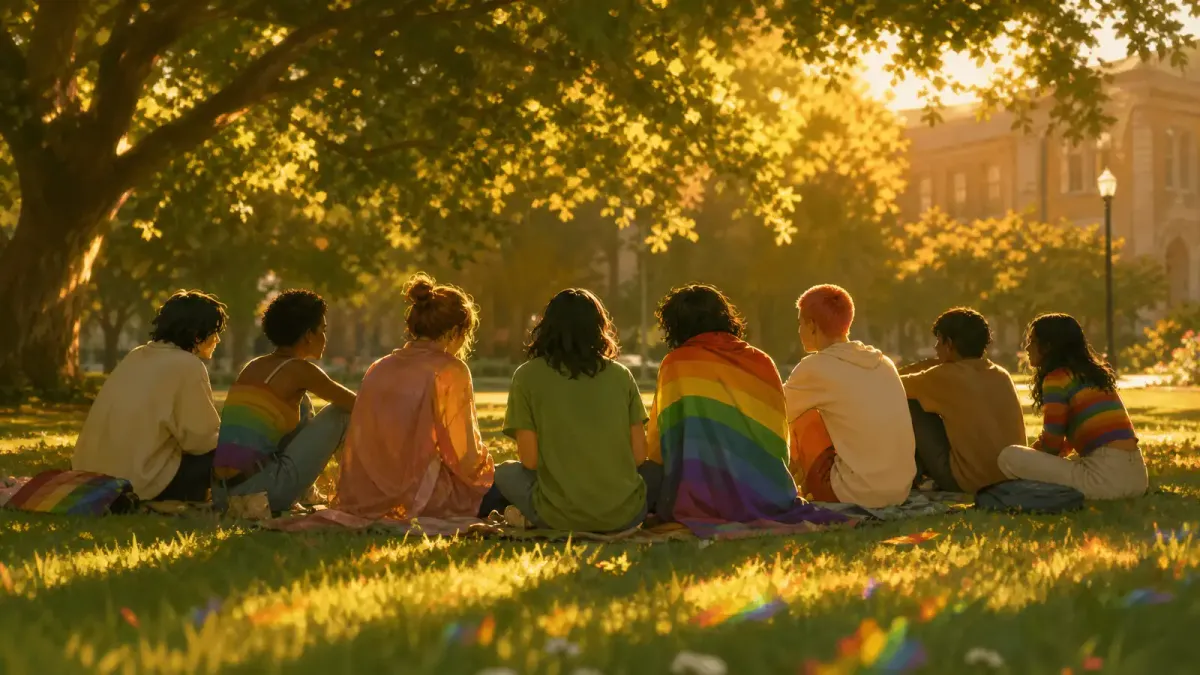
The most resilient communities are often the ones that don’t depend on institutional funding at all. Student-run Discord servers, group chats, and social media networks function as connective tissue when official channels go quiet. A student from a small liberal arts college in Ohio described her campus LGBTQ+ group’s summer strategy to a Blade reporter: “We have a Discord with channels for venting, for memes, for ‘I’m home and my parents are using the wrong pronouns again.’ It’s not structured. It’s just always there.”
This peer-to-peer infrastructure is fragile. It depends on a handful of motivated students, and it can collapse when those students graduate. But it’s also the hardest to kill. It doesn’t require a budget line or administrative approval. It just requires someone to start the group chat and keep showing up. One student at a small liberal arts college described her group’s summer Discord to a Washington Blade reporter as “always there” — the absence of an off switch is what makes peer networks fundamentally different from institutional programming. An office can close. A Discord server can’t.
The challenge for campus administrators is figuring out how to support these networks without co-opting or formalizing them. The best approaches so far have been light-touch: providing small grants for student-organized summer meetups, keeping the campus center’s social media active even when the physical space is closed, making sure the list of LGBTQ+-affirming off-campus therapists stays updated through July and August.
What It Looks Like When It Works
In San Diego, where Pride falls in July rather than June, the calendar itself creates a natural bridge. Students who stay in town can participate in Pride events that happen mid-summer rather than during finals week. Community organizations coordinate with campus groups to ensure students know about housing, healthcare, and employment resources that don’t depend on the academic calendar.
In Ann Arbor, the overlap between UMich’s summer session and the city’s Pride festival creates a similar effect. Students who might otherwise feel isolated during the summer months can anchor themselves in a visible, city-wide celebration that reminds them the community extends beyond campus boundaries.
These aren’t solutions to every problem an LGBTQ+ student might face over the summer. They don’t replace the need for affirming families, accessible mental healthcare, or legal protections. But they address a specific, solvable problem: the problem of community disappearing when the semester ends. The infrastructure to keep it alive already exists in most places. It just needs to be designed for year-round operation instead of treating summer as an off-season.
The most effective programs share a few design principles. They’re low-barrier — no lengthy applications, no requirements to prove identity. They’re consistent — students know there’s a check-in every Wednesday night or a monthly meetup at the same coffee shop, whether three people show up or thirty. And they’re student-shaped — the students decide what they need, and the institution provides resources without imposing structure. When those three things are in place, summer stops being a gap and starts being a different kind of semester.
Building Your Own Summer Safety Net
If you’re reading this as a student facing a summer without your campus community, a few things that help:
Find the Discord, the GroupMe, the Slack — whatever your campus group uses to stay in touch. If it doesn’t exist, start it. It doesn’t need to be fancy. A group chat with three people who get it is better than a formal organization with thirty people who don’t show up.
Identify the summer anchor events in your area. Pride festivals, LGBTQ+ film screenings, volunteer opportunities with local organizations. Having one thing on the calendar each month — something to look forward to and plan around — makes the stretch feel manageable rather than endless.
If you’re going home to a non-affirming environment, have an exit strategy. Know who you can call. Identify a friend whose family is supportive who might let you stay for a weekend if things get hard. Put the Trevor Project’s number in your phone: 1-866-488-7386. You probably won’t need it. Having it there anyway is not paranoia — it’s preparation.
The academic calendar isn’t going to change. Semesters will keep ending and summers will keep arriving. But the expectation that LGBTQ+ community should pause for three months every year is a failure of design, not a law of nature. The students and organizers who treat summer as an extension of community — not an interruption — are building something more durable than any single Pride Month could produce.