Summer break creates a gap that many LGBTQ+ college students know too well. Campus health centers close. Student organizations go dormant. The affirming community that existed in the dorm, the student union, and the classroom scatters for three months. For students who are not out at home, or who return to environments where their identity is not supported, that gap is more than inconvenient — it is isolating.
The resources that matter most during this period are the ones that do not depend on physical proximity to campus. Digital support networks, national hotlines, and online communities fill the gap when in-person options disappear.
Mental health support that stays open
The Trevor Project remains the most comprehensive crisis intervention resource for LGBTQ+ young people. Their 24/7 crisis line (1-866-488-7386) connects callers with trained counselors. The text and chat options (text START to 678678) are especially useful for students who cannot make private phone calls at home.
Trans Lifeline (877-565-8860) is staffed entirely by trans operators and does not engage in non-consensual active rescue — meaning they will not call police or emergency services without explicit permission. For trans students who fear law enforcement intervention, this distinction matters.
The LGBT National Help Center runs multiple hotlines, including a youth-specific line (800-246-7743) and a senior line. Their peer-support model means every caller speaks with someone who shares their identity.
Online communities that replace the campus social fabric
When the student group chat goes quiet and the weekly club meetings stop, digital spaces become the primary social outlet. Discord servers run by organizations like Q Chat Space and TrevorSpace offer moderated environments where LGBTQ+ youth can connect without the risks that come with unmoderated platforms.
Q Chat Space hosts facilitator-led discussions on specific topics — coming out, relationships, school stress — in scheduled sessions. The structure helps conversations stay productive, which is especially valuable when someone is looking for support rather than just casual chat.
Reddit communities like r/LGBT and r/AskLGBT provide asynchronous support that works on any schedule. The anonymity of Reddit can be freeing for students who are not ready to be visible in other spaces, though moderation quality varies by subreddit.
Academic and career resources for the summer months
Summer is also when many students work on scholarship applications, internship searches, and career planning. Point Foundation and Stonewall Community Foundation offer LGBTQ+-specific scholarships with application windows that often fall during summer months.
Out for Undergrad runs industry-specific conferences in tech, marketing, and engineering that connect LGBTQ+ students with mentors and recruiters. Their virtual events have made these connections accessible to students who cannot travel, and many sessions are recorded for on-demand access.
Campus Pride maintains an index of LGBTQ+-friendly colleges and universities that is updated annually. For students considering transfer or graduate school, this is a starting point for identifying campuses where they will not have to fight for basic recognition.
Emergency financial assistance
The gap between spring and fall financial aid disbursements can be brutal. The Point Foundation offers emergency grants for LGBTQ+ students facing housing insecurity, food insecurity, or unexpected medical costs. The Trans Justice Funding Project and local community foundations often have rapid-response funds that process applications in days rather than weeks.
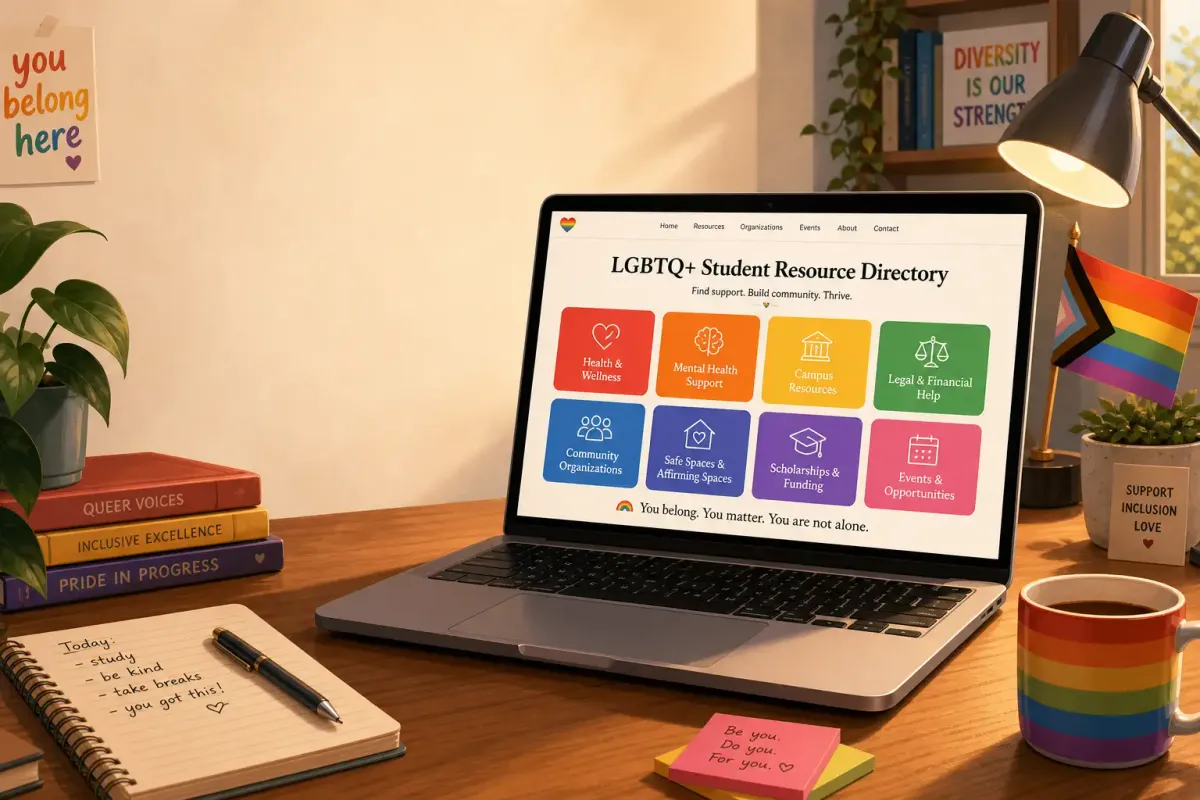
Most importantly, if your school has an LGBTQ+ resource center, check their website before you leave. Many centers maintain summer office hours, virtual drop-in sessions, or email newsletters that aggregate resources. The staff who run these centers know that summer is when students need them most, and the best centers plan accordingly.
If you are not safe at home
For students whose home environment is actively hostile, The Ali Forney Center and True Colors United focus specifically on LGBTQ+ youth housing insecurity. Their resource directories list shelters that are explicitly affirming, and their hotlines can help navigate emergency housing options.
No resource list replaces the safety of an affirming community on campus. But when that community is temporarily out of reach, knowing what exists — and that it exists — makes the summer months navigable. You are not the only student counting the days until fall semester begins.