I spent my first semester of college feeling like a ghost. I existed in my dorm room, went to class, ate meals alone, and returned to my room. I wasn’t unhappy exactly—I was just invisible, even to myself.
I knew I was queer. I’d known for years, tucked the knowledge away like a secret letter I couldn’t quite bring myself to read. High school hadn’t been safe to explore, and my small town hadn’t offered many options. College was supposed to be different. But different how? Different what?
This is the story of how I found my people, built my tribe, and learned that belonging isn’t something you find—it’s something you create with others who choose to include you.
The Silence Before the Storm
My first semester was a study in avoidance. I joined a few clubs that seemed interesting—one about filmmaking, another about environmental issues—but I never stayed after meetings. I gave excuses: homework, tiredness, the need for “me time.” The truth was that I didn’t know how to be myself around strangers, and I didn’t know who myself actually was.
I watched other students seem so comfortable in their skin. They talked about crushes and dates and relationships with an ease I couldn’t imagine. When someone asked if I was seeing anyone, I deflected. When someone asked about my type, I gave a vague answer that could have meant anything.
The isolation was gradual. It didn’t hit me all at once like a movie scene. It was more like slowly being submerged in water—first your feet, then your ankles, then your waist. By Thanksgiving break, I was drowning.
The Meeting That Changed Everything
I almost didn’t go to that first LGBTQ+ student alliance meeting. I told myself it would be awkward, that everyone would know I didn’t belong, that I wasn’t “queer enough” or too confused or too hidden.
I went because I was desperate. I had no other ideas.
The meeting was in a cramped room in the student union, maybe fifteen people scattered around folding chairs. Someone was setting up cookies. Someone else was arguing about whether Marvel movies were actually good.
I expected everyone to look at me. They didn’t. They were too busy being themselves—laughing, disagreeing, catching up on each other’s weeks.
A person with bright blue hair noticed me standing in the doorway and smiled. “Hi! I’m River. You’re new, right?”
That’s how it started.
The Slow Work of Belonging
Joining a community isn’t like flipping a switch. It’s more like learning a language—slow, sometimes frustrating, gradually becoming fluent.
Week One: I went to one meeting. I said maybe five words. I went home feeling simultaneously exhausted and hopeful.
Week Two: I went to two events—the regular meeting and a game night. I learned that River was a junior studying psychology. I learned that the quiet person in the corner, Sasha, was a senior who ran the poetry club. I learned that this group was a space where people could show up as they were.
Month One: I started recognizing faces. People started recognizing mine. Someone saved me a seat at the regular meeting. Someone else asked if I wanted to grab coffee after.
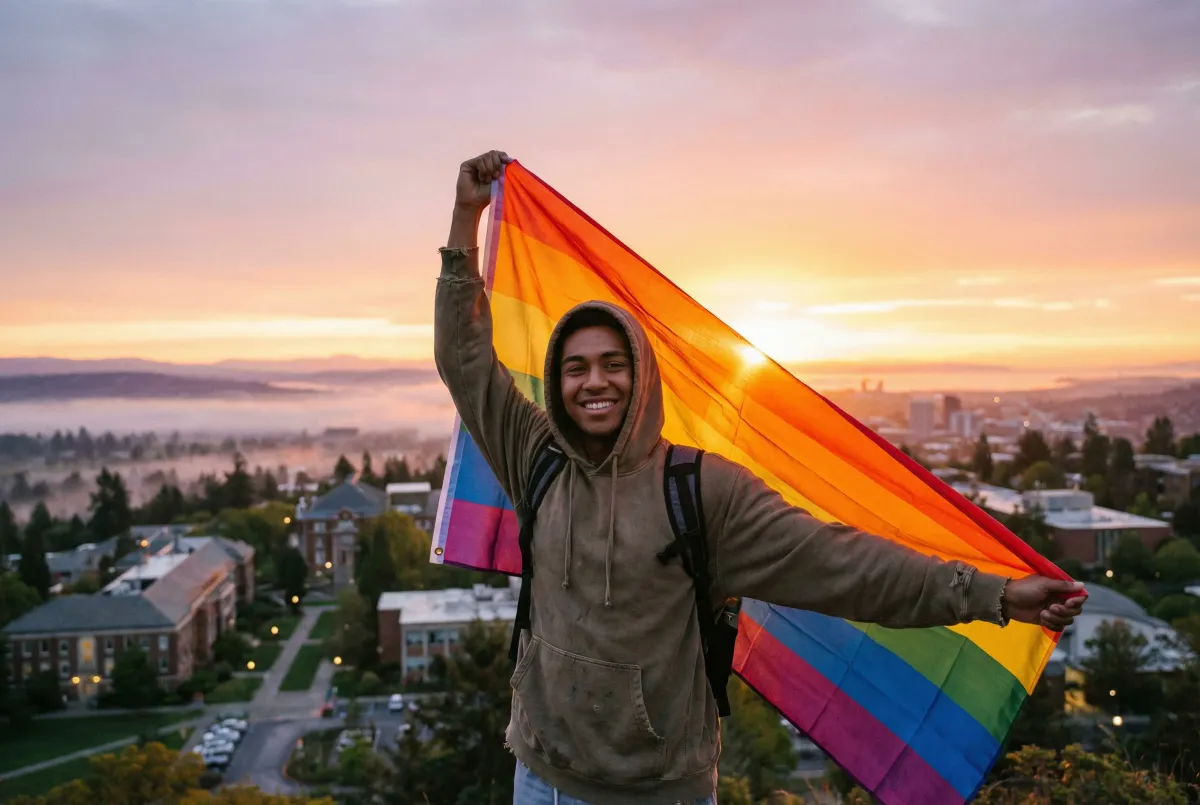
Month Two: I went to my first pride event. I met even more people. I heard stories from students who had come out in high school, in college, in their twenties, in their forties. The variety of experiences blew my mind. There was no single way to be queer.
Month Three: I started bringing friends I’d made in the group to other parts of my life—to the dining hall, to study sessions, to my dorm room for movie nights.
Learning to Trust
Trust is hard when you’ve spent years hiding. I had walls up without even realizing it—walls built from years of self-censorship, from learning that parts of me weren’t safe to share.
My walls crumbled slowly, mostly because the people in this community kept showing up. They shared their own struggles, their own fears, their own stories of family rejection and campus drama and identity confusion. They normalized the messiness.
When I finally came out to River—actually said the words out loud for the first time in my life—they didn’t react like it was a big deal. “Thanks for telling me,” they said. “That took courage. I’m honored you trusted me.”
That was when I understood something important: coming out isn’t a one-time event. It’s a series of moments, each one a choice to be honest, each one with someone who earns the right to know. And choosing who to come out to means choosing who gets to be part of your life.
Building Chosen Family
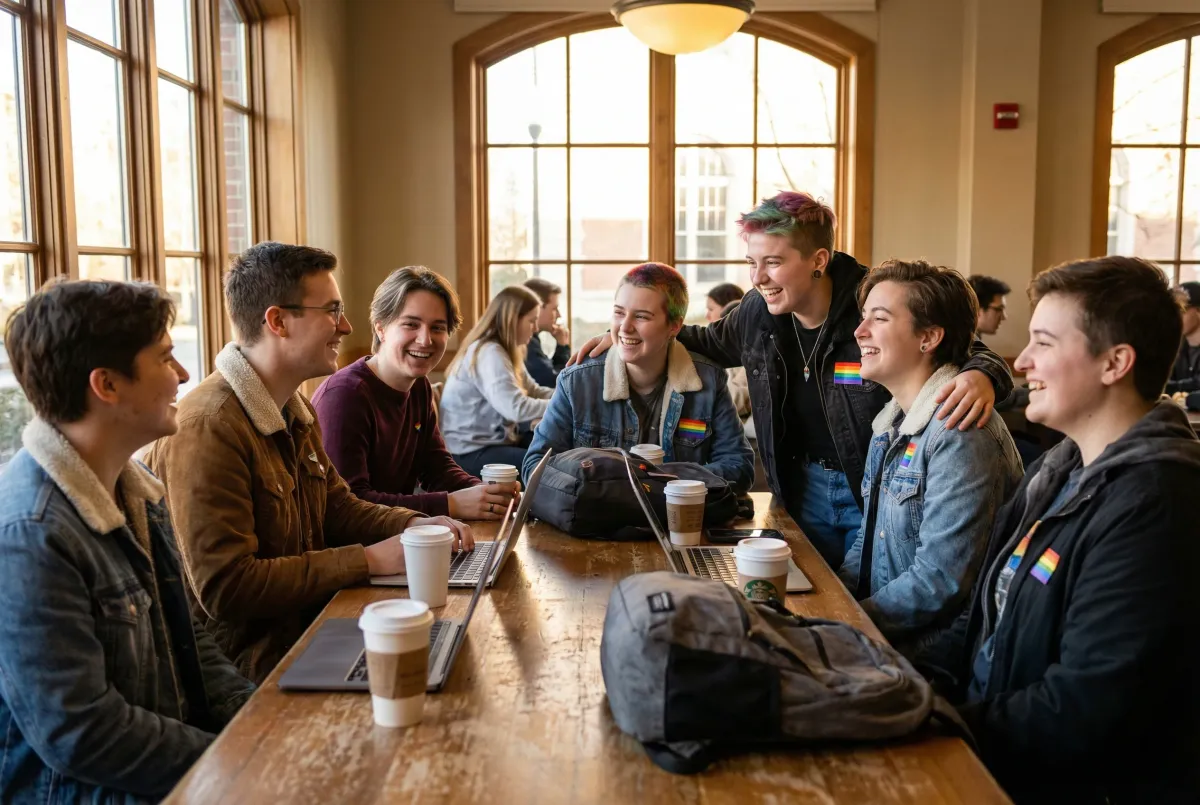
Somewhere along the way, these people stopped being “the LGBTQ+ group” and started being family.
We created rituals that were ours:
- Sunday brunches where everyone brought something and we ate until we couldn’t move
- Late-night conversations about everything and nothing
- Study sessions where actual studying happened maybe half the time
- Inside jokes that grew so elaborate they had their own history
When I had my first real queer crush—another student, also figuring things out—my found-family helped me through the confusion and excitement and eventual heartbreak. When one of us had family trouble, we showed up with ice cream and movies and the kind of presence that says “I’m here, for as long as you need.”
I remember thinking, around my sophomore year: This is what people talk about when they talk about family. Not obligation, not duty, not conditional love. The people who show up. The people who see you. The people who choose you, just as you choose them.
The Ripple Effect
Finding my tribe changed everything:
My confidence grew. When you have people who affirm you, you start to believe yourself. I spoke up more in class. I took risks I wouldn’t have taken before.
My mental health improved. Depression that I’d accepted as normal started lifting. It wasn’t magic—I still had hard days—but the baseline was higher.
My identity became mine. I stopped performing what I thought people wanted and started just being myself. Sometimes that meant discovering new things about myself. Sometimes it meant changing my mind about things I’d thought were settled.
I became braver. The community had taught me that vulnerability wasn’t weakness. I started being more open in other areas of my life—in friendships outside the group, in romantic relationships, eventually in relationships with family members who were willing to grow.
The Hard Parts
I won’t pretend it was all easy. Community has hard parts too:
Conflict happens. People who care about each other sometimes hurt each other. Learning to navigate conflict within chosen family, learning to repair and forgive, is a skill.
People leave. Graduating, transferring, growing apart—relationships change. Learning to stay connected through change, and learning to let go when necessary, is part of the package.
Not everyone has access. My campus had an active LGBTQ+ community. Some students don’t have that, whether because their campus is small, rural, unwelcoming, or they aren’t out. The community I found isn’t available to everyone.
Internal politics exist. LGBTQ+ communities have drama, cliques, and conflict just like any other group. Learning to navigate this without becoming cynical is its own journey.
What I Wish I’d Known
Looking back, here’s what I would tell freshman year me:
You don’t have to have it figured out. The people in the community weren’t all certain about their identities. Some were still questioning. Some had “I’m not sure yet” as a valid identity. There’s no queer purity test.
You don’t have to be outgoing. Introverts find community too. Sometimes your people find you. Sometimes the connection is quieter but no less real.
One person is enough. You don’t need to be friends with everyone. Sometimes one person who truly sees you is enough to change everything.
Showing up is the hard part and the only part. The meetings I almost didn’t go to, the conversations I almost didn’t start—they were the beginning of everything.
Chosen family is real family. Biology doesn’t determine love. The people who show up for you, who celebrate you, who help you through your worst moments—those are your family.
Creating Community If It Doesn’t Exist
If your campus doesn’t have an LGBTQ+ organization, consider starting one. You don’t need permission to create space for yourself and others like you:
- Check student government processes for recognizing new organizations
- Start small—coffee meetups, movie nights, group chats
- Connect with campus resources that might support you
- Look for off-campus community if on-campus options are limited
The Ongoing Work
I’m a senior now. My found-family has changed—some people have graduated, new people have joined, the dynamics have shifted. But the core truth remains: I have people who love me. I have community. I belong.
Finding your tribe isn’t about finding the perfect group where everything clicks immediately. It’s about showing up, being patient, taking small risks, and gradually building something with other people who are also trying to figure things out.
The queer community isn’t a destination. It’s a journey we take together, supporting each other through the confusion and the joy and the ordinary moments in between.
And if you’re still looking, still waiting to find your people, I want you to know: they’re out there. They’re looking for you too. And when you find each other, something magic happens—not because it’s easy, but because you’ve both chosen to be there for each other.
That’s what family means.