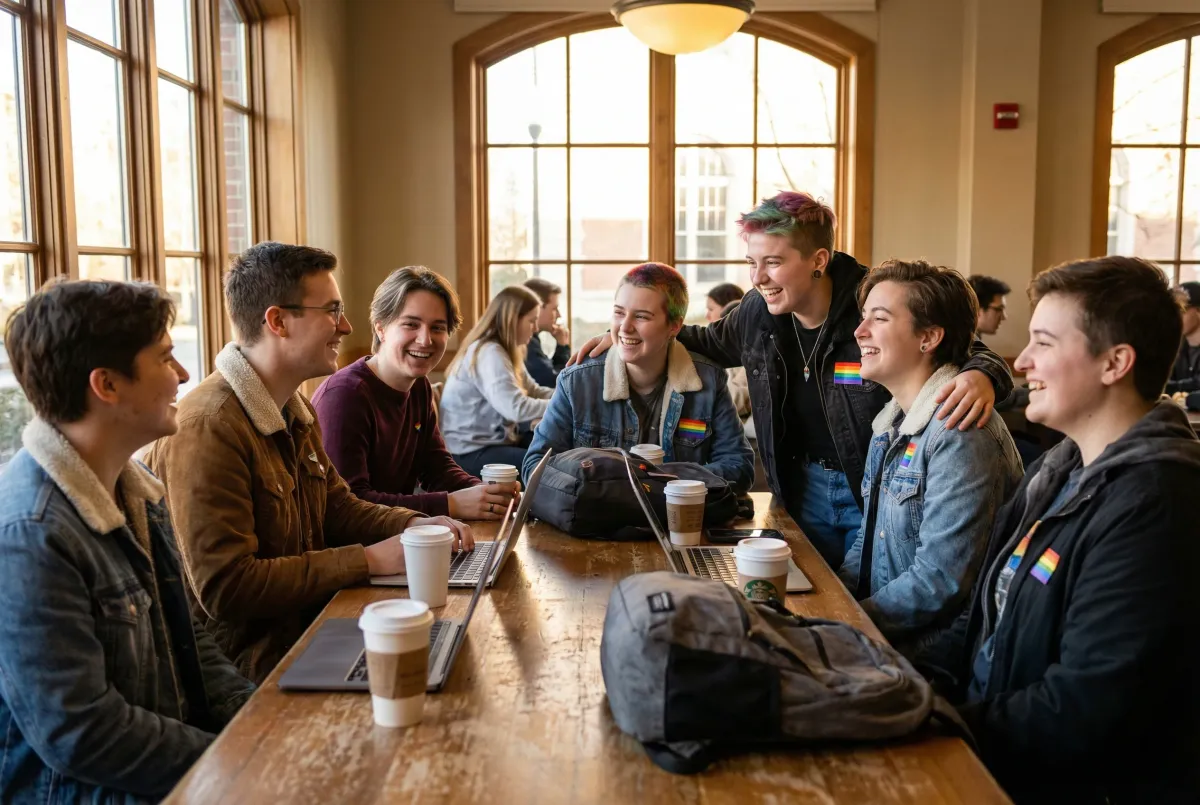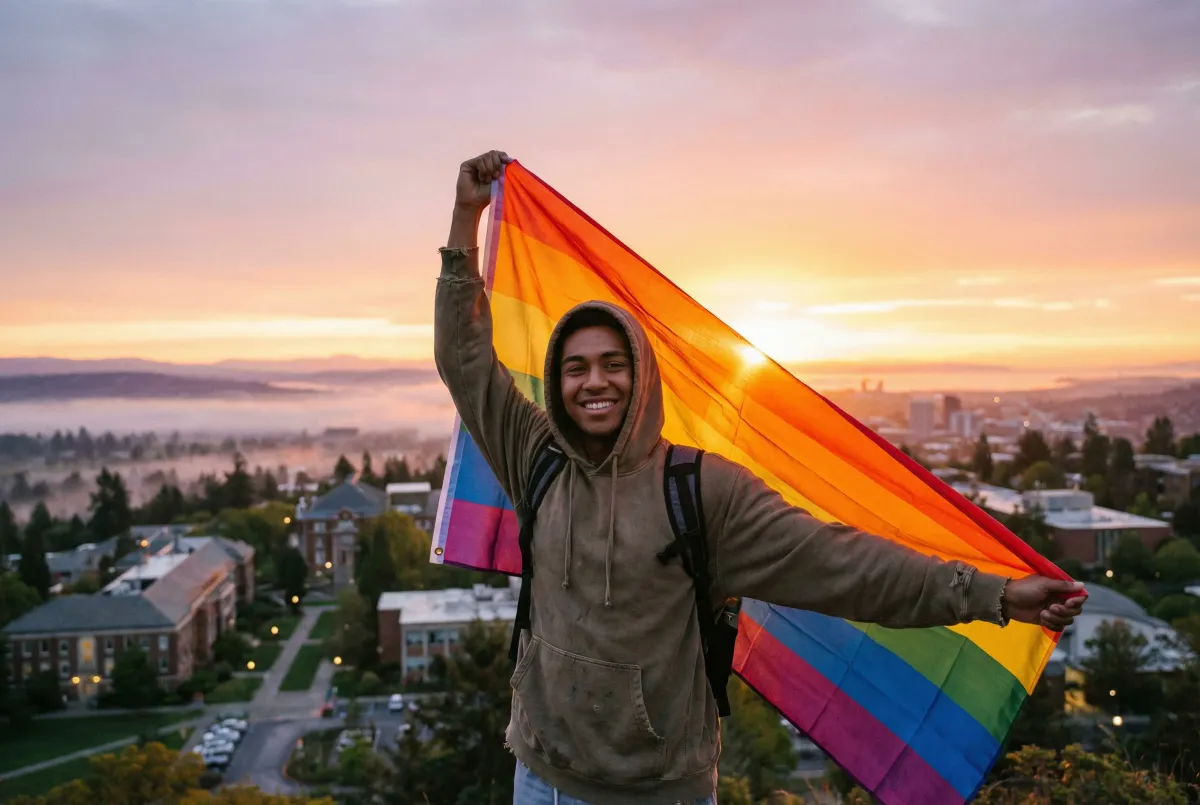
College represents a unique chapter in the coming out journey. Unlike the family environments we grew up in or the high schools we attended, universities offer new opportunities for authenticity, fresh starts, and the chance to define ourselves on our own terms. The stories shared here represent the diverse experiences of LGBTQ+ students who have navigated this transformative period in their lives.
Understanding Coming Out as a Process
Coming out is rarely a single moment but rather an ongoing journey that unfolds differently for everyone. Some students arrive at college already out to their families and friends, seeking only to continue living authentically in a new environment. Others use the transition to college as an opportunity to explore aspects of their identity they may not have felt safe to examine before.
For many, college becomes the first space where coming out feels possible. Being surrounded by peers who share similar experiences, access to LGBTQ+ organizations, and the general culture of exploration that characterizes university life can create conditions where authenticity becomes achievable in ways that were not previously possible.
The decision to come out involves weighing multiple factors: personal readiness, safety concerns, family dynamics, social environments, and individual comfort levels. There is no right or wrong timeline, and every person’s journey deserves respect.
Story One: Finding My Voice Through Pride
Marcus, Senior at a Large State University
I grew up in a small town where I never heard anyone explicitly say they were gay, but I also never heard anyone explicitly say it was wrong either. Silence surrounded the topic, and I learned early to keep parts of myself hidden. When I got my acceptance letter to a large state university four hours from home, I felt something I hadn’t experienced before: possibility.
My first semester, I was still trying to figure out what my sexuality meant. I knew I was attracted to men, but saying “I’m gay” out loud felt enormous, like claiming an identity I wasn’t sure I had earned. I joined the university marching band, which had a reputation for being accepting, but still didn’t find the words to describe myself.
The turning point came during my sophomore year. I was walking across campus and saw a flyer for an LGBTQ+ student meeting. I stood in front of it for fifteen minutes, trying to decide whether I could go. When I finally walked into that room, I saw faces that looked like mine—nervous, curious, hopeful. I didn’t say anything that first meeting. I just listened.
The next week, I went back. And the week after that. Slowly, I started to understand that I didn’t have to have everything figured out to belong. The community held space for people at every stage of their journey, from those who had been out for years to those still struggling to say the words.
Coming out to my friends in the band happened naturally over time. I started using different language, being more open about my life, and watching how people reacted. When I finally said the words—“I’m gay”—to my closest friend, she just nodded like I had told her I preferred coffee to tea. “Thanks for telling me,” she said. “Do you want to grab lunch?”
My parents were harder. I came out to them over winter break of my junior year, after months of preparing for every possible reaction. My mother cried—not because she was upset, but because she said she had always known and was waiting for me to be ready. My father took a few days to process, but eventually told me he loved me and wanted me to be happy. We’re not a family that talks about deep feelings easily, but I could feel the shift in our relationship.
College gave me the space to figure out who I was without the pressure of the environment I had grown up in. I didn’t have to leave behind everyone I loved; I just had to find a new way to exist alongside them. Now, as a senior, I mentor incoming students who are where I was a few years ago—curious, scared, hopeful.
Story Two: Beyond Labels
Alex, Junior at a Liberal Arts College
I’ve never really fit into neat categories, and my journey reflects that. When I started college, I knew I wasn’t straight, but I also knew that “gay” or “lesbian” didn’t fully capture my experience. It took me two years of college to finally embrace the word “queer” as my identifier.
Coming out as queer was strange because it meant claiming a word that had been used as a slur against people like me. For some, reclaiming “queer” feels powerful; for others, it’s still painful. For me, it represents the freedom to not have to explain myself in specific terms. Queer means I’m not straight, but I’m also not trying to fit into anyone else’s box of what that should look like.
My college has been remarkably supportive, though not perfectly so. I’ve had professors who use my correct pronouns without hesitation and others who seem to stumble over them constantly. I’ve had housing situations that worked and others that required advocacy. The difference between a good experience and a difficult one has often come down to whether I had to fight for basic recognition or whether it was simply offered.
The most significant coming out moment for me wasn’t to other people—it was to myself. I spent a lot of time trying to figure out exactly what I was so that I could announce it clearly. Eventually, I realized that the urge to label myself perfectly was just another way of seeking external validation. I didn’t need to have a complete explanation for anyone, including myself.
My identity shows up in unexpected ways. I’m involved in our campus women’s rugby team, which turned out to be surprisingly queer. I’m minoring in gender studies because I want to understand the systems that shape how we think about identity. I date people of various genders because connection matters more to me than fitting a particular narrative.
The community I’ve found in college is not about shared labels but shared values. We talk about justice and visibility and what it means to exist in spaces that weren’t designed for us. We argue about strategy and theory. We support each other through breakups and family drama and all the ordinary things that make up college life.
Story Three: Coming Out While Staying Safe
Sam, Graduate Student
I come from a family where coming out would mean losing more than I currently have. My parents are loving in their own way, but their love comes with conditions that I cannot meet if I live authentically. This reality shapes everything about how I navigate college and graduate school.
Being in the closet during a time when most of my peers are coming out and being celebrated for it brings complicated feelings. I’m genuinely happy for my friends who have supportive families, who get to bring their partners home for holidays, whose parents ask about their dating lives without flinching. At the same time, I carry grief for the relationship I cannot have with my own family.
For me, college has meant finding chosen family. The friends I’ve made in LGBTQ+ spaces on campus understand this dynamic because many of them have experienced variations of it themselves. We don’t interrogate each other about why we have or haven’t come out to specific people. We simply offer the support that blood relatives cannot or will not provide.
I’ve built a life on campus that feels authentic in all the ways that matter. I’m out to my professors, my roommates, my close friends, and everyone I interact with regularly. My chosen family knows the real me. The people who matter most in my daily life see me fully.
The people who don’t see that part of me—extended family, family friends, some people from my hometown—simply don’t have access to that information. I’ve learned that privacy is not the same as shame. Protecting myself from harm is not living a lie. There is a big difference between hiding who you are because you are afraid and choosing not to share personal information with people who don’t need to know.
Eventually, I will have to navigate this situation differently. My career will take me somewhere new. I’ll have to decide what to do about holidays and family events. My siblings have started their own families, and there are moments when the distance between who I am and who I present myself as becomes sharp and painful.
But for now, I’ve found a way to have both safety and authenticity. Neither complete nor perfect, but real in all the ways that matter.
Story Four: Supporting Others While Figuring It Out
Jordan, Sophomore
My coming out journey has been unconventional because I’ve been doing it while also supporting others through their own journeys. As a resident advisor in a first-year dormitory, I have a responsibility to create safe spaces for students who are often dealing with being away from home for the first time.
Many of the students I support are queer in some way. Some have already come out and are looking for community. Others are still figuring things out and need someone who can hold space for their questions without pressure. A few are dealing with family rejection and need practical and emotional support.
This role has accelerated my own coming out in unexpected ways. Having conversations with residents about identity made me examine my own assumptions and experiences more carefully. When a student asked me if I was gay, I found myself pausing in a way that surprised me. Was I ready to claim that label publicly? What would it mean for how students perceived me?
I came out to my residents gradually, through my actions and responses before my words. When I spoke about LGBTQ+ issues in floor meetings, I spoke from personal experience without specifying exactly what that experience was. When students asked directly, I told them.
The responses have been overwhelmingly positive. Students say they feel safer knowing their RA shares aspects of their identity. Some have asked me questions about my journey that they wouldn’t feel comfortable asking anyone else. A few have come out to me because they knew I would understand.
But it’s also been hard. There are days when I feel like I’m carrying everyone’s coming out stories but haven’t fully processed my own. Being a resource for others can sometimes mean putting your own needs aside, and I’m learning to balance providing support with taking care of myself.
My own family doesn’t know I’m gay. I’m not sure when or if I’ll tell them. For now, I’ve built a network of chosen family on campus who know the real me, and that feels like enough for this chapter of my life.
The Common Threads
These stories, while deeply different, share common themes that many LGBTQ+ students experience:
Timing is personal: Coming out happens on its own schedule. Some students come out immediately upon arriving at college; others wait until their senior year. Some come out to everyone at once and others carefully calibrate who knows what. Every approach is valid.
Community matters: Finding others who understand what you’re going through provides essential support. Whether through formal organizations, informal friend groups, or online communities, connection with other LGBTQ+ people transforms isolation into belonging.
Safety considerations are real: Not everyone has the luxury of coming out without risking their safety or wellbeing. Making choices that prioritize your security is not the same as living a lie.
Identity evolves: The labels we use at one point in our journey may change over time. This is not inconsistency—it is growth. Give yourself permission to continue learning about who you are.
Chosen family is powerful: The families we build for ourselves, particularly during our college years, often become our primary sources of support. These relationships deserve to be honored.
If You’re Considering Coming Out
If you’re thinking about coming out, whether for the first time or to new people, here are some thoughts from students who have been through it:
You don’t have to have everything figured out: You can come out as questioning, as curious, as “figuring things out.” Labels are tools for describing your experience, not boxes you have to fit into perfectly.
Support systems matter: Before coming out to people who might be unsupportive, make sure you have supportive people in your life who will catch you if the reaction is difficult.
You can set boundaries: Coming out doesn’t mean sharing everything with everyone. You get to decide who knows what and when.
It’s okay to take your time: There’s no deadline for coming out. You can wait until you feel safe, ready, and resourced.
Your safety comes first: If coming out would put you at risk, prioritizing your safety is the right choice. You deserve to be safe, and one day you will have more control over your environment.
Looking Forward
College offers a unique opportunity to explore, grow, and become more fully yourself. For many LGBTQ+ students, this experience includes some version of coming out—claiming their identity in ways that may not have been possible before.
The journey is not always easy, but it is worth it. Every student who lives authentically builds visibility for those who come after. Every conversation about identity creates understanding. Every person who finds their community makes that community stronger.
Whether you’re just starting to question, ready to come out, or somewhere in between, you are not alone. Your identity is valid. Your experience matters. And there is a place where you belong.