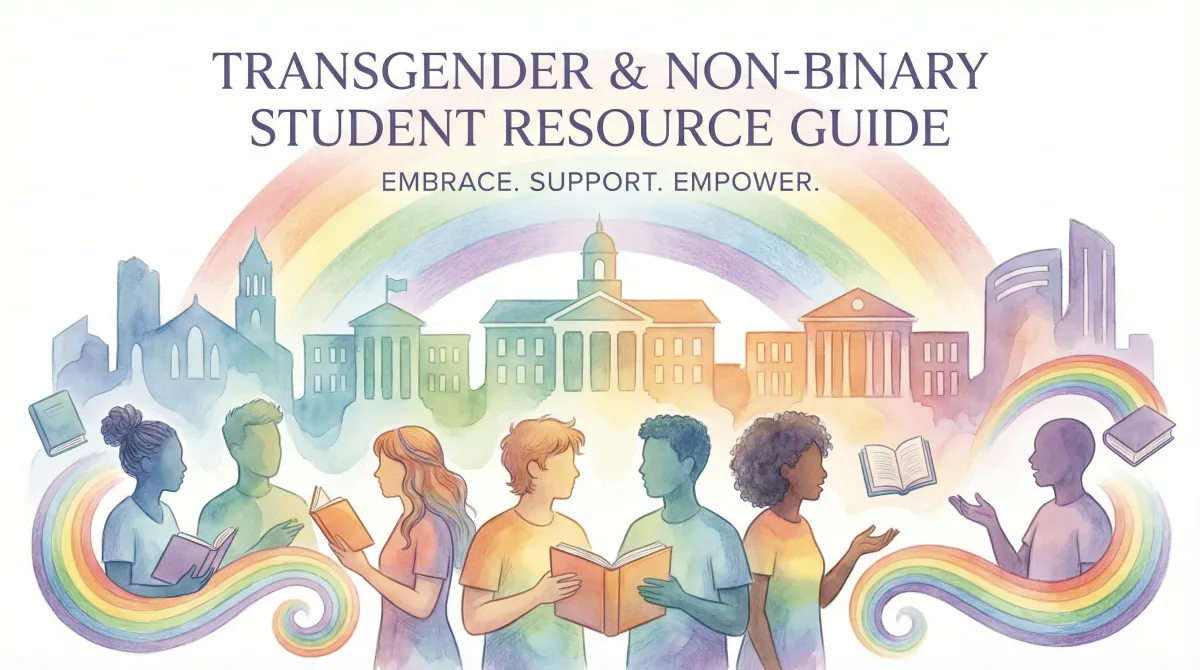
Starting college brings excitement, challenges, and countless new experiences. For transgender and non-binary students, this transition can feel even more complex. You might wonder: Will my campus be safe? Can I access the healthcare I need? What happens if someone refuses to use my correct name or pronouns?
This guide answers those questions. Whether you’re just beginning your college search, preparing for your first semester, or already navigating campus life, you’ll find practical information about your rights, available resources, and how to advocate for yourself.
You deserve to thrive in college, not just survive it.
Understanding Your Rights on Campus
Federal law protects you from discrimination based on your gender identity. Title IX prohibits sex-based discrimination in educational institutions that receive federal funding (nearly all colleges and universities). Courts have consistently ruled that this protection extends to transgender and non-binary students.
What this means in practice:
Your school must treat you according to your gender identity. You don’t need to provide medical documentation, legal name changes, or any other “proof” of your gender. Your identity is valid as you express it.
You have the right to your correct name and pronouns. While honest mistakes happen, teachers and staff cannot deliberately use the wrong name or pronouns after you’ve told them your preferences. If this happens repeatedly, it constitutes harassment under Title IX.
You can use facilities that match your gender identity. This includes restrooms and locker rooms. Your school cannot force you into separate facilities, though you can request private spaces if that makes you more comfortable.
Your privacy matters. Schools must keep information about your transgender status, former name, or medical history confidential. They cannot “out” you without your permission, except in specific circumstances required by law.
You can participate fully in campus life. This means joining student organizations, participating in athletics, attending events, and accessing all programs available to other students. Your gender identity cannot be used as a reason to exclude you.
Beyond Title IX, other laws support your rights. The Equal Access Act ensures that LGBTQ+ student groups receive the same treatment as other organizations. The Family Educational Rights and Privacy Act (FERPA) protects your educational records. The First Amendment protects your right to express your gender identity through clothing, speech, and other forms of expression.
When Your Rights Are Violated
Knowing your rights is one thing. Enforcing them is another. If you experience discrimination or harassment, you have several options.
Start by documenting everything. Keep records of incidents, including dates, times, locations, people involved, and any witnesses. Save emails, text messages, and other communications. This documentation becomes crucial if you need to file a formal complaint.
Talk to your school first. Many institutions want to resolve issues quickly once they understand what’s happening. Contact your campus LGBTQ+ center, Title IX coordinator, or student affairs office. Explain the situation clearly and state what you need to happen.
If your school doesn’t respond appropriately, you can file a complaint with the U.S. Department of Education’s Office for Civil Rights. You have 180 days from when the discrimination occurred, though you can request an extension if you explain why you’re filing late. The complaint process is confidential, and your school cannot retaliate against you for filing.
You might also have options through your state education department or human rights agency. Many states have laws that specifically protect transgender students. Organizations like GLSEN and the ACLU can help you understand your options and connect you with legal support if needed.
Campus Resources: What to Look For and How to Access Them
Good campuses for transgender and non-binary students offer comprehensive support systems. Here’s what to seek out.
LGBTQ+ Resource Centers
These centers are your home base on campus. They typically offer peer support and community building, educational programming and workshops, advocacy assistance when you face challenges, connections to other campus resources, safe spaces for socializing and studying, and information about campus policies and procedures.
Don’t assume you know what a center offers based on its name or your experiences elsewhere. Visit their website, stop by in person, and ask questions. Some centers have dedicated staff who specialize in supporting trans and non-binary students.
Gender-Affirming Healthcare
Many student health centers now provide gender-affirming care. Services often include:
Hormone therapy: Providers can prescribe and monitor estrogen, testosterone, anti-androgens, and progesterone. Options typically include oral medications, injections, and topical applications. Some schools use an informed consent model, meaning you don’t need a therapist’s letter to begin hormone therapy.
Primary care: Regular health maintenance, preventive care, sexual health services, and treatment for acute and chronic conditions. Good providers understand that your healthcare needs may differ from assumptions based on your assigned sex at birth.
Surgical referrals: While most campus health centers don’t perform gender-affirming surgeries, they can refer you to specialists for chest reconstruction, facial procedures, genital reconstruction, and other surgeries. They may also help with pre-operative evaluations and post-operative care.
Mental health support: Counseling services that understand the specific challenges trans and non-binary students face, including gender dysphoria, minority stress, and navigating transition. Look for providers who use affirming language and don’t pathologize your identity.
Case management: Help navigating insurance coverage, finding off-campus specialists, obtaining letters for surgery, changing your name on medical records, and accessing financial assistance.
Check whether your student health insurance covers gender-affirming care. Many plans now include hormone therapy, surgeries, and related services. If coverage seems unclear, ask to speak with someone who specializes in LGBTQ+ health benefits. According to a 2024 study by the UCLA Williams Institute, 73% of student health plans now cover hormone therapy, up from 45% in 2020.
Housing and Facilities
Where you live significantly impacts your college experience. Many campuses now offer:
Gender-inclusive housing: Options that allow students of different genders to room together. This might mean specific residence halls, floors, or the ability to request any roommate regardless of gender. Some schools handle this through a general application process; others require you to specifically request gender-inclusive housing.
Private bathrooms: Single-occupancy restrooms available throughout campus. Many schools now maintain maps showing all-gender bathroom locations. Apps like Refuge Restrooms can help you find safe facilities both on and off campus.
Flexible housing assignments: The ability to work with housing staff to find arrangements that feel safe and comfortable, even if they fall outside standard procedures. Good housing offices treat each student’s needs individually rather than applying rigid policies.
If your school doesn’t offer gender-inclusive housing, don’t give up. Contact the housing office and LGBTQ+ center to explain your needs. Many schools will work with you to find solutions, especially if you’re persistent and clear about what you need.
Name and Gender Marker Changes
Using your correct name matters for your safety, mental health, and sense of belonging. Many schools now allow you to update your name and gender marker in campus systems without requiring legal documentation.
This typically affects student ID cards, class rosters and learning management systems, email addresses and campus directories, and diplomas and transcripts (policies vary).
The process usually involves contacting the registrar’s office or student records. Some schools have online forms; others require an in-person meeting. Ask about what documentation, if any, you need to provide, how long the process takes, which systems will reflect your chosen name, whether your legal name will still appear anywhere, and how to update your name if you legally change it later.
Even if your school requires legal documentation for some records, they should still use your chosen name in daily interactions. Your professors should call you by your correct name in class, regardless of what appears on official rosters.
Building Your Support Network
Resources and policies matter, but people make the real difference.
Connect with other trans and non-binary students. Look for student organizations specifically for trans and non-binary people, or broader LGBTQ+ groups. These connections provide emotional support, practical advice, and the reminder that you’re not alone.
Find allies among faculty and staff. Some professors and staff members are particularly knowledgeable and supportive. They might display safe space stickers, include their pronouns in email signatures, or be known in the community as good resources. These allies can advocate for you, provide mentorship, and help navigate campus bureaucracy.
Explore off-campus resources. Local LGBTQ+ centers, support groups, and healthcare providers can supplement what your campus offers. They might provide services your school doesn’t, or simply offer a break from campus life.
Stay connected to online communities. While in-person connections are valuable, online spaces can provide support when you need it most: late at night, during breaks, or when you’re feeling isolated.
Practical Strategies for Common Challenges
Even with good resources, you’ll face challenges. Here are strategies that work:
When professors use the wrong name or pronouns: Start with a private conversation. Most mistakes come from habit or confusion, not malice. If the problem continues, escalate to the department chair or dean of students. Document each incident.
When you face harassment from other students: Report it immediately to campus security, your RA, or the Title IX office. Harassment often escalates if left unaddressed. You’re not overreacting, and you’re not causing trouble. You’re protecting yourself and potentially other students.
When insurance denies coverage: Appeal the decision. Many initial denials get overturned on appeal, especially for medically necessary care. Your student health center or campus LGBTQ+ center may have staff who can help with appeals.
When you feel isolated: Remember that building community takes time. Attend events even when you don’t feel like it. Reach out to people who seem friendly. Join organizations. It gets easier.
When you’re exhausted from educating others: You’re not obligated to teach people about trans issues. It’s okay to direct people to resources instead of explaining everything yourself. It’s okay to simply walk away from conversations that feel draining.
What College Actually Looks Like
College offers real opportunities for growth, learning, and self-discovery. As a trans or non-binary student, you bring perspectives to your campus community that matter.
Focus on what matters most to you. Maybe that’s academics, maybe it’s activism, maybe it’s finding your people and having fun. You don’t have to be a spokesperson for trans issues unless you want to be. You’re allowed to just be a student.
At the same time, don’t hesitate to advocate for yourself and others. When you speak up about problems, you often create change that helps future students. When you share your story, you help others feel less alone.
Essential Resources to Bookmark
National Organizations:
- Trans Lifeline: Crisis support specifically for trans people (877-565-8860)
- The Trevor Project: 24/7 crisis support for LGBTQ+ youth (866-488-7386)
- National Center for Transgender Equality: Policy information and advocacy resources
- GLSEN: Educational resources and know-your-rights guides
- Trans Legal Services Network: Legal resources organized by state
Healthcare:
- WPATH (World Professional Association for Transgender Health): Standards of care and provider directory
- Planned Parenthood: Many locations offer gender-affirming care
- Local LGBTQ+ health centers: Search for community health centers in your area
Financial Support:
- Point Foundation: Scholarships for LGBTQ+ students
- Live Out Loud: Scholarships and mentorship
- Campus Pride: Scholarship listings and campus resources
Community:
- Gender Odyssey Conference: Annual gathering with workshops and networking
- Local trans support groups: Check community centers and healthcare providers
- Online communities: Reddit’s r/asktransgender, Discord servers, and other platforms
Your Next Steps
If you’re preparing for college:
- Research schools’ policies on name changes, housing, and healthcare
- Contact LGBTQ+ centers at schools you’re considering
- Ask current trans and non-binary students about their experiences
- Review health insurance coverage for gender-affirming care
- Connect with other incoming trans and non-binary students
If you’re already on campus:
- Locate your campus LGBTQ+ center and introduce yourself
- Update your name and pronouns in campus systems
- Find out what healthcare services are available
- Connect with student organizations
- Identify supportive faculty and staff
If you’re facing challenges:
- Document everything that’s happening
- Reach out to your campus LGBTQ+ center or Title IX office
- Connect with other students who might have faced similar issues
- Consider filing a formal complaint if informal approaches don’t work
- Remember that you deserve support and shouldn’t have to handle this alone
Final Thoughts
College as a trans or non-binary student requires resilience, but you don’t have to do it alone. Resources exist to support you. Laws protect you. Communities welcome you.
The challenges you face are real, but they don’t define your college experience. You’ll also find joy, friendship, learning, and growth. You’ll discover new parts of yourself. You’ll build skills and knowledge that serve you throughout your life.
Your identity is valid. Your needs are legitimate. Your presence makes your campus community richer and more complete.