For years, the playbook for LGBTQ+ student rights was straightforward: win in court, and the protections would follow. A favorable Supreme Court ruling meant schools had to comply. A successful Title IX challenge meant discriminatory policies would fall. The courts were the battlefield, and a legal victory was the prize.
But 2026 has made one thing abundantly clear — the courts won’t save us, and they never really could. A string of setbacks, alongside federal rollbacks of gender-affirming care access and protections, has forced LGBTQ+ student advocates to ask a harder, more honest question: what happens when the highest court in the land doesn’t side with you?
The answer, it turns out, is where the real work has always been.
The Numbers Are Shifting — And That’s Exactly Why Strategy Must Too
The backdrop for this strategic reckoning isn’t abstract. It’s data-driven, and it’s sobering.
A 2026 Gallup poll revealed that for the first time in over two decades, public acceptance of LGBTQ+ people in America has declined. The numbers tell a stark story: just four years ago, 55% of Republicans supported same-sex marriage. Today, that figure sits at 37%. On transgender rights specifically, the shift is even more dramatic — only 5% of Republicans now say that changing one’s gender is morally acceptable, down from 22% five years ago.
These aren’t just statistics. They translate directly into policy. They fuel state-level legislation targeting transgender students’ participation in athletics, access to facilities, and even their right to be addressed by their chosen names. They embolden school boards to debate whether a student’s identity is appropriate classroom content at all.
When one Chicago Public Schools board member put it bluntly in June 2026: “LGBTQ+ students know what it means when adults debate their lives like they are an issue on a campaign mailer.” The point was simple — no child should have to earn their humanity, and no student should have to litigate their identity before they can learn.
The Old Playbook Had a Fatal Flaw
Court victories are binary. You win, or you lose. And even when you win, enforcement depends on political will, administrative compliance, and the patience to fight appeal after appeal.
The UC misgendering lawsuit earlier this year — which made headlines as a landmark case for trans students’ right to be addressed by their correct names — illustrated both the power and the limits of legal advocacy. A win in one district doesn’t automatically protect a trans student three states over. A federal ruling can be narrowed, delayed, or quietly undermined by non-compliant administrators.
Student advocates have started to recognize what organizers in other movements learned long ago: lasting change doesn’t come from the top down. It comes from building power at every level simultaneously.
What the New Strategy Looks Like
Across the country, LGBTQ+ student organizations are pivoting. The shift isn’t about abandoning legal challenges — it’s about not depending on them as the sole or primary strategy. Here’s what the new approach involves:
1. Campus-Level Policy Codification
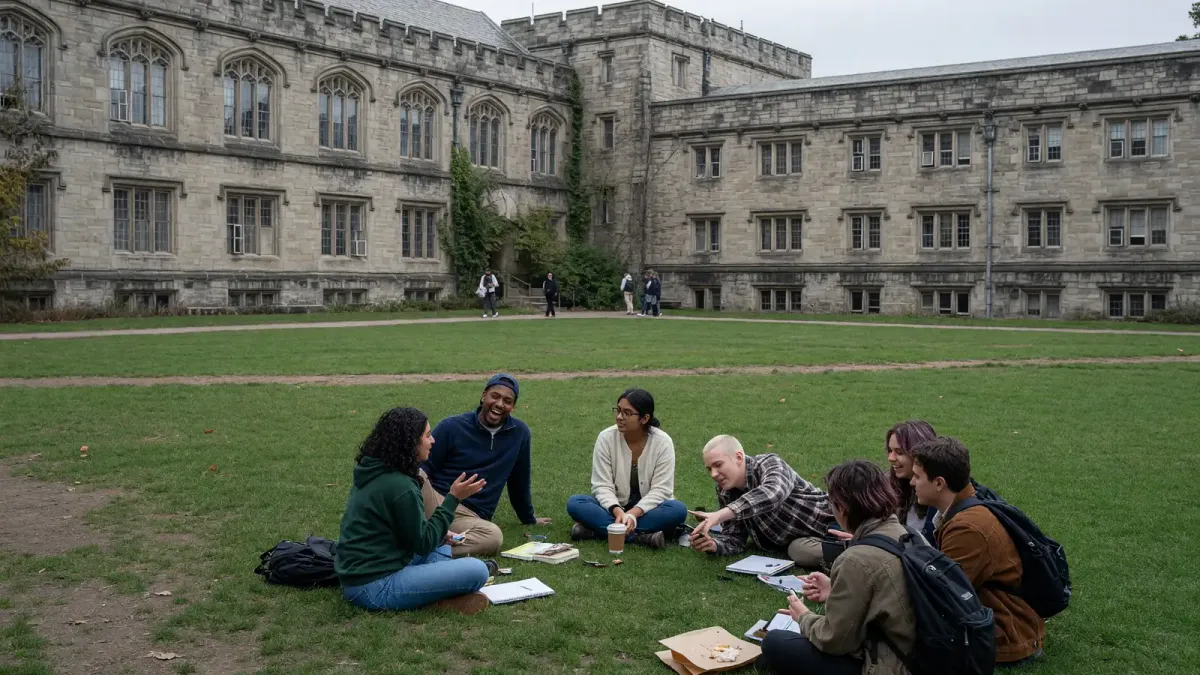
Rather than relying on federal Title IX guidance that can change with each administration, student groups are pushing their own institutions to adopt comprehensive nondiscrimination policies that exist in campus handbooks — independent of any external mandate. These policies cover preferred name and pronoun usage, gender-inclusive housing, access to healthcare resources, and clear reporting procedures for harassment.
The advantage? Once written into institutional policy, these protections survive federal shifts. They create an internal enforcement mechanism — through campus ombudspersons, student government, and faculty governance — that doesn’t require a lawsuit to activate.
2. State Legislative Coalitions
In states where the political climate is hostile, LGBTQ+ student advocates are building coalitions that extend far beyond campus. The Chicago Tribune commentary from June highlighted a critical insight: the fight for LGBTQ+ students is connected to the fight for immigrant families, Black students, bilingual education, disability rights, and foster care advocacy. “Our fights are not identical,” the board member noted. “But they are bound together by a simple belief.”
This intersectional approach is producing results. Coalitions in several states have successfully blocked anti-trans legislation by framing it not as a niche cultural issue but as a broad question of student wellbeing and institutional autonomy.
3. Mutual Aid and Practical Support
When legal protections fail, community support becomes the safety net. Student organizations are expanding beyond awareness campaigns to offer concrete resources: emergency housing funds for students facing family rejection, legal referral networks, mental health peer support programs, and — increasingly — relocation assistance for students in states where basic protections have been stripped away.
The challenge here is real and growing. As reported by Axios in June 2026, LGBTQ+ Americans attempting to relocate from restrictive states face a brutal barrier: housing costs in LGBTQ+-protective states have reached a point where a household would need to earn over $150,000 annually to afford a median-priced home. Student organizers are responding by building shared housing networks and partnering with established LGBTQ+ community organizations to create transitional housing programs.
4. Narrative Power and Media Engagement
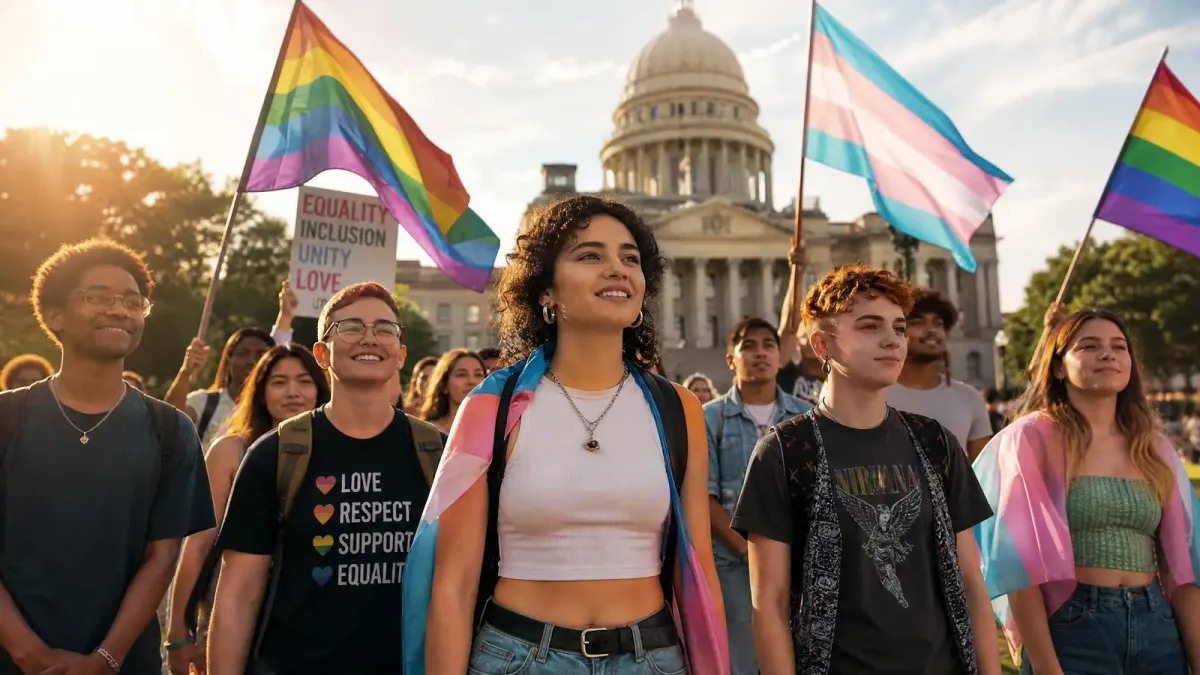
Student advocates are also learning that controlling the narrative is as important as controlling the policy. Rather than letting opponents frame transgender students as a political controversy, campus organizations are centering student voices — personal stories, academic achievements, community contributions. Pride 2026 celebrations across the country reflected this duality: yes, there were parties and parades, but there were also teach-ins, voter registration drives, and community forums that connected celebration to strategy.
What Students Can Do Right Now
If you’re an LGBTQ+ student — or an ally — on a campus in 2026, here’s what the evidence suggests works:
- Know your campus policy inside and out. Don’t assume protections exist just because they should. Read your student handbook. If nondiscrimination language is vague or absent, that’s your first organizing target.
- Join or form a coalition, not just a club. Single-issue organizations are easier to dismiss. Groups that connect LGBTQ+ advocacy to broader student welfare issues — mental health, housing security, academic freedom — build wider support and more political power.
- Document everything. When policies are violated — whether it’s a professor refusing to use correct pronouns or an administrator blocking a student event — keep records. Documentation is the foundation of both internal accountability and, if necessary, legal action.
- Build relationships with faculty and staff who have institutional memory. Administrators come and go. Faculty who have been on campus for decades know which policies survived previous administrations and how to navigate governance structures to make changes stick.
- Don’t isolate. The data is clear that acceptance is declining in certain demographics. But that decline is not universal, and it is not permanent. Movements that build broad coalitions outlast political cycles.
The Long Game
The Supreme Court may not have the final word on trans student rights. But that was never going to be the end of the story anyway. Civil rights in America have never been won by courts alone — they’ve been won by movements that made those court decisions possible in the first place, and that continued fighting long after the gavel fell.
LGBTQ+ students in 2026 are building something that outlasts any single ruling, any single administration, any single election cycle. It’s slower. It’s harder. It requires showing up to school board meetings and student government sessions and state capitol hearings — not just Supreme Court steps.
But it works. And it’s the only thing that ever has.