A resolution agreement is not a statute. It is a contract a school signed to end an Office for Civil Rights investigation. Students treat it like law because administrators quoted it like law. On Monday, the Department of Education said parts of those contracts are coming off the table.
Higher Ed Dive’s account is the one to keep. OCR is rescinding pieces of Title IX resolution agreements that previous Democratic administrations used to require bathroom access, preferred pronouns, and, in some K-12 cases, keeping LGBTQ-related books. The department’s press line is blunt: earlier administrations “distorted the law contrary to its plain meaning” to police gender identity rather than sex, and the agreements had “no legal foundation.”
You can argue with that sentence in a seminar. You cannot argue with the operational fact. If your campus has been pointing at an OCR letter from 2016 or 2022 as the reason the locker room policy looks the way it does, that letter may no longer be doing that work.
We already mapped the broader Title IX shift. This week is narrower. It is a list of named institutions, a press release, and a homework assignment: find out whether your school was on the old paper, and what it will still do without it.
Who is actually on the list
Most of the names Higher Ed Dive printed are school districts. Delaware Valley in Pennsylvania had to hire a consultant “with expertise in child and adolescent gender identity,” review policies, and stand up support teams for gender-transitioning students. Cape Henlopen in Delaware, Fife in Washington, La Mesa-Spring Valley and Sacramento City Unified in California sit on the same list.
The higher-ed name in that write-up is Taft College, in California. If you do not go to Taft, do not shrug. OCR resolution agreements are templates. General counsel offices copy the language. A district in Pennsylvania losing a consultant mandate does not rewrite your student handbook. It does tell your Title IX coordinator which way the federal wind is blowing when they next edit a PDF.
K-12 Dive’s version is the same announcement with a K-12 frame. Read both if your campus shares a district lawyer with a local school system, which community colleges sometimes do. The legal shop is one office. The student body is not.
What the agreements had required, in the Obama and Biden interpretations Dive recaps, included transgender students’ bathroom access and preferred pronoun usage, and in some cases blocking the removal of LGBTQ-related books. Those are the clauses the department now says were never authorized. Sex discrimination under Title IX still exists. The fight is what “sex” covers this semester.
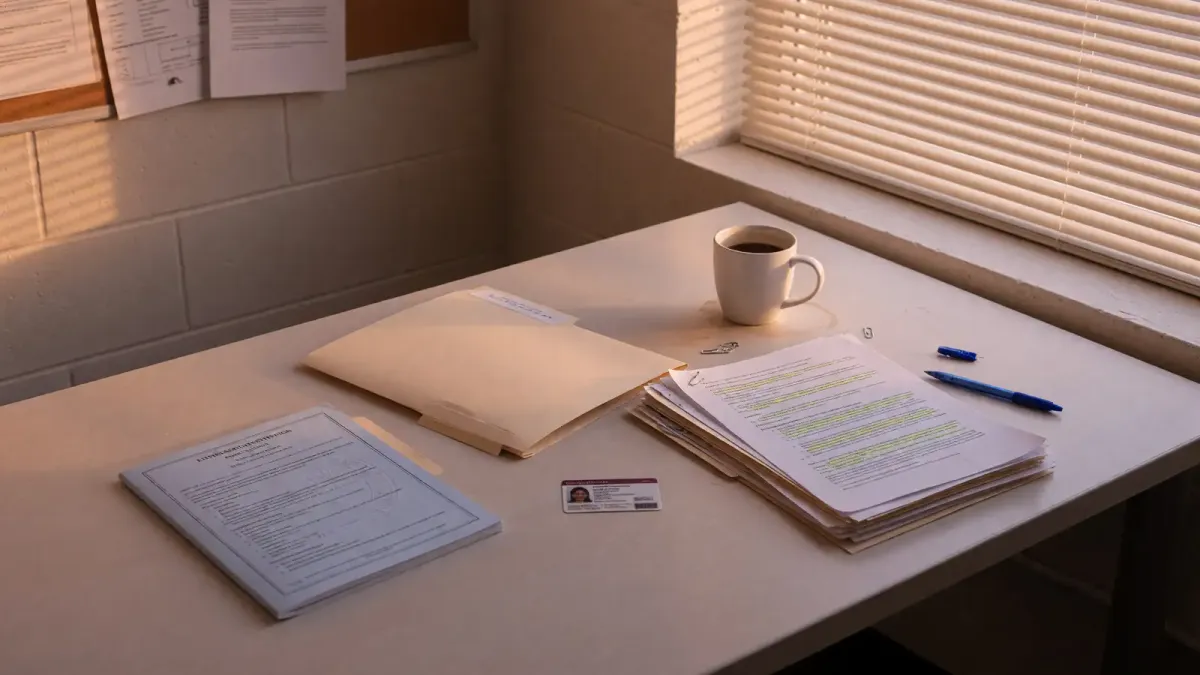
Do not outsource the list. Dive named schools. Your campus may have an agreement that did not make this particular Monday roundup. Search your school’s domain for “resolution agreement” and “OCR” and “Title IX.” If you find a PDF, download it. If the file disappears next week, you will want the copy.
A settlement last week is not this letter
Nine days ago Georgia Southern’s former wellness director took $250,000 to drop a lawsuit. That was a personnel contract. Nobody admitted Title IX liability. The flag did not go back up.
Monday’s OCR move is the other machine. It is the compliance office in Washington telling specific schools that pieces of an old deal no longer bind them. A settlement pays one person. A rescission changes what a coordinator can be forced to do by the federal file.
If student government cites Georgia Southern as proof that “Title IX still protects us in court,” a lawyer will yawn. If student government cites an OCR agreement that OCR just hollowed out, the lawyer will send a shorter letter. Use the right document for the argument you are in.
The Georgia Southern complaint leaned on Title IX retaliation for opposing sex discrimination, including gender identity. That theory is exactly what this week’s press release calls a distortion. Whether a judge would have agreed in Statesboro is what the settlement left untested. Whether OCR will still write agreements on that theory is, as of Monday, a lot less likely.
Keep the two folders separate on your desktop: lawsuits, and OCR files. Mixing them is how you lose a meeting.
What still binds the school
Title IX the statute is still on the books. Your campus still has a coordinator, still has a grievance process, still takes federal money. None of that vanished because a press release used the word “rescind.”
What may have vanished is the extra architecture an old agreement piled on top: a named consultant, a required training vendor, a bathroom sentence written to satisfy OCR rather than the board. If those extras were the only reason a practice existed, the practice is now a policy choice. Policy choices can be reversed in a cabinet meeting.
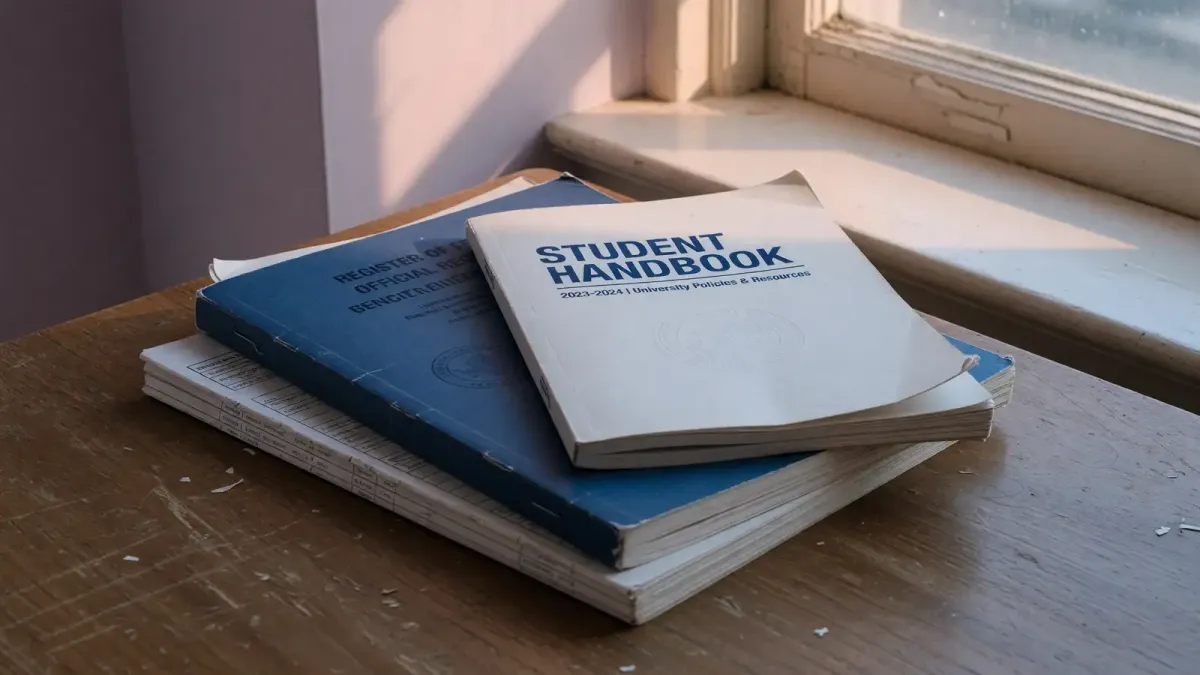
Campus policy you voted into the student handbook is still campus policy until the board changes it. State law is still state law. A union contract covering staff pronouns is still a contract. Those are the layers that do not live in Washington.
Ask, in writing, three questions:
- Does this institution currently operate under an OCR Title IX resolution agreement? Yes or no, with the date and the docket number.
- Which clauses, if any, did the Department of Education identify as rescinded? Paste the department letter, not a paraphrase.
- Which of those clauses were also independently adopted in our code of conduct, housing contract, or employee handbook?
If the answer to 3 is “none, it was only the OCR file,” you now know what can disappear without a campus vote. If the answer is “we wrote it into housing in 2023,” the fight is local.
We already wrote the discrimination complaint path. File on a specific incident, a date, and a policy that still applies. Do not file “because OCR changed its mind.” That is a press clip, not a complaint.
If the grievance office stalls, the escalation map is the same as it was in August. A rescinded agreement does not shorten it. It may lengthen it, because the coordinator will now say they no longer have a federal mandate to do the extra steps.
How to read a disappearing PDF
Administrators will not always announce “we are done with the 2016 letter.” They will update a FAQ. They will take down a microsite. They will leave the handbook alone and change the housing assignment practice over winter break.
Save:
- The resolution agreement PDF, with the URL and the date you grabbed it.
- The Title IX page as it exists this week. Print to PDF. Screenshots of a CMS page are better than memory and worse than a PDF.
- Housing and athletics pages that mention gender identity, bathrooms, or pronouns. Those are the first to move.
- Any email from Student Affairs that cited “our OCR agreement” as the reason they could or could not do something. That citation may now be stale. The email is still evidence of what they claimed.
If you are at Taft, you are on the published list. Ask the questions above this month, not after housing assignments lock. If you are not at Taft, still ask. Counsel sometimes waits to see who else got a letter.
Do not harass the Title IX coordinator’s student worker. Send one email to the coordinator and copy the dean of students. Give them a week. If they ignore it, that is its own record.
Books and libraries: some of the K-12 agreements blocked removal of LGBTQ-related books. That is a district fight. On a college campus the analog is course lists, library displays, and student org funding. OCR walking back a K-12 books clause does not let a dean shred a gender studies syllabus. It does give a trustee a talking point. Treat talking points as talking points until a written policy changes.
Staff conferences are not a student remedy
LGBTQ Leaders in Higher Education still has its 2026 Leadership Institute on the calendar: October 13–15 in Atlantic City, hosted by Stockton, lodging hold at the Tropicana through September 21. Mentoring for people who registered by September 1. That is a staff and administrator event. It will have sessions with names like “When Systems Fail Quietly.”
If your campus pays for a director to go, ask them to bring back the OCR memo, not the tote bag. If your campus just eliminated that director, a conference in New Jersey will not replace them. Last week’s Georgia Southern piece is the reminder.
Students do not get a seat at that institute by default. Do not wait for October for a policy that can change in a cabinet meeting this week.
Housing, bathrooms, and the clause that moves first
Dive’s recap of what the old agreements required is a shopping list of the first things to check on a campus that was never named: bathroom access, preferred pronouns, support teams for transitioning students. Those are also the first things a housing director can change without rewriting the whole Title IX page.
If you live in campus housing, the assignment rules and the restroom maps are the documents. A coordinator can say “Title IX still applies” while housing quietly stops honoring a 2024 FAQ. Ask housing for the current assignment policy as a PDF. If last year’s PDF mentioned an OCR agreement as the legal basis, that sentence is now a problem for them, not a slogan for you.
Pronouns in class and in email are often an employee-handbook issue, not an OCR file. Faculty contracts and staff HR pages survive a Washington press release. Students still need to know which document they are citing when a professor refuses a name. Cite the handbook if it is there. Do not cite a rescinded letter.
Athletics is a different statute fight and a different news cycle. This Monday list is not a sports bill. Keep it off this email so counsel cannot change the subject.
Use the week, not the vibe
Monday’s language is ideological on purpose. “Distorted the law.” “No legal foundation.” That is how departments talk when they want coverage. Your job is inventory.
This week:
- Search, download, date-stamp.
- Send the three questions.
- Tell the student org what you found, in writing, without a rally unless you already had one planned.
- If housing assignments are in progress, ask housing whether anything in the assignment rules depended on an OCR agreement. Get the answer in email.
Next month:
- Compare the Title IX page to the PDF you saved.
- If a clause vanished, ask when and by whose vote.
- If nothing vanished, you still have a paper trail for the semester a trustee asks why the bathroom signs look like 2024.
Title IX did not repeal itself. A set of settlement-like agreements got trimmed. The people who will feel it first are students at the named schools, then students at schools whose lawyers read the same press release and quietly delete a sentence. Be the person who noticed which sentence.