At large research universities, the LGBTQ+ resource center is often a physical space: a dedicated building or suite with staff, programming budgets, and decades of institutional history. At small liberal arts colleges, community colleges, and rural campuses, the queer community may consist of six students, a supportive English professor, and a Discord server. But the need for support is just as real — and in some ways more acute, because students at these institutions often have fewer off-campus alternatives.
The Landscape
Approximately 40% of U.S. college students attend community colleges, which are the least likely to have dedicated LGBTQ+ resource centers. Rural four-year institutions face similar gaps: limited budgets, smaller student bodies, and sometimes political environments that make administration hesitant to visibly support LGBTQ+ programming.
Yet students at these institutions are no less queer than their peers at flagship universities. They’re just less visible — and often less served.
“If you’re a queer student at a community college in rural Missouri, your campus might not have a single out faculty member, let alone a resource center,” said Dr. Kelsey Tran, who researches LGBTQ+ student experiences at community colleges. “But that doesn’t mean you don’t need community. It means you have to build it differently.”
The Discord Revolution
One of the most significant shifts in LGBTQ+ campus organizing over the past five years has been the move to digital-first community building. Discord servers, GroupMe chats, and Instagram group messages have become de facto queer centers for students at institutions without physical spaces.
At a community college in upstate New York, a student named Robin started an LGBTQ+ Discord server with five members in fall 2024. By spring 2026, it had 87 members — a substantial portion of the school’s queer student population. The server functions as a support group, an event planning hub, and a resource library. Members share scholarship opportunities, coordinate rides to the nearest Planned Parenthood, and organize meetups at the campus coffee shop.
“The administration doesn’t even know it exists,” Robin told us. “Which is both a problem and, honestly, kind of the point. We built something that works for us without waiting for permission.”
The downside of unofficial organizing is that it’s fragile: it depends on student leadership that graduates, and it doesn’t come with institutional funding or protection. But the upside is speed and autonomy — students can build community tomorrow without filing paperwork today.
Working With What You Have
Even at institutions without dedicated LGBTQ+ centers, there are usually resources that can be redirected. Students we spoke with identified several unexpected sources of support:
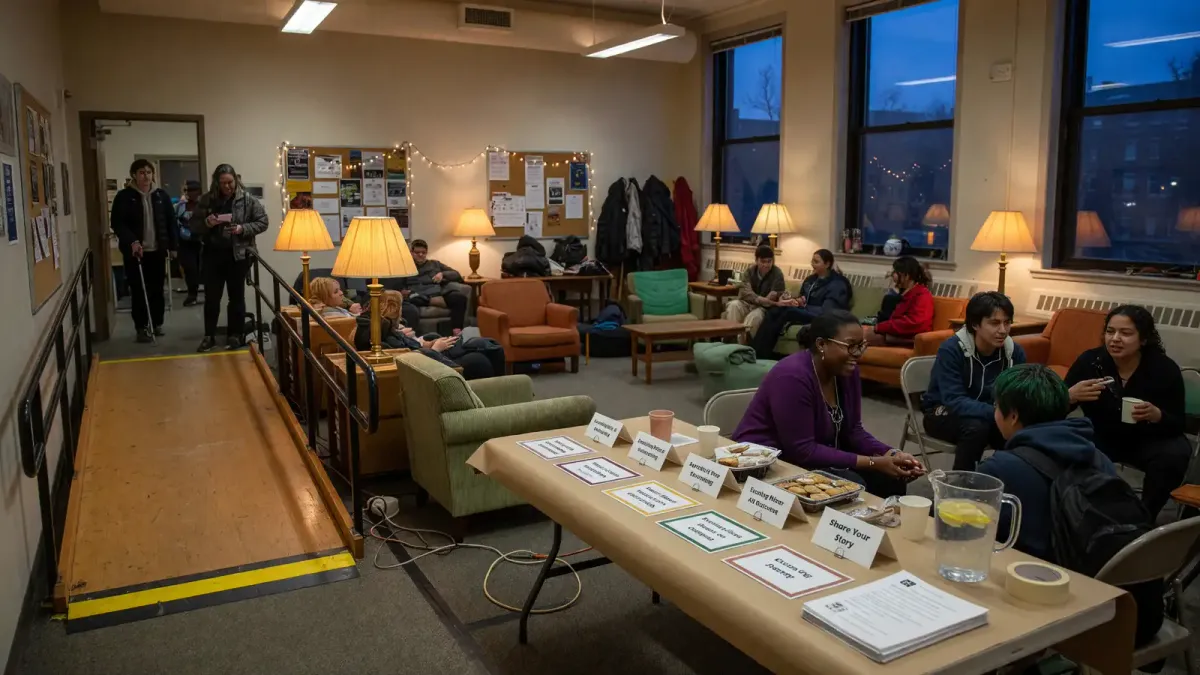
The counseling center. Even a one-person counseling office can offer an LGBTQ+ support group if students ask. “I walked into the counseling office and said, ‘I want to start a queer support group, and I need a staff sponsor and a room.’ The counselor said yes to both,” said a student at a rural liberal arts college. “Sometimes the answer is no because no one has asked.”
Academic departments. Gender studies, sociology, and psychology departments often house faculty with LGBTQ+ expertise and interest. A single professor willing to serve as a faculty advisor can unlock access to meeting space, event funding through departmental budgets, and institutional legitimacy.
Student government. At many small colleges, student government controls a portion of the activity fee budget. LGBTQ+ students who run for student government — or simply build relationships with those already there — have directed thousands of dollars toward queer programming, speakers, and resource libraries.
Local community organizations. The nearest city may have an LGBTQ+ community center, a PFLAG chapter, or a queer-friendly faith community. These organizations are often eager to support college students and may offer meeting space, mentorship, or funding.
Starting an Official Organization
If you want to move from informal to formal, the process typically looks like this:
Find a faculty or staff advisor. This is usually required for official recognition. Look for professors who include pronouns in their email signatures, teach courses related to gender or sexuality, or have publicly supported LGBTQ+ causes.
Write a constitution. Most student government associations require one. Keep it simple: name, purpose, membership criteria (usually “open to all students”), officer structure, and meeting frequency. Templates are available online.
Register with student government. This unlocks funding, room reservations, and the ability to table at campus events. The process varies by institution but typically involves submitting your constitution and officer list.
Start small and consistent. The most sustainable student organizations are those that do one thing reliably — a weekly meeting, a monthly movie night, a biweekly discussion group — rather than trying to do everything at once.
When Administration Pushes Back
At some institutions, particularly in states with anti-LGBTQ+ legislation, students face active resistance. Official recognition may be denied. Event funding may be blocked. The student newspaper may refuse to run LGBTQ+ event listings.
In these situations, students have several options:
Document everything. Record the dates and details of denied requests. This creates a paper trail that can be shared with organizations like the ACLU, Lambda Legal, or FIRE (Foundation for Individual Rights and Expression), which sometimes take on campus free speech and discrimination cases.
Go unofficial but visible. If the institution won’t recognize your group, meet anyway. A weekly coffee hour at a local café, advertised through word of mouth and a private social media account, is harder for administrators to shut down than an official student organization.
Find off-campus allies. Local LGBTQ+ organizations, supportive religious congregations, and even sympathetic local businesses can provide space and legitimacy that the campus won’t.
The students building queer community at small and rural campuses aren’t waiting for permission. They’re building what they need with what they have — and proving that community doesn’t require a dedicated center, just dedicated people.