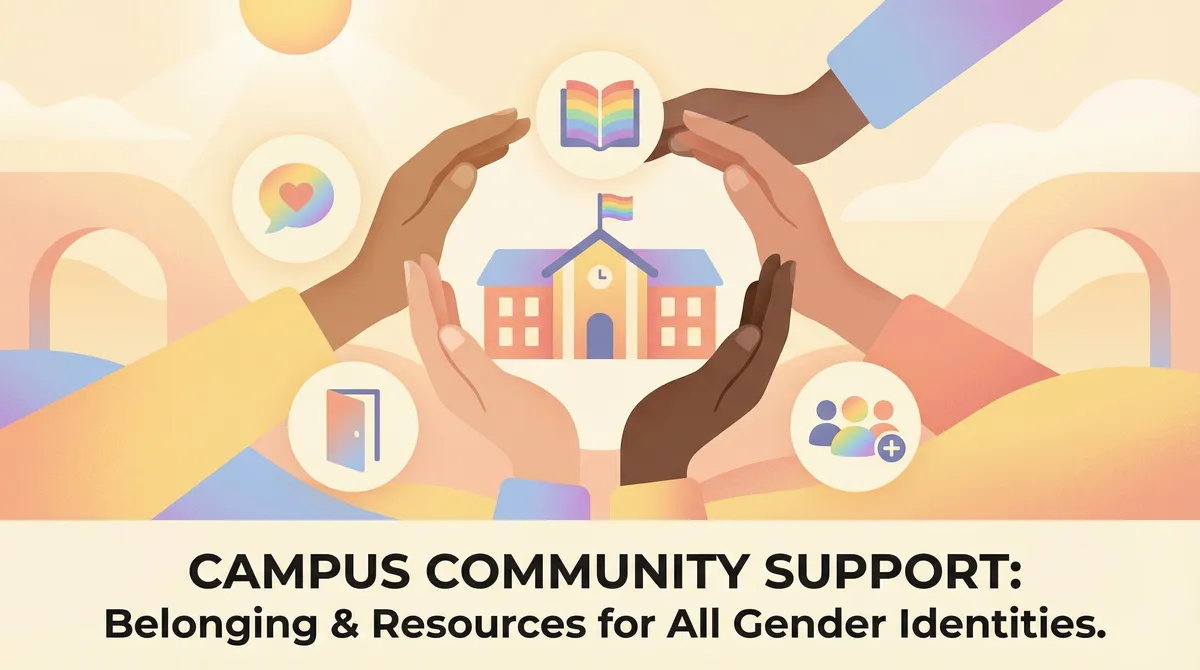
Everything About Non-binary Campus Support: A Practical Guide
Non-binary individuals have always existed on college campuses, yet institutional support has often lagged behind the lived experiences of students who identify outside the traditional gender binary. This guide explores how campuses can create environments where non-binary students feel seen, safe, and supported throughout their educational journey.
Whether you are a student seeking resources, a faculty member wanting to improve your teaching practices, or an administrator planning policy changes, this article provides practical information to help you understand what meaningful support looks like and how you can contribute to more inclusive campus communities.
Understanding Non-binary Identities in Educational Settings
Non-binary is an umbrella term that describes anyone whose gender identity falls outside the simple man or woman distinction. Some non-binary people identify as having no gender, while others experience their gender as fluid, moving between categories, or as something entirely separate from the binary framework. The key thing to understand is that non-binary identities are valid and real, not a phase or a trend that students will outgrow.
On college campuses, non-binary students often navigate spaces designed around binary assumptions. Dormitories separated by sex, restroom facilities marked only for men or women, and paperwork that offers only male or female options are common features of campus life. These everyday encounters can feel exhausting and alienating, even when no single instance seems dramatic enough to complain about.
Research consistently shows that non-binary students experience higher rates of depression, anxiety, and social isolation compared to their cisgender peers. Academic performance often suffers not because of any lack of ability, but because students spend significant mental energy managing disclosure decisions, hiding aspects of their identity, or simply trying to exist in unwelcoming spaces. The cumulative effect of these microaggressions and structural omissions creates real barriers to educational success.
Non-binary students also bring unique strengths to campus communities. Many develop sophisticated skills in self-reflection, boundary-setting, and handling complex social systems. They often become advocates for broader inclusivity, pushing institutions toward policies that ultimately benefit all students. Understanding both the challenges these students face and the contributions they make helps frame support not as charity but as recognizing inherent worth.
Creating Physically and Emotionally Safe Spaces
Safety on campus means more than security guards and well-lit paths. For non-binary students, safety involves having access to spaces where they can exist without judgment or harassment, and knowing that institutional policies will protect them if problems arise.
Restroom and changing room access remains one of the most immediate concerns for many non-binary students. The simplest approach campuses can take is to designate single-occupancy facilities as gender-neutral and clearly mark them. More comprehensive solutions include converting some multi-stall facilities to all-gender spaces or simply removing binary markers from existing single-occupancy rooms. Students should not have to explain their identity or justify their presence just to use the bathroom.
Housing presents another set of challenges and opportunities. Many campuses now offer gender-inclusive housing options where students can room with others regardless of assigned sex or gender identity. Some institutions have moved beyond simply allowing this option and actively advertise gender-inclusive housing as a standard choice. The best approaches include training for Resident Advisors and housing staff on how to address concerns from students who may be unfamiliar with non-binary identities, without placing the burden on non-binary students to educate others.
Campus organizations and community groups play an important role in creating belonging. Pride alliances, LGBTQ+ student centers, and specifically non-binary support groups provide spaces where students can share experiences, find mentorship, and build friendships with others who understand their journey. These groups work best when they receive adequate funding, meeting space, and administrative support rather than existing as entirely student-run entities with no institutional backing.
Faculty and staff can contribute to emotional safety by using correct names and pronouns, correcting students who misgender others, and including diversity statements in syllabi that explicitly welcome non-binary students. When mistakes happen, a brief sincere apology and correction matters more than elaborate explanations. Students notice when instructors treat gender inclusivity as an afterthought versus an integral part of their teaching practice.
Navigating Academic and Administrative Systems
Academic institutions are bureaucracies, and bureaucracies run on data. Yet much of the data collection practices in higher education remain firmly rooted in outdated binary frameworks. Working within these systems requires both individual strategies for students and systemic reforms that administrators should prioritize.
Student records systems often present the first hurdle. When registration forms, transcript requests, and ID card applications force students to choose between male or female, the message is clear: this institution was not designed with you in mind. Students have reported various workarounds, from selecting the option that matches their legal documents to fighting for changes that may or may not come. The most sustainable solution involves campuses updating their systems to include non-binary options or, at minimum, a field for students to specify their self-identified name and gender regardless of legal status.
Classroom dynamics require ongoing attention from instructors. Roll calls that assume binary names, grouping based on gendered categories, and group work that pairs students with assumptions about their interests all create friction. Effective teaching practices include learning and using correct pronouns from the start, avoiding gendered language when possible, and creating classroom cultures where mistakes can be corrected without shame.
Research and professional development settings present their own challenges. Non-binary students may worry about how their identity will be perceived by potential mentors, co-authors, or employers. Some fields, particularly in STEM disciplines, have cultures that remain resistant to gender diversity. Students benefit from connecting with mentors who share aspects of their identity or who have demonstrated commitment to inclusivity. Departments that actively recruit and retain non-binary faculty and researchers send powerful signals about the possibilities for students in those fields.
Healthcare access on campus deserves special attention. Many university health centers have improved intake forms to include non-binary options, but clinical staff may still lack training in gender-affirming care. Students should know their rights to respectful treatment and how to report experiences of discrimination. Mental health services vary widely in their capacity to support LGBTQ+ students specifically, with some centers offering dedicated counselors and others relying on general staff who may be well-meaning but unprepared.
Building Community and Finding Support Networks
No single guide can substitute for connection with real people who understand your experience. Building community is essential for non-binary students navigating campus life, and several approaches have proven effective across different institutions.
Student organizations form the backbone of many support networks. Beyond general LGBTQ+ groups, some campuses have created specifically non-binary collectives that focus on the unique experiences of people outside the binary. These groups provide space for discussions that might not feel appropriate in more general settings, from dating and relationships to family dynamics to specific challenges in particular majors or campus departments. Starting a new organization requires effort but can fill genuine gaps when existing groups do not address non-binary concerns.
Online communities offer connection even when in-person options feel limited. Social media groups, Discord servers, and forums specifically for non-binary students in higher education provide spaces to ask questions anonymously, share frustrations, and celebrate successes. These communities cross institutional boundaries, allowing students to learn from peers at different schools and build networks that extend beyond graduation.
Alumni connections become valuable as students consider life after college. Many non-binary graduates remember their campus experiences fondly despite challenges and want to support current students. Reaching out to alumni working in fields of interest can provide mentorship, internship opportunities, and realistic perspectives on how workplace experiences compare to academic settings.
Faculty and staff allies can make significant differences in individual student experiences. Some professors have office hours specifically for discussing identity-related concerns, while others serve as informal mentors to non-binary students in their departments. Finding these allies often requires some investigation, through student organizations, course evaluations that mention inclusive teaching, or simply by asking directly whether a potential mentor has experience supporting non-binary students.
Moving Forward Together
Creating genuinely supportive campus environments for non-binary students is an ongoing process that requires attention from everyone in the academic community. There is no destination where the work is complete; instead, institutions and individuals develop habits of listening, learning, and adjusting as understanding deepens.
Students who are non-binary should know that their identity is valid and that difficulties in campus environments reflect institutional failures rather than any shortcoming on their part. Resources exist, people care, and things can improve both individually and collectively. Asking for help is not weakness but strategy, and building connections with others who understand your experience provides strength for the journey ahead.
Faculty, staff, and administrators have responsibilities that go beyond passive acceptance. Supporting non-binary students actively means examining policies for hidden assumptions, speaking up when witnessing discrimination, and investing resources in programs and services that make real differences in students’ daily lives. The goal is not perfection but consistent effort toward inclusion.
Campuses that take non-binary support seriously benefit everyone. Practices developed for non-binary students, like gender-inclusive facilities and flexible name usage, serve cisgender students with various needs as well. Cultures that value authenticity and respect for difference create better learning environments for all. When institutions support their most marginalized students well, they tend to support everyone better.
The path toward full inclusion remains long, but each step matters. Whether you are a student finding your way, a teacher refining your practice, or an administrator reviewing policies, your choices contribute to environments where non-binary students can thrive rather than simply survive. That possibility for flourishing is what education should offer to every student, and it is worth working toward together.