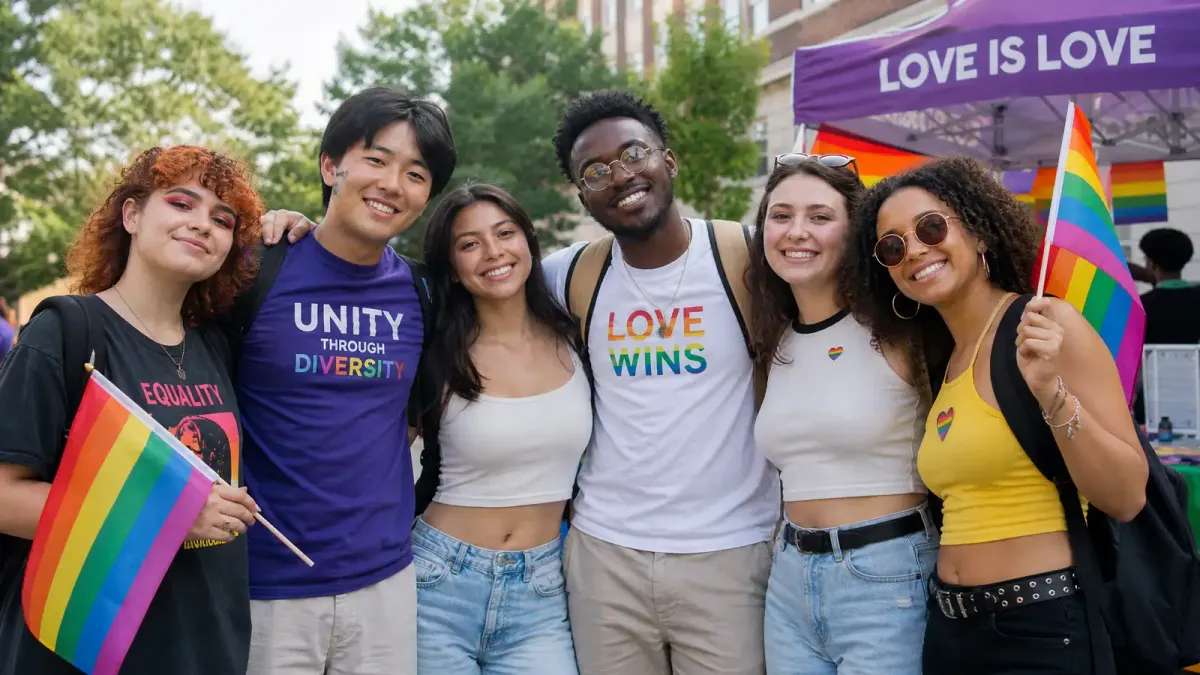
June is Pride Month, and on campuses across the country, that means rainbow banners, guest speakers, and a lot of well-meaning administration emails. But the real work of LGBTQ+ student organizations doesn’t happen in June. It happens on random Tuesdays in November, in a half-empty student union room, when someone needs help navigating a name change on their student ID or just needs to talk to someone who gets it.
The student groups that actually change campus culture aren’t the ones that throw the best events. They’re the ones that build structures — systems of support, community, and advocacy that operate 365 days a year. Here’s what that looks like in 2026.
The Mentorship Model That Actually Works
The most effective LGBTQ+ student organizations on campuses right now have adopted a peer mentorship model that pairs incoming queer students with upperclassmen who share similar identities or experiences. It sounds simple. The impact is anything but.
When a transgender freshman arrives on campus and their mentor is a trans junior who already navigated the housing assignment process, the health services intake, and the inevitable awkward roommate conversation — that’s not programming. That’s infrastructure.
Several campus organizations reported that mentored students were significantly more likely to stay engaged with campus life in their second semester compared to non-mentored peers. The mechanism isn’t hard to understand: having one person on campus who already knows your experience removes the isolation that drives so many students to disengage.
Social Events That Aren’t Just Parties
The stereotype of LGBTQ+ student life revolves around nightlife. But the organizations doing the most interesting work in 2026 are building social spaces that don’t involve alcohol or late hours — and in doing so, they’re reaching students who would never attend a traditional Pride event.
Book clubs. Game nights. Cooking groups. Hiking clubs. The format doesn’t matter. What matters is that these events signal something important: queer community isn’t a single experience, and the social structures that serve it shouldn’t be either.
One campus organization reported that their quiet game night consistently drew more first-year students than their large-scale social mixer. The reason was straightforward: for some students, a room with ten people and a board game is infinitely more approachable than a crowded party.
The Housing Advocacy That Prevents Crises
Every semester, a handful of LGBTQ+ students arrive on campus to find themselves in housing situations that are, at best, uncomfortable and, at worst, unsafe. The student organizations that have formal relationships with their housing offices are preventing these situations before they become crises.
This isn’t about special treatment. It’s about practical communication. When a student organization can flag to housing staff that a transgender student’s preferred name and gender marker need to be reflected in their room assignment — before the roommate finds out through the university directory — it prevents the kind of awkward, sometimes hostile discovery that can derail a student’s entire semester.
The organizations that do this well have written protocols, not just good intentions. They know who to contact in housing, what information needs to be shared, and how to follow up.
Academic Integration
The LGBTQ+ student organizations with the strongest campus presence in 2026 aren’t operating in isolation from academic life. They’re building bridges — partnering with faculty to create inclusive syllabi, working with departments to host guest lectures, and sometimes serving as the community connection that turns a theoretical course topic into a lived experience.
A sociology class on social movements becomes richer when the students in the room include people who organized one. A literature seminar on contemporary narratives gains depth when the campus LGBTQ+ organization co-hosts a reading event with the department.
These partnerships benefit everyone. Faculty get authentic community connections. Students see their identities reflected in academic work. And the organization gains institutional legitimacy that translates into better funding and more administrative support.
The Data Point That Matters Most
Here’s the number that campus administrators should pay attention to: students who are actively involved in LGBTQ+ campus organizations report higher overall satisfaction with their college experience, regardless of the size of the institution or the political climate of the surrounding community.
The mechanism is community. Not programming, not policy, not performative allyship. Actual, sustained, interpersonal community — built by students, for students, on a random Tuesday in November.
That’s what transforms campus life. And it doesn’t need a parade to do it.