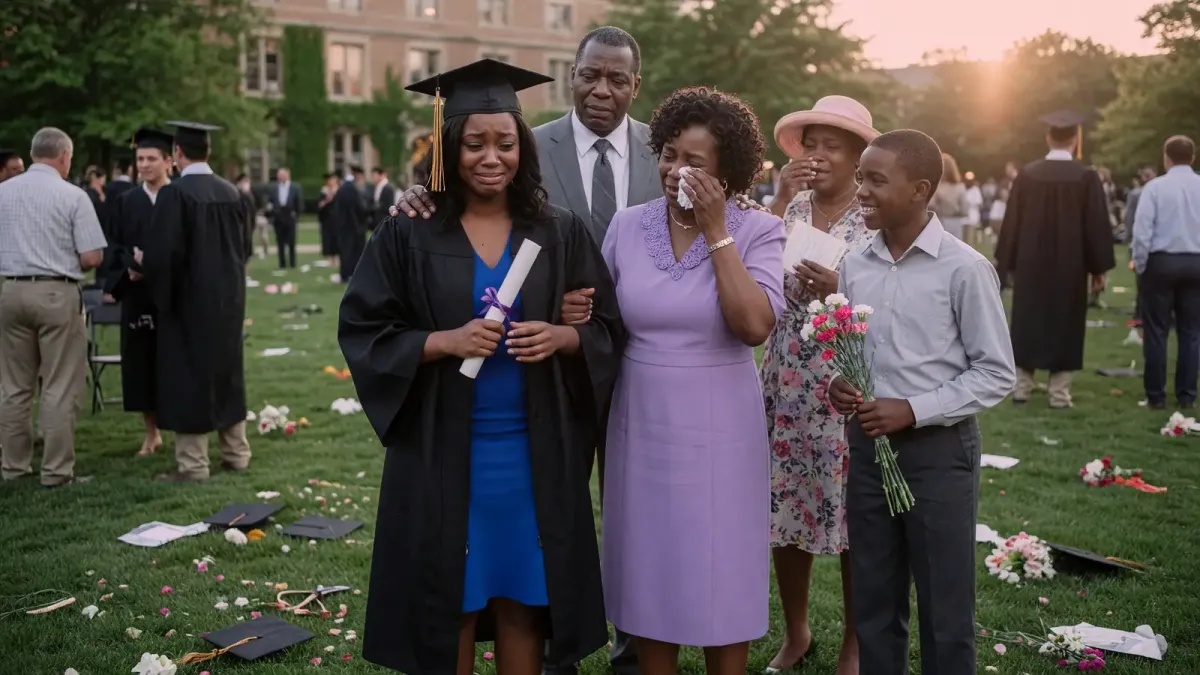
When Javier walked across the stage at his state university’s spring commencement, his parents were in the third row. They were proud — first in the family to earn a bachelor’s degree. What they didn’t know, as they snapped photos and cheered, was that their son had spent four years building a life they’d never seen: running the campus LGBTQ+ student alliance, dating a man for two years, and figuring out how to be both the family’s academic success story and its unspoken disappointment.
Two Kinds of First
First-generation college students navigate a well-documented set of challenges: decoding the hidden curriculum of higher education, managing financial stress, bridging family expectations with academic demands. First-generation queer students add another layer: navigating identity in an institution their families may not understand, often without the safety net of parental support if things go badly.
“I came out to my mom sophomore year,” Javier told us. “It didn’t go well. She said she still loved me, but she also told me not to tell my dad or anyone else in the family. So I had this double life — I was out on campus, living as myself, and then I’d go home for breaks and disappear back into the closet.”
Research on first-generation LGBTQ+ students is limited, but what exists points to a particular form of isolation. These students are often disconnected from both their families of origin (who may not understand their queer identity) and the institutional culture (which they’re already navigating without family guidance). The campus LGBTQ+ center can become a literal lifeline — not just a social space, but a substitute family.
The Campus as Refuge
For Javier, the turning point came at the campus Pride Center’s weekly discussion group. “I walked in during my first semester, terrified, and there was a senior there named Marcus who was also first-gen and also Latino. He told me, ‘You don’t have to choose between your culture and your identity.’ I had literally never heard anyone say that before.”
That mentorship — informal, peer-based, identity-informed — is what many first-gen queer students point to as the difference between staying and leaving. Formal mentorship programs exist on many campuses, but the organic connections that happen in identity-based spaces carry a particular weight.
The Pride Center staff also helped Javier navigate practical challenges. “I needed a summer housing exception so I wouldn’t have to go home. The center director wrote a support letter. I needed emergency funding when my parents cut me off financially for a semester. The center connected me to a micro-grant program I didn’t know existed. These aren’t things I would have found on my own.”
What Graduation Means
Walking across the stage in front of family who don’t fully know you is a particular kind of emotional complexity. Some first-gen queer graduates choose to come out shortly before or after graduation — a “now I have my degree, and you can take it or leave it” approach. Others, like Javier, decide the timing isn’t right.
“I thought about telling them at graduation. I really did. But my little sister was there, and she’s starting college next year, and I didn’t want to blow up the family right before her big transition. So I smiled for the pictures and saved the hard conversation for later.”
Javier has since come out to his parents in full. The conversation was difficult, but having a degree — and the independence that comes with it — changed the power dynamic. “When I was 18 and financially dependent, coming out felt like a risk I couldn’t take. At 22, with a job lined up and my own apartment, it felt like a conversation, not a crisis.”
What Campuses Can Do
First-generation queer students need more than a welcome email. Based on the students we spoke with, here’s what actually helps:
Targeted mentorship that doesn’t require self-identification. Many first-gen programs and LGBTQ+ programs operate in silos. A student shouldn’t have to choose between first-gen support and queer community.
Financial safety nets that acknowledge family cutoff as a real risk. Emergency funds, short-term housing, and meal support for students whose families withdraw financial support after they come out.
Summer and break housing that doesn’t require justification. For students who can’t go home, requiring them to explain why is itself a burden.
Faculty who signal allyship in concrete ways. A pronoun introduction during the first class, an office hours sign that says “all identities welcome,” or a simple “if you’re dealing with family stuff and need an extension, just let me know” can make a professor feel safe to approach.
For Javier, graduation wasn’t the end of the journey. “I’m the first to graduate, the first to come out, the first to try to build something different. That’s a lot of firsts. But it also means my siblings don’t have to be first. If nothing else, they’ll know it’s possible.”