When CUNY announced the launch of its LGBTQ+ Institute in June 2026, the timing was notable. The same week, other universities were quietly scaling back Pride month displays — removing rainbow signage, limiting themed programming, or treating June as just another month on the academic calendar.
CUNY went in the opposite direction. The new institute funds systemwide programming across every campus in the university system, including housing policy reform. That signals something larger than a seasonal gesture: a shift from symbolic inclusion to structural change in how students live on campus.
What “Inclusive Housing” Actually Means
For most universities, inclusive housing starts with one thing: giving students the option to live with roommates regardless of gender. Gender-neutral or all-gender housing lets transgender, non-binary, and gender non-conforming students avoid a situation that is, frankly, untenable — filling out a housing form that forces them to choose between a men’s floor and a women’s floor when neither feels like home.
But the best programs go further. They pair housing assignment reform with:
- On-site gender-affirming services: accessible through residence hall staff who know the referral process
- LGBTQ+ peer mentors: upperclassmen living on the floor who serve as informal support
- Safe-space training for RAs: resident advisors who understand how to handle discriminatory incidents, not just pass them to a dean’s office
- Community programming: optional events and discussion groups that build connection without forcing visibility on students who aren’t ready
The CUNY Model
CUNY’s LGBTQ+ Institute is systemwide — meaning every campus in the City University of New York network gets a baseline of support, not just the ones with the largest activist populations. The institute preserves queer history, funds programming, and coordinates services that previously existed in pockets.
Rose at UCR (University of California, Riverside) updated their LGBTQ+ scholarly resource list for Pride Month 2026 and noted that student-government-level collaboration with UCLA’s law school administration was producing more inclusive campus policies. The pattern is the same: student-led advocacy meeting institutional willingness to act.
Swipe Programs and Basic Needs
A less visible but critical piece of inclusive campus life is food security. Programs like “Swipe Out Hunger” — now expanded to include LGBTQ+ student services — address the fact that queer students experience food insecurity at higher rates than their peers, often because they lack family support after coming out.
When a campus provides on-campus food solutions alongside gender-affirming services, it stops treating housing as just a bed assignment and starts treating it as a holistic living environment. A student who cannot eat regularly will not thrive, regardless of how welcoming their RA is.
What Students Should Look For
If you are choosing a college and LGBTQ+ inclusivity matters to you, here are concrete questions to ask — not just whether the school has a Pride center:
- Does the housing application include a gender-neutral option that you can select without filing a special request? If you have to petition or call the housing office, the option exists but the friction signals it is not fully normalized.
- Are RAs trained on LGBTQ+ issues specifically? General diversity training is a baseline. Ask if there is a dedicated module.
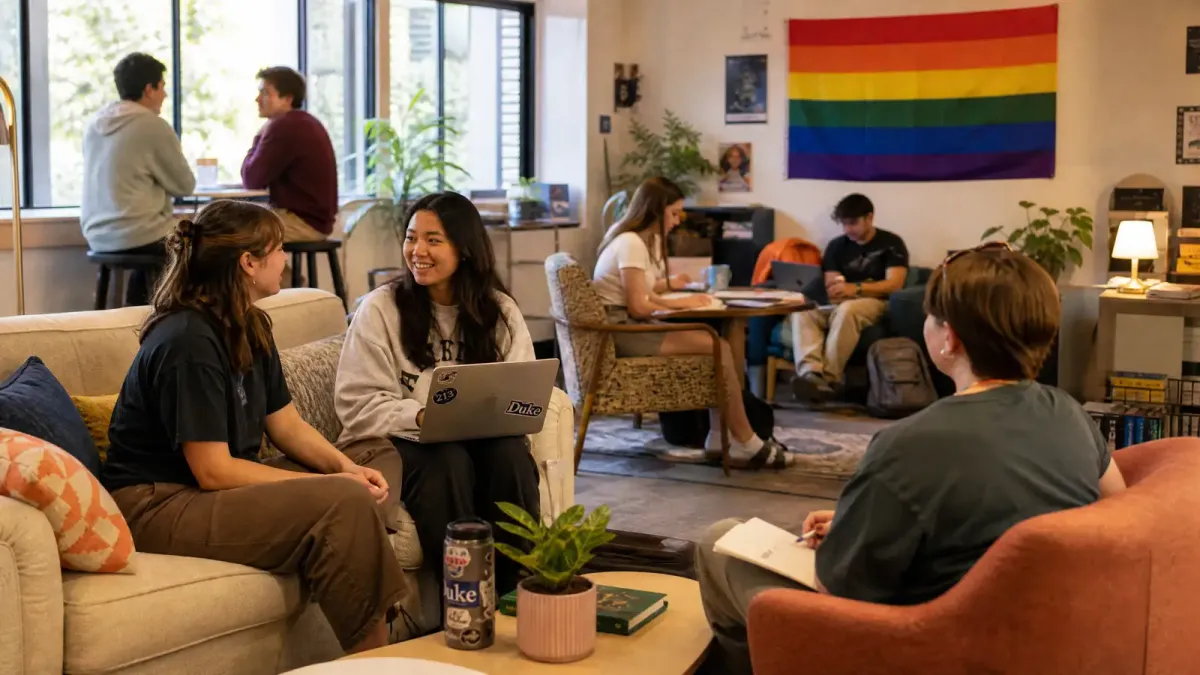
- Is there an on-campus LGBT services office with professional (not just student-run) staff? The Director of LGBT Student Services at many universities serves as the primary resource for housing disputes, name and pronoun changes in the residential system, and emergency support.
- What happens when discrimination occurs in the residence halls? A good answer involves a clear reporting process, follow-up timeline, and consequences that are enforced, not just documented.
The Bottom Line
Pride flags in June are nice. But the students who need support the most — transgender students navigating housing forms, first-year students far from home for the first time, students whose families rejected them — need more than a rainbow banner. They need housing policies that do not force them into boxes, staff who know how to help, and a campus culture that treats inclusion as a year-round practice.
Universities that are getting this right are building systems, not just celebrations.